OPTION 01
Correct the cause and rest the field
When it fits: Failure traced to a leak, runoff or a solids problem while the soil is still serviceable.
- Lowest cost
- No new trenches
- Won't revive a field that is sealed or crushed
Serving metro Atlanta from Oxford, GA
Georgia DPH-certified septic installer & pumper24/7 Emergency? (678) 863-5620
SEPTIC GUIDE · DRAIN FIELDS · GEORGIA
Get a free estimate
or call (678) 863-5620The short answer
A failing septic drain field usually shows up as soggy or spongy ground over the trenches, stripes of greener grass, sewage odor across the yard, drains that slow down after heavy rain, and a tank that refills to its outlet soon after pumping. In Georgia, repairing or replacing the field requires a county permit and inspection.
Reviewed by Atlanta Water & Sewage Solutions · Last updated
Who does the work
One crew, the whole line
Key facts
Each row links to the agency, code or publisher it comes from. Tap a source to check it yourself.
| Topic | What it says | Source |
|---|---|---|
| Permit for any field repair | Required; repairs, replacements and additions are permitted and inspected (511-3-1-.03(2)(c)) | Georgia DPH Rules Chapter 511-3-1, On-Site Sewage Management Systems (Jan 2016), 2016 |
| Soil report in Gwinnett, Newton, Rockdale | Level 3 soil report needed for a repair permit (GNR, since Feb 7, 2022) | GNR Public Health — Septic Systems (Gwinnett, Newton & Rockdale), 2026 |
| Permit lifespan | Up to 12 months from issue (511-3-1-.03(3)(a)) | Georgia DPH Rules Chapter 511-3-1, On-Site Sewage Management Systems (Jan 2016), 2016 |
| Where clogging starts | A biomat in the top 1 to 6 inches of soil beneath the trench (NC State Extension) | NC State Extension — Septic Systems and Their Maintenance, 2026 |
| Clay and field size | Slowly permeable clay soils need larger fields than sandy ones (NC State Extension) | NC State Extension — Septic Systems and Their Maintenance, 2026 |
| Drain field repair or rejuvenation | $1,000–$5,000 typical market range (HomeGuide, 2026) | HomeGuide — How Much Does a Leach or Drain Field Replacement Cost? (2026), 2026 |
| Drain field replacement | $3,000–$15,000 typical market range (HomeGuide, 2026) | HomeGuide — How Much Does a Leach or Drain Field Replacement Cost? (2026), 2026 |
| Residential repair permit, Newton (GNR) | $275 for site evaluation, permit and first inspection (2026 schedule) | GNR Environmental Health Fee Schedule — Newton County, 2026 |
Plain definitions
Warning signs
Seeing two or more of these? Call (678) 863-5620
Soil & terrain
Across the Piedmont east of Atlanta, a few inches of sandy topsoil sit on dense red clay. The USDA's Cecil series description shows that clay beginning around 8 inches deep and continuing past 40, described as firm and sticky (NRCS Cecil). Pacolet, common on steeper ground, can have clay starting within a few inches of the surface (NRCS Pacolet).
Clay has small pores, so the biomat that forms under every trench seals it faster than it would in sand. Georgia sizes each field to the soil it sits in, which is why fields here are long, and why an older field loses its safety margin when a household grows or the lot is regraded.
Before calling anyone, you can look up your lot on the free USDA Web Soil Survey, which rates mapped soils for septic absorption. It is only a screening tool; a certified soil classifier's report is what the county actually relies on.
The whole story
Skipped pumping is the slow killer. When sludge and scum build up in the tank, solids escape into the trenches, and NC State Extension explains that this thickens the biomat until the soil can no longer keep up (NC State). Georgia DPH also cautions homeowners against septic additives, which can move fine solids out to the field (DPH advisory).
Too much water is the quick one. Leaking toilets, back-to-back laundry loads and gutters or yard runoff aimed at the field all flood trenches that were designed for a set daily volume. UGA advises spreading laundry through the week for exactly this reason.
Weight and roots finish the job. UGA Extension warns against driving or parking over the system because it can crush lines and compact soil, and UMD Extension notes tree roots can invade and clog pipes (UMD). A patio pour or a line of shrubs along the trenches can undo decades of service.
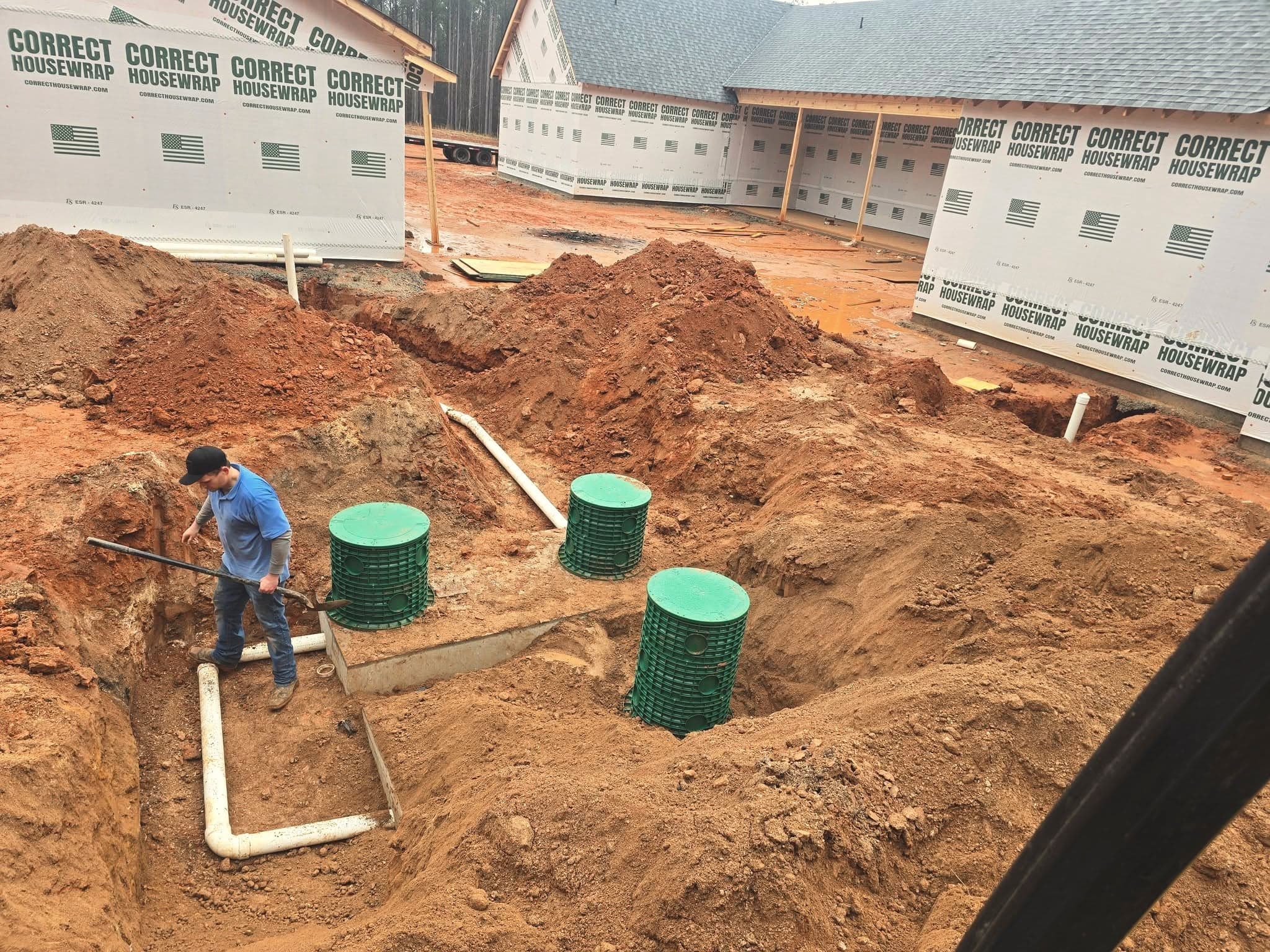
Your options
OPTION 01
When it fits: Failure traced to a leak, runoff or a solids problem while the soil is still serviceable.
OPTION 02
When it fits: Pipes are clogged but trenches and soil are otherwise sound.
OPTION 03
When it fits: Part of the field is intact and there is usable soil nearby within setbacks.
OPTION 04
When it fits: The whole field has failed or the original area can no longer absorb.
How the job runs
Stagger laundry, fix running toilets, and write down whether symptoms follow rainfall. That timing narrows the cause.
A pump-out shows whether liquid flows back from the field and whether baffles or the outlet filter have failed.
Test holes along the lines show ponding depth, crushed pipe, roots and biomat condition.
In Gwinnett, Newton and Rockdale, GNR reviews a repair only with a Level 3 report from a certified soil classifier.
GNRGNR Residential Septic System Repair Permit Application and Requirements (Rev. 2024-05-03)
The county health office reviews the plan; GNR allows about 10 working days including a site visit.
511-3-1-.03(2)(c)GNR Residential Septic System Repair Permit Application and Requirements (Rev. 2024-05-03)
Environmental Health inspects the new work before backfill. The permit stays valid for up to 12 months.
511-3-1-.03(3)(a)Georgia DPH Rules Chapter 511-3-1, On-Site Sewage Management Systems (Jan 2016)
Permits & the Georgia rules
Contact the county Environmental Health office (or have your contractor do it) before any digging on the field.↗
Submit the repair application with the soil report and, where required, an engineered site plan.↗
Pass the inspection before trenches are covered.↗
Georgia rule 511-3-1-.03(2)(c)
“Repairs, replacement, or additions to existing systems must be permitted and inspected.”
Georgia rule GNR repair requirements
“A Level 3 soil report will be required…”
What it costs
Drain field repair or rejuvenation
$1,000–$5,000
per job
HomeGuide, 2026.
Typical market range — HomeGuide — How Much Does a Leach or Drain Field Replacement Cost? (2026), 2026
Drain field repairs, broader range
$2,000–$15,000
per job
Angi, 2026.
Typical market range — Angi — Cost to Replace Septic Tank and Drain Field (updated Jul 8, 2026), 2026
Leach line replacement
$20–$45
per linear foot
HomeGuide, 2026.
Typical market range — HomeGuide — How Much Does a Leach or Drain Field Replacement Cost? (2026), 2026
Field line cleaning
$600–$1,100
per job
Angi, 2026.
Typical market range — Angi — How Much Does It Cost to Clean Septic Field Lines? (updated Jul 9, 2026), 2026
Full drain field replacement
$3,000–$15,000
per job
HomeGuide, 2026.
Typical market range — HomeGuide — How Much Does a Leach or Drain Field Replacement Cost? (2026), 2026
Relocating the field
$5,500–$21,500
per job
HomeGuide, 2026.
Typical market range — HomeGuide — How Much Does a Leach or Drain Field Replacement Cost? (2026), 2026
These are typical market ranges published by third parties, not Atlanta Water & Sewage Solutions prices. Our on-site estimates are free.
Free estimate: (678) 863-5620FAQ
Straight answers, with the rule or record behind them. Still unsure? Call and ask the crew that digs.
(678) 863-5620Tank problems tend to show up as a backup at every drain at once, an alarm, or odor at the lids, and they often clear after pumping. Field problems show in the yard: soggy strips, greener grass, and symptoms that return soon after pumping or after rain. A tank that refills to its outlet quickly is a strong field indicator.
Source: UGA Cooperative Extension Bulletin 1421 — A Beginner's Guide to Septic Systems
Sometimes partially. If overload came from a leak or runoff, removing the extra water and resting the field can let the biomat thin and absorption recover. A field that is sealed by solids, crushed by vehicles or packed with roots will not recover by resting, and continued use risks sewage surfacing in the yard.
Source: NC State Extension — Septic Systems and Their Maintenance
Yes. Georgia rule 511-3-1-.03(2)(c) says repairs, replacements and additions to existing septic systems must be permitted and inspected. In Gwinnett, Newton and Rockdale counties, GNR Public Health also requires a Level 3 soil report from a certified soil classifier before it reviews a repair application.
Source: Georgia DPH Rules Chapter 511-3-1, On-Site Sewage Management Systems (Jan 2016)
HomeGuide's 2026 figures put drain field repair or rejuvenation at $1,000 to $5,000 and full replacement at $3,000 to $15,000, with relocation running $5,500 to $21,500. Angi's 2026 range for repairs is $2,000 to $15,000. County permit fees, such as $275 for a residential repair in Newton, are added on top.
Source: HomeGuide — How Much Does a Leach or Drain Field Replacement Cost? (2026)
Piedmont clay has small pores and accepts water slowly, so the biomat under each trench seals it sooner than it would in sandy soil. NC State Extension notes clayey soils need larger fields to begin with, and heavy Georgia storms can saturate trenches that are already running near capacity.
Source: NC State Extension — Septic Systems and Their Maintenance
Georgia DPH advises against relying on septic additives, and some can make field problems worse by stirring up solids that then wash into the trenches. Regular pumping, lower water use and keeping runoff away from the field do more for a struggling system than any product poured down a drain.
It can be. Water pooling over trenches may contain untreated effluent, so keep children and pets away and avoid mowing through it. The EPA notes an overloaded field can bring sewage to the surface or back into the home, which is why surfacing liquid is treated as a failure that needs a permitted repair.
Under Georgia rule 511-3-1-.03(3)(a), a septic permit is valid for no more than 12 months from the date it is issued. The county inspects the new or repaired trenches before they are covered, so the work should be scheduled once the permit is in hand and the soil report is complete.
Source: Georgia DPH Rules Chapter 511-3-1, On-Site Sewage Management Systems (Jan 2016)
Keep going
Sources
Rules, costs and local facts on this page link to the agency, code or publisher that states them. Cost figures are third-party market ranges, not our prices — estimates are free.
Reviewed by Atlanta Water & Sewage Solutions · Last updated
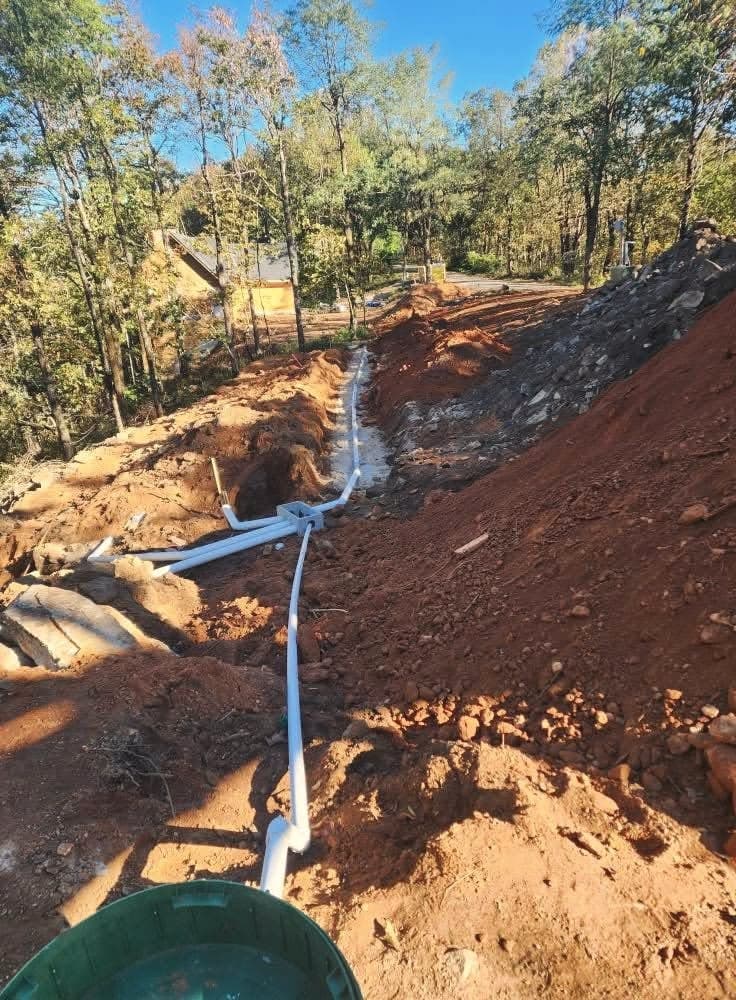
Ready when you are
The yard usually tells you before the toilets do. Here is what a struggling absorption field looks like on a Georgia lot, why red clay speeds it up, and what the fix and the paperwork involve.
(678) 863-5620Free estimate
or call (678) 863-5620