Septic permits & records
DeKalb Public Health — Environmental Health Division
- Address
- 445 Winn Way, Suite 320, Decatur, GA 30030
- Phone
- 404-508-7900
Serving metro Atlanta from Oxford, GA
Georgia DPH-certified septic installer & pumper24/7 Emergency? (678) 863-5620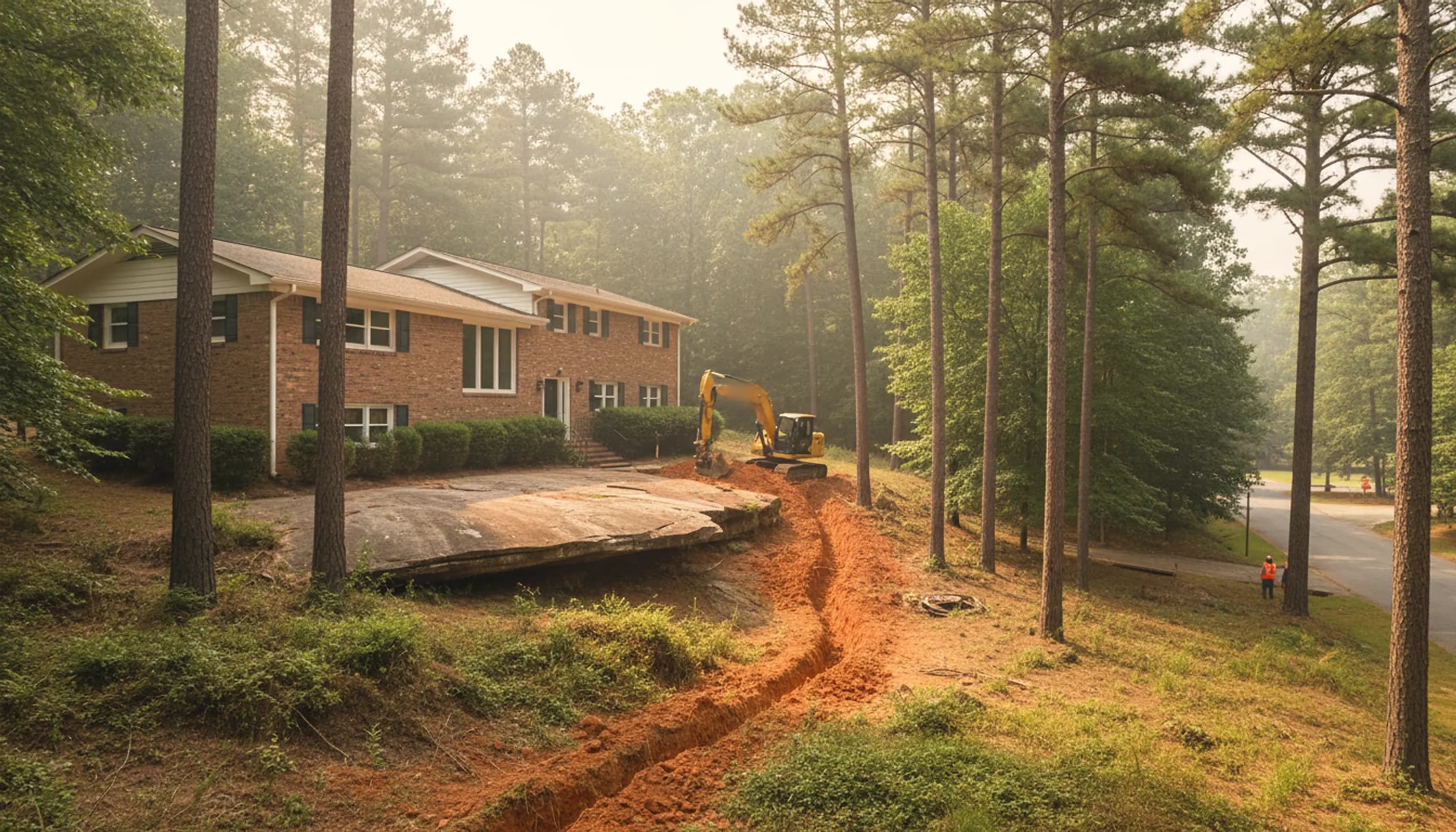
DeKalb County · Septic & sewer rules
Get a free estimate
or call (678) 863-5620The short answer
DeKalb County is mostly sewered by DeKalb Watershed Management, but the county's own 2017 ordinance says some areas still run on old septic tanks that may fail. DeKalb Public Health's Winn Way office in Decatur permits septic repairs and installs. Atlanta Water & Sewage Solutions repairs septic systems, laterals and septic-to-sewer connections across DeKalb.↗↗↗
Reviewed by Atlanta Water & Sewage Solutions · Last updated
At a glance
Sewer or septic?
Watershed Management serves more than 775,000 residents through roughly 5,200 miles of water and sanitary sewer pipe. That is most of DeKalb. The exceptions show up on the bill: homes with septic tanks are charged no sewer fees at all.↗↗
In 2017 the Board of Commissioners wrote the problem into code. Ordinance 17-05 finds that certain areas of the county are served by septic tanks, many of which are old and may potentially fail. Our DeKalb town pages focus on Lithonia, Stonecrest and Redan.↗
DeKalb then layers its own connection rule on the state's. Sec. 25-154 says that when public sewer sits in an abutting street within 100 feet of the property line, the owner must connect at their own expense within 24 months of official notice. The county can grant exceptions on application.↗
Local facts
Each row links to the agency, code or publisher it comes from. Tap a source to check it yourself.
| Topic | What it says | Source |
|---|---|---|
| Septic permit office | DeKalb Public Health, Environmental Health Division, 445 Winn Way, Suite 320, Decatur; 404-508-7900 | DeKalb Public Health Environmental Health Division Fee Schedule (effective January 1, 2024) |
| Septic repair permit | $150; a residential installation permit is $250 | DeKalb Public Health Environmental Health Division Fee Schedule (effective January 1, 2024) |
| Sewer utility size | 775,000+ residents, about 5,200 miles of water and sewer pipe | Watershed Management | DeKalb County, GA |
| Treatment plants | Snapfinger and Pole Bridge advanced wastewater plants; 67 lift stations | Watershed Management | DeKalb County, GA |
| County connection rule | Sewer within 100 feet in an abutting street: connect within 24 months of notice | DeKalb County Code Ch. 25, Art. IV, Div. 1 — Sewers and Sewage Disposal, Generally (Municode, Supp. 72) |
| Conversion districts | Petitioned special tax districts; per-lot line cost capped at $7,500 | DeKalb County Code Ch. 25, Art. IV, Div. 2.5 — Special Septic Tank to Sewer Conversion Tax District (Municode, Supp. 72) |
| Septic customers' sewer charge | None | Services & Billing | DeKalb County, GA |
The DeKalb County story
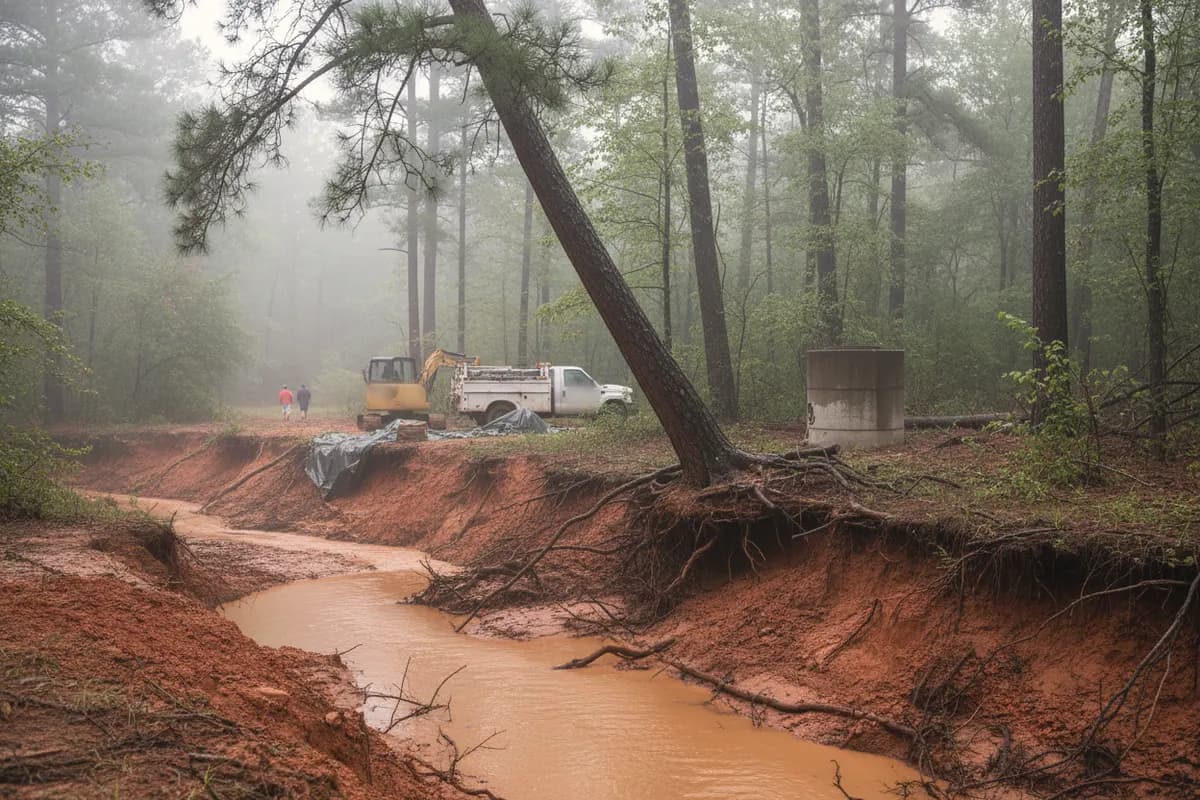
Division 2.5 of the county's water and sewer chapter, adopted November 14, 2017, lets developed neighborhoods on septic petition for a special tax district that pays to extend public sewer to them. Each lot's share of building the line is capped at $7,500. The cost of connecting the house is not in that cap.↗
Once the main is in, the county encourages owners to connect but doesn't force it, unless public health, water quality or a nuisance calls for it. Owners who do connect hire a plumber to run pipe from the building drain to the county stub-out and pay a plumbing fee and a sewer tap fee before inspection.↗
That private run is the part we build: trench, pipe, cleanout and backfill from your foundation to the stub. Watershed's own packet warns that a connection permit grants only the right to connect at the owner's expense, and that a stub is not guaranteed.↗
Permits · DeKalb Public Health — Environmental Health Division (Septic System Program)
DeKalb Public Health must permit a new system, a new drain line or a repair before the work starts.↗
Only a Georgia DPH-certified contractor may install, repair or pump a DeKalb system.↗
The contractor emails the Construction Permit and Site Approval application plus the engineered site plan checklist to dekalb.eh@dph.ga.gov, or brings them to Suite 320.↗
The form records soil series, loading rate, restrictive horizon depth, bedrooms and tank size.↗
Engineered plans run at 1 inch = 40 feet or finer, with 2-foot contours and a Level 3 or Level 4 soil report overlaid.↗
Permits expire 12 months after approval; call for final inspection before the system is covered.↗
Published fees
Who owns what
DeKalb Watershed Managementsewer lateral
Owner on private property; county within street rights-of-way and sewer easements↗
Where the line sits: Edge of the right-of-way or sewer easement
DeKalb Watershed Managementwater service line
County up to and including the meter; owner beyond it↗
Where the line sits: Meter
Sec. 25-220 is the rule behind that split. Sec. 25-215 adds that the owner pays every cost of installing the building sewer, plus any damage the work does to the public line.↗
What it costs
Residential sewer access fee (Watershed)
$1,811.93
Typical market range — DeKalb County 2022 Current Rates — Water and Sewer Rates and Service Charges (via Wayback), 2022 rate sheet
Water meter tap, 3/4 inch
$1,100
Typical market range — DeKalb County 2022 Current Rates — Water and Sewer Rates and Service Charges (via Wayback), 2022 rate sheet
Water access fee
$2,000
Typical market range — DeKalb County 2022 Current Rates — Water and Sewer Rates and Service Charges (via Wayback), 2022 rate sheet
Per-lot share of a conversion-district sewer extension
Up to $7,500
Typical market range — DeKalb County Code Ch. 25, Art. IV, Div. 2.5 — Special Septic Tank to Sewer Conversion Tax District (Municode, Supp. 72), Ord. 17-05 (2017)
These are third-party typical market ranges, not our prices. Every job is quoted after we see it — estimates are free.
Free estimate: (678) 863-5620Soil & terrain
DeKalb covers 271 square miles of Georgia's upper Piedmont, with Stone Mountain near its eastern edge and Arabia Mountain, a 955-foot dome of swirled migmatite, in the southeast. Quarried Arabia stone curbs Atlanta streets.↗↗
Water splits the county too. Below a line from Druid Hills to Tucker, the southern two-thirds drains to the Upper Ocmulgee; the northern third drains to the Chattahoochee. In 2021 American Rivers ranked the South River, on the Ocmulgee side, the fourth-most endangered river in the country, citing sewage pollution.↗
Cecil-Urban land↗
Largest map unit, about 29,383 of the survey's 173,100 acres.
Pacolet↗
Clay upland soil from felsic rock, on gentle to very steep slopes.
Ashlar↗
Moderately deep: bedrock at 20 to 40 inches.
Rock outcrop↗
About 2,017 acres of bare rock.
Cartecay and Toccoa↗
Frequently flooded stream-bottom soils, roughly 11,800 acres combined.
Median year homes were built
1984
Typical house here is about 42 years old — and so is its original sewer or septic line.
ACS 2020-2024 5-year, table B25035 · Census Reporter: DeKalb County, GA (ACS 2024 5-year)
Services here
Also available:Sewer Camera InspectionExcavation, Grading & Drainage
Towns we serve
Who to call at the county
Septic permits & records
FAQ
Straight answers, with the rule or record behind them. Still unsure? Call and ask the crew that digs.
(678) 863-5620DeKalb Public Health's Environmental Health Division runs the county's Septic System Program from 445 Winn Way, Suite 320, in Decatur (404-508-7900). It reviews plans and soil reports and does site evaluations. Applications go in by email to dekalb.eh@dph.ga.gov or in person, filed by a DPH-certified contractor.
Under the DeKalb Public Health fee schedule effective January 1, 2024, a repair permit is $150. A new residential system runs $200 for lot plan review plus $250 for the installation permit, and a land use evaluation with a site visit is $150. Plan resubmittals after the first free one cost $125.
Source: DeKalb Public Health Environmental Health Division Fee Schedule (effective January 1, 2024)
If the sewer is in an abutting street within 100 feet of your property line and the county sends official notice, Sec. 25-154 gives you 24 months to connect at your own expense. You can apply for an exception. A failing septic system near available sewer also falls under Georgia's separate 200-ft connection rule.
Neighborhoods on septic can petition for a special tax district under Division 2.5 of the county code (Ord. 17-05, 2017) to extend public sewer. Each lot's share of line construction is capped at $7,500. Connecting the house to the new stub-out is a separate cost, paid through a plumbing fee, a tap fee and the owner's contractor.
No. Sec. 25-220 puts the building sewer connection on private property on the owner and assigns the county only the portion inside street rights-of-way and sewer easements. A cracked or root-filled lateral between your house and the property line is a private repair.
Source: DeKalb County Code Ch. 25, Art. IV, Div. 3 — Building Sewers and Connections (Municode, Supp. 72)
Not for a pump-out alone, according to DeKalb Public Health. Permits are needed for new systems, new drain lines and repairs. The pumping company itself must be DPH-certified, and its truck is inspected under the county fee schedule. A certification letter for a loan or sale is requested separately.
Watershed Management applies no sewer charges to customers with septic tanks, so a missing sewer line item is a strong hint the house is on septic. Confirm it with DeKalb Public Health's records or by finding the tank lids before planning an addition, pool or sale.
The most recent Watershed rate sheet located, from 2022, lists a residential sewer access fee of $1,811.93; non-residential access is based on population equivalents. A 3/4-inch water meter tap was $1,100 plus a $2,000 water access fee. Check with Watershed for current figures before budgeting.
Source: DeKalb County 2022 Current Rates — Water and Sewer Rates and Service Charges (via Wayback)
Guides
 How does septic-to-sewer conversion work in DeKalb?The step-by-step version of the tax-district path.Read the guide
 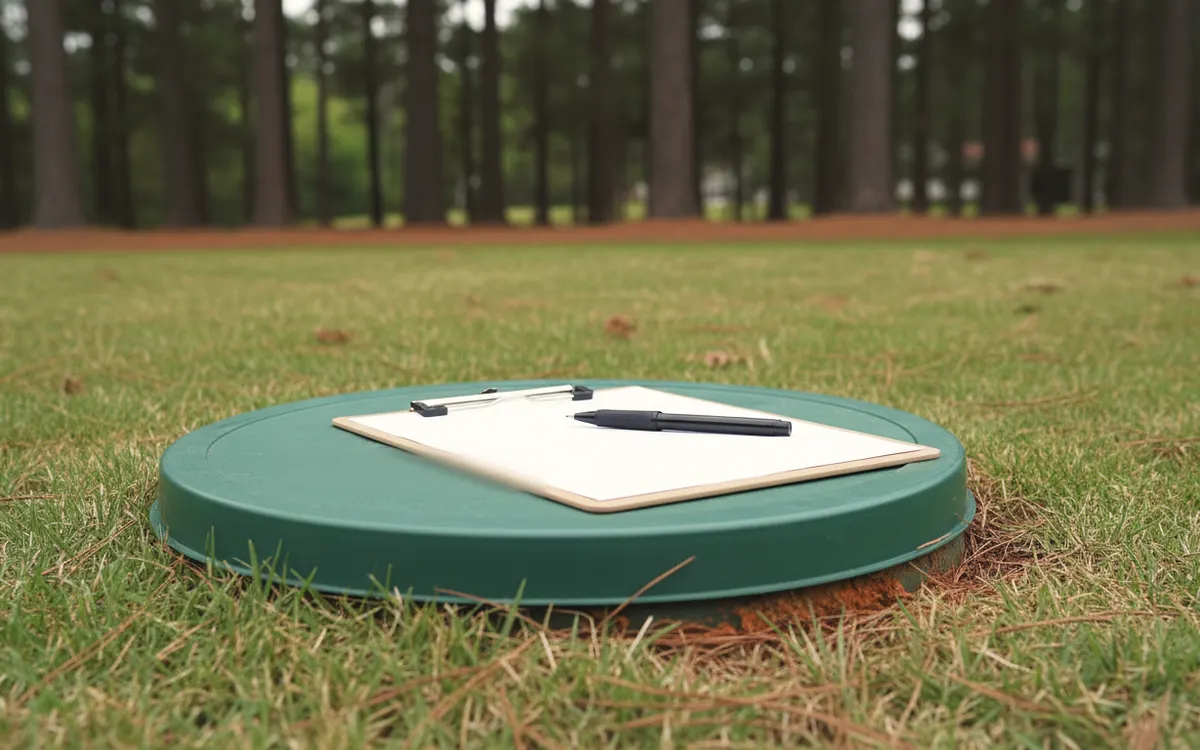 Is my Georgia home on septic or sewer?Five checks, including the DeKalb bill clue.Read the guide
 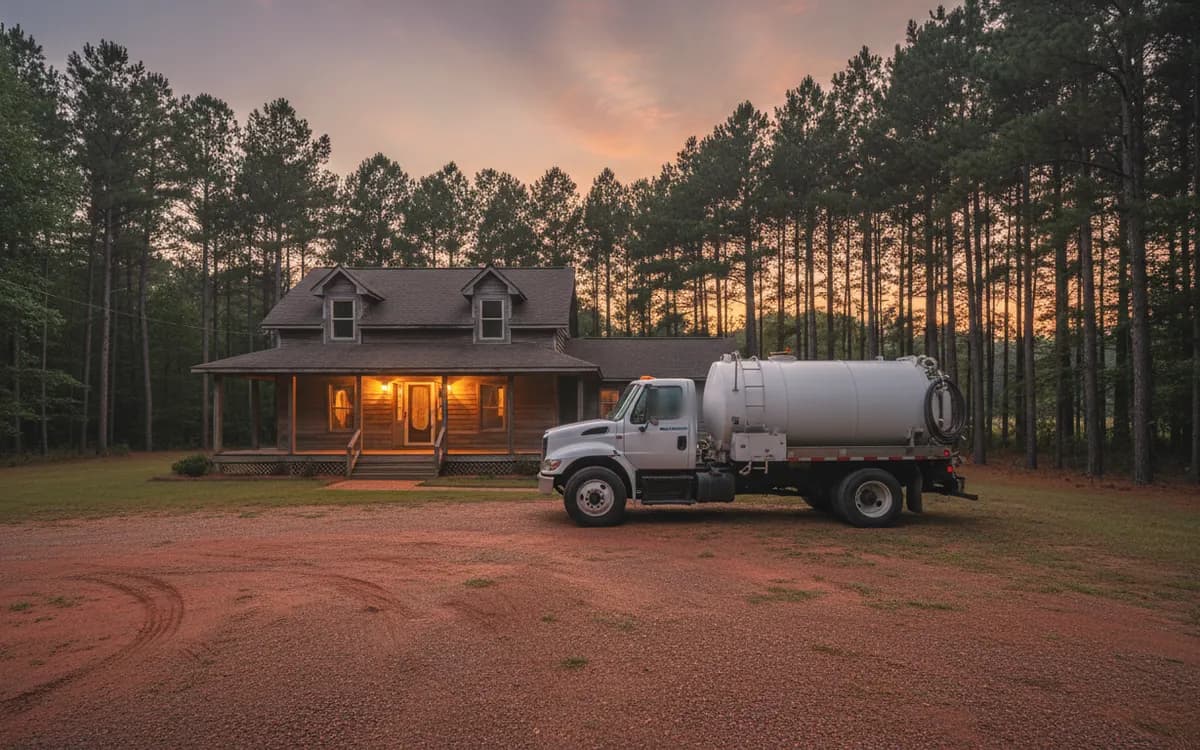 Who is responsible for sewer line repair?DeKalb's split compared with neighboring utilities.Read the guide
 Sources
Rules, costs and local facts on this page link to the agency, code or publisher that states them. Cost figures are third-party market ranges, not our prices — estimates are free.
Reviewed by Atlanta Water & Sewage Solutions · Last updated
Ready when you are
Call (678) 863-5620 for a free on-site estimate. We sort out the permit with DeKalb Public Health or the tie-in to Watershed's stub, then trench, lay pipe and backfill.
(678) 863-5620Free estimate
or call (678) 863-5620