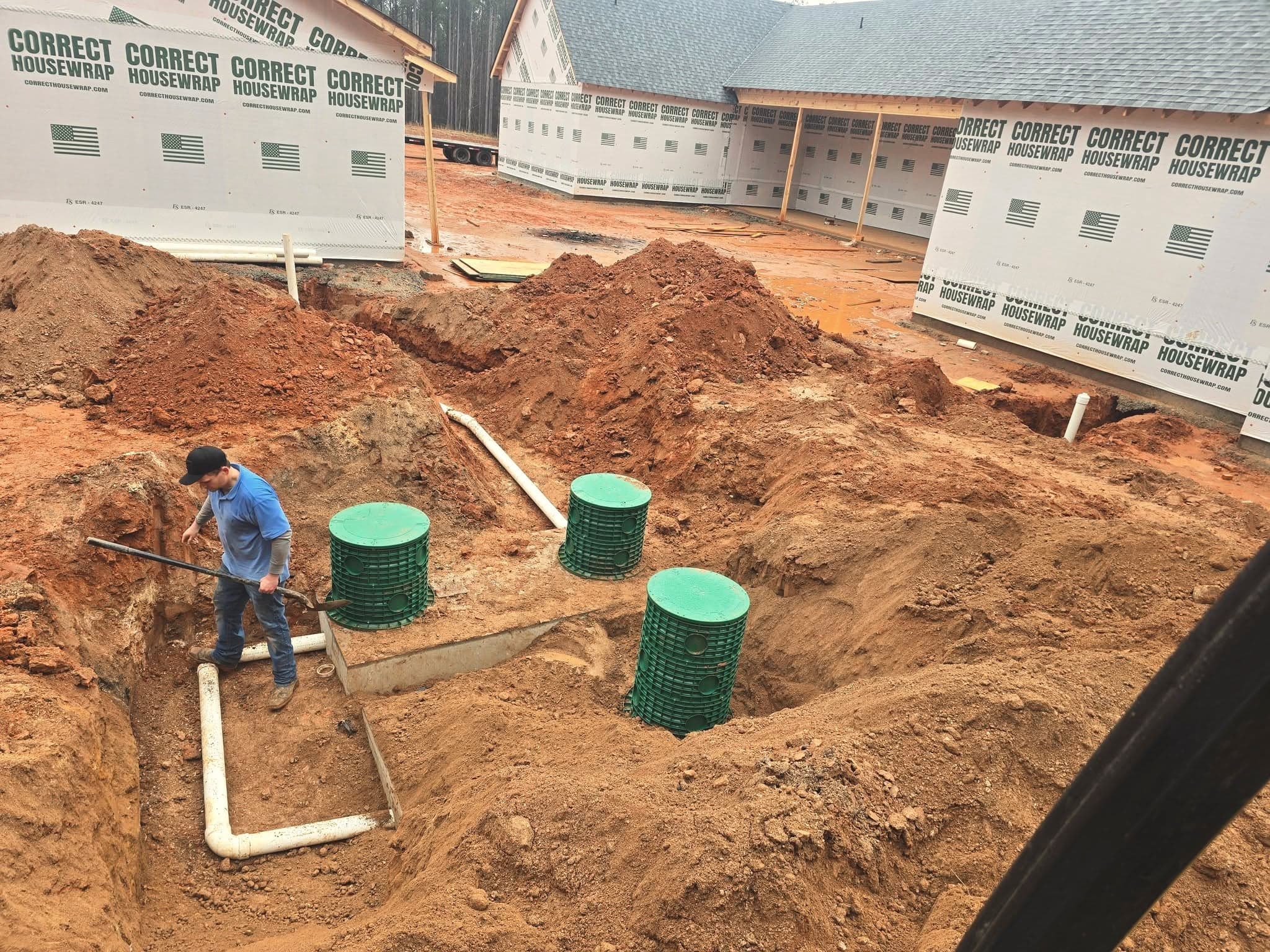
Much of the east metro was built on septic and is being sewered in pieces. The Newton County Water & Sewerage Authority says most homes and businesses in unincorporated Newton County still aren't on sanitary sewer. DeKalb has written a whole code division for special septic-to-sewer conversion tax districts. So the call we get is often not "my sewer line broke" but "the county just ran a main past my house — now what?"
The first question is whether you have to connect or just may. Georgia's rule is the floor: if public sewer is within 200 ft of your property line or in an abutting right-of-way, a new building connects to it, and a failing septic system must connect if sewer is available. Local codes then set the clock. NCWSA can require a septic property to connect within 30 days of notice once sewer is within 200 ft. Covington gives 90 days after official notice. Monroe gives 30. DeKalb's general rule gives owners 24 months after notice when the sewer is within 100 ft — but inside a DeKalb conversion district, owners are encouraged, not required, to connect right away unless health or water-quality conditions warrant it.
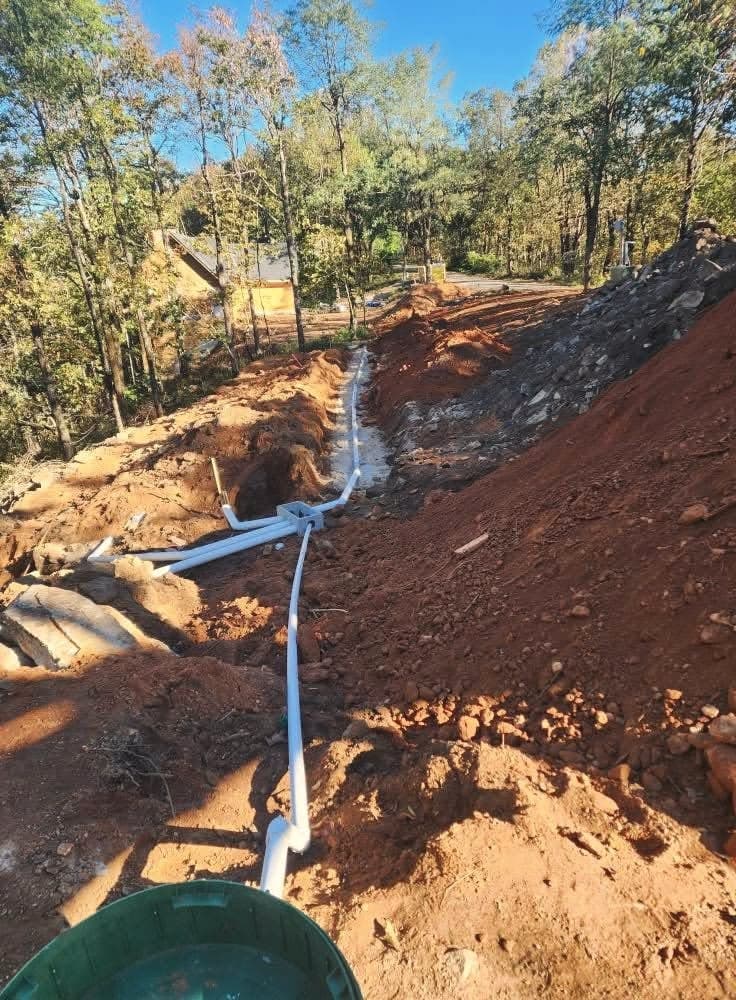
The second question is who pays for what. Nearly everywhere, the pipe on your side is yours: Covington's code has the owner build the line from the house to the property line and apply for the connection from there to the street sewer. In unincorporated Newton, NCWSA has new customers fund any needed sewer extension, get a design professional's drawings approved, obtain easements if the lot isn't next to the sewer, and hire a contractor whose work NCWSA inspects. NCWSA's own guidance estimates $50 to $100 per foot from the building to the nearest manhole. In a DeKalb conversion district, the county caps each lot's share of the line extension at $7,500.
The third question is where the house plumbing leaves the building, because that decides where the new lateral starts. Rockdale's code says a conversion connects upstream of the septic tank — the house sewer is cut and redirected before the tank, not routed through it. On many ranch houses the old line to the tank leaves the back of the house while the street is out front, which can mean a longer run around the foundation. We walk the lot, find the building drain and the utility's stub, and lay out the route before anyone quotes you a number.