
GUIDE · GEORGIA SEPTIC PERMITS
How to get a septic permit in Georgia, step by step
- Georgia DPH-certified installer & pumper
- Residential & commercial
- Emergency line answered 24/7
Get a free estimate
or call (678) 863-5620The short answer
How do you get a septic permit in Georgia?
To get a septic permit in Georgia, you apply to the county Environmental Health office, which evaluates the site and soil (a Level 3 soil report in Gwinnett, Newton and Rockdale) before issuing a construction permit good for 12 months. A DPH-certified contractor then installs the system, and the county must inspect it before anything is covered.
Reviewed by Atlanta Water & Sewage Solutions · Last updated
Who does the work
One crew, the whole line
- Georgia DPH Certified Septic Tank Installer Listed by the Georgia Department of Public Health
- Georgia DPH Certified Septic Tank Pumper Listed by the Georgia Department of Public Health
- Homes and businesses across metro Atlanta, from our shop in Oxford, GA
Key facts
Georgia septic permits at a glance
Each row links to the agency, code or publisher it comes from. Tap a source to check it yourself.
| Topic | What it says | Source |
|---|---|---|
| Who issues the permit | The County Board of Health, working through its Environmental Health office | Georgia DPH Rules Chapter 511-3-1, On-Site Sewage Management Systems (Jan 2016), 2016 |
| When a permit is needed | Before physical development of a lot that will rely on septic, and for any repair, replacement or addition | Ga. Comp. R. & Regs. 511-3-1 (Georgia Secretary of State rules index) |
| County decision deadline | 20 days to approve or deny a completed application (Rule 511-3-1-.03) | Georgia DPH Rules Chapter 511-3-1, On-Site Sewage Management Systems (Jan 2016), 2016 |
| How long a permit lasts | No more than 12 months from the issue date | Georgia DPH Rules Chapter 511-3-1, On-Site Sewage Management Systems (Jan 2016), 2016 |
| Soil report in GNR counties | Level 3 report from a certified soil classifier, required for new, repair and addition permits since Feb 7, 2022 | GNR Public Health — Septic Systems (Gwinnett, Newton & Rockdale), 2026 |
| GNR review time | About 10 working days for plan review and a site visit | GNR Residential Septic System Repair Permit Application and Requirements (Rev. 2024-05-03), 2024 |
| Newton residential permit fee | $275 for site evaluation, permit and initial inspection (2026 schedule) | GNR Environmental Health Fee Schedule — Newton County (effective Jan 1, 2026), 2026 |
| Who may install | Only a contractor currently certified by Georgia DPH (Rule 511-3-1-.16) | Georgia DPH Certified Septic Tank Installers list (dated 9/18/2026), 2026 |
Plain definitions
Permit vocabulary, defined
- Site evaluation
- A site evaluation is the county's visit to the lot to judge whether its soil, slope, groundwater and rock can support an on-site sewage system before a permit is issued.↗
- Construction permit
- A Georgia septic construction permit is the Board of Health's written approval to build one specific system design on one specific lot, and it lapses after 12 months.↗
- Level 3 soil report
- A Level 3 soil report is a detailed field study by a Georgia-recognized soil classifier that maps soil series and limiting layers where the drain field and its repair area would go.↗
- Final inspection
- The final inspection is the county's look at the finished tank and drain field while they are still uncovered; written approval must follow before backfill or use.↗
- Repair permit
- A repair permit authorizes fixing, replacing or enlarging part of an existing system and follows the same inspect-before-cover rule as a new installation.↗
How the job runs
The five gates between a bare lot and a working septic system
- 1
Rule out public sewer
Septic is the fallback, not the default. If a public or community sewer line runs within 200 feet of the property line or sits in an abutting right-of-way, Georgia expects the house to connect to it. Ask the local utility before spending money on soil work.
511-3-1-.03(1)Georgia DPH Rules Chapter 511-3-1, On-Site Sewage Management Systems (Jan 2016)
- 2
Site evaluation and soil work
The county needs to know what the ground can absorb. In Gwinnett, Newton and Rockdale, GNR Public Health wants a Level 3 soil report from a certified soil classifier before it will even review the application. In Walton and Morgan, an Environmental Health Specialist evaluates the staked site. The findings set the loading rate, and the loading rate sets how long the drain field must be. You can preview mapped soils on the Web Soil Survey, but only the county-accepted evaluation counts.
511-3-1-.03(2)(a)GNR Public Health — Septic Systems (Gwinnett, Newton & Rockdale)
- 3
Application and construction permit
File the county form with a scaled lot sketch, the floor plan and the bedroom count, and pay the fee. Tank size is driven by bedrooms: 1,000 gallons covers up to four, with 250 more for each additional bedroom. Once the site inspection checks out, the county issues the construction permit, which expires 12 months from its issue date.
511-3-1-.03(3)(a); .05(3)Georgia DPH Rules Chapter 511-3-1, On-Site Sewage Management Systems (Jan 2016)
- 4
Installation by a DPH-certified contractor
Georgia bars anyone without current DPH certification from working as a septic tank contractor. The installer builds the tank and drain field exactly where the approved drawing puts them. Shifting the field, adding bedrooms or relocating the house without county approval can void the permit.
511-3-1-.16(1)Georgia DPH Certified Septic Tank Installers list (dated 9/18/2026)
- 5
Inspection before anything is covered
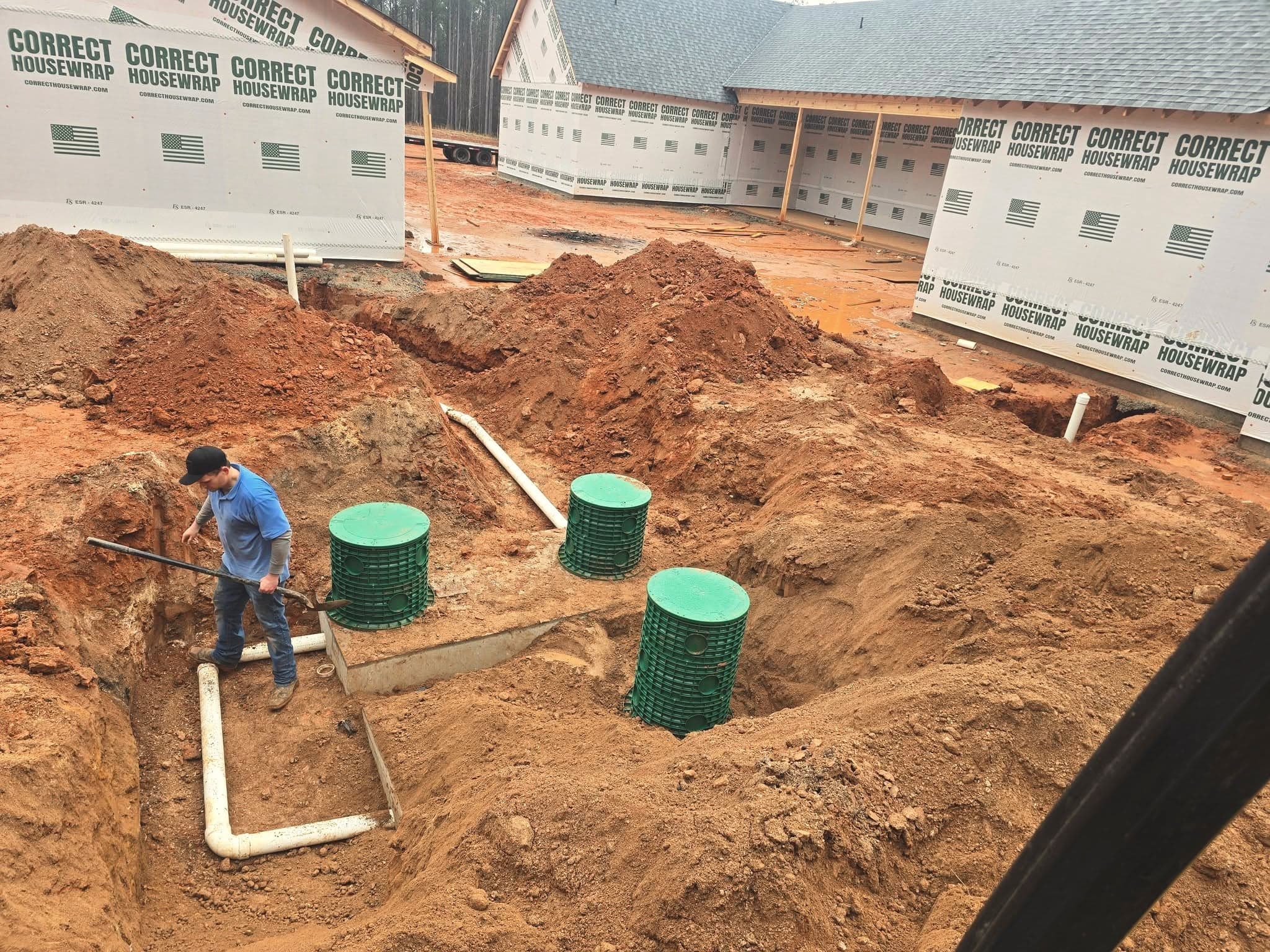
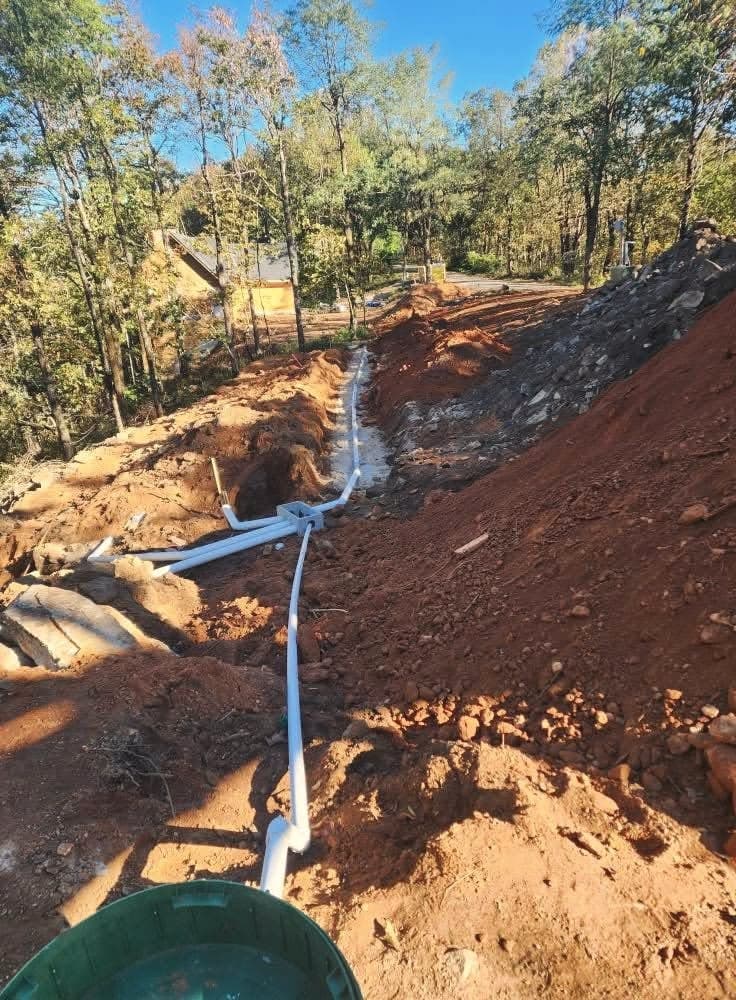
The trenches and tank stay open until Environmental Health inspects them and issues written approval. Only then does backfill happen. Keep the final inspection report with the deed papers; later buyers, lenders and pumpers will want to see it.
511-3-1-.03(4)Ga. Comp. R. & Regs. 511-3-1 (Georgia Secretary of State rules index)
Permits & the Georgia rules
What the rule says, and how each county applies it
- 01
Check sewer availability with the local water and sewer utility first.↗
- 02
Complete the county's soil or site evaluation (Level 3 report in GNR counties; a Level 4 report may be required for alternative systems).↗
- 03
Submit the permit application, lot sketch, floor plan and fee to county Environmental Health.↗
- 04
Build within the permit's 12-month window using a DPH-certified installer.↗
- 05
Call for the final inspection and wait for written approval before covering the system.↗
Georgia rule 511-3-1-.03(3)(a)
“…construction permits shall remain valid for not more than twelve months…”
Georgia rule 511-3-1-.03(4)
“No person may backfill or use [a system] until a final inspection…”
How it varies by county
Level 3 soil report first, then the GNR residential application; an approved report already on file can be reused. New-construction files need three copies of a lot sketch at 1" = 40' or larger and a labeled floor plan. The residential site evaluation, permit and initial inspection fee is $275.↗
Rockdale and Gwinnett (GNR Public Health)
Same GNR forms and Level 3 requirement as Newton. Where lot limitations are challenging, GNR can ask for an engineered site plan at 1" = 20' with 2-foot contours and a soils overlay.↗
Walton (Northeast Health District)
Use the Walton Site Evaluation Form, which asks for water supply, bedrooms, house design and system type. The building site must be staked before the Environmental Health Specialist visits. The 2024 schedule lists $425 for a residential new-system inspection.↗
Morgan (Northeast Health District)
Apply to Morgan County Environmental Health for a construction or repair permit. The August 2024 schedule lists $350 for a residential septic inspection ($400 at five bedrooms) and $75 for a site plan review.↗
Jasper (North Central Health District)
Jasper sits in a different health district from its neighbors. Permits and repair permits go through Jasper County Environmental Health in Monticello.↗
DeKalb (DeKalb Public Health)
The contractor files the Construction Permit and Site Approval application, which records soil series, loading rate, restrictive-horizon depth and field design. Residential site approval is $200 and the installation permit $250.↗
The whole story
Where permits stall, and how to keep yours moving
Most delays we see have nothing to do with the county being slow. They come from paperwork that disagrees with itself. A floor plan shows four bedrooms, the application says three, and the tank on the drawing is sized for three. Environmental Health will not guess which number is right, so the file sits until someone fixes it. Count every room that could be used as a bedroom, and make the sketch, the plan and the form all say the same thing.
The second common stall is ordering soil work too late. In the GNR counties nothing gets reviewed until the Level 3 report is in hand, and certified soil classifiers book up during building season. On a new home, the soil study belongs at the very front of the schedule, ideally before the lot is cleared, because the drain field and its reserved repair area often decide where the house can sit.
The third is the 12-month clock. A permit issued in spring for a house that doesn't break ground until the following summer can expire before the installer arrives. If your build slips, ask the county about the permit's status well before the anniversary rather than after.
Finally, remember that repairs are permitted too. A homeowner who swaps a crushed distribution box or adds a trench without a permit risks a failed inspection when the house sells. Our septic repair and drain field repair crews pull the county repair permit as part of the job.
FAQ
Georgia septic permit questions
Straight answers, with the rule or record behind them. Still unsure? Call and ask the crew that digs.
(678) 863-5620How long does it take to get a septic permit in Georgia?
The state gives the County Board of Health 20 days to approve or deny a completed application. GNR Public Health, which covers Gwinnett, Newton and Rockdale, plans on roughly 10 working days for plan review and its site visit. The bigger variable is soil work: a Level 3 report has to be finished before GNR reviews anything, and classifier schedules can add weeks.
Source: Georgia DPH Rules Chapter 511-3-1, On-Site Sewage Management Systems (Jan 2016)
Can a homeowner apply for their own septic permit?
Owners can apply, and GNR's residential application also lets a chosen septic contractor act as the owner's agent. What an owner can't do is install the system without DPH certification: Georgia Rule 511-3-1-.16 limits septic tank contractor work to people currently certified by the Department. Most owners let the certified installer handle the filing so the design and paperwork line up.
Source: GNR Residential Septic System Repair Permit Application and Requirements (Rev. 2024-05-03)
Do I need a permit to repair or replace a septic system?
Yes. Georgia's rules say repairs, replacements and additions to existing systems must be permitted and inspected, the same as a new installation. In Gwinnett, Newton and Rockdale that also means a Level 3 soil report for the repair permit. Skipping the permit can surface later as a problem at a home sale or loan closing.
Source: Ga. Comp. R. & Regs. 511-3-1 (Georgia Secretary of State rules index)
What is a Level 3 soil report and who needs one?
It is a detailed soil study prepared by a certified soil classifier recognized by the State of Georgia, mapping soil series and limiting layers where the system would go. GNR Public Health has required one for every new, repair and modifying-addition septic permit in Gwinnett, Newton and Rockdale since February 7, 2022. Other counties may run their own site evaluation instead.
Source: GNR Public Health — Septic Systems (Gwinnett, Newton & Rockdale)
How much does a septic permit cost in metro Atlanta?
It depends on the county. Newton's 2026 GNR schedule charges $275 for a residential site evaluation, permit and initial inspection. Walton lists $425 for a residential new-system inspection, Morgan $350 for a residential septic inspection, and DeKalb $200 for site approval plus $250 for the installation permit. Soil reports and design work are billed separately by the professionals who prepare them.
Source: GNR Environmental Health Fee Schedule — Newton County (effective Jan 1, 2026)
What happens if a Georgia septic permit expires?
A construction permit stays valid for no more than 12 months after it is issued. If the installation hasn't been completed and inspected by then, expect to go back to the county Environmental Health office before work continues. Check the issue date when you schedule the build, and ask the office early if construction is running behind.
Source: Georgia DPH Rules Chapter 511-3-1, On-Site Sewage Management Systems (Jan 2016)
Can the installer cover the system before the county inspects it?
No. Georgia Rule 511-3-1-.03(4) prohibits backfilling or using a septic system until the County Board of Health has made a final inspection and issued written approval. The trenches, pipe and tank stay exposed until the inspector signs off. Grading or filling over the area afterward without approval can void that approval.
Source: Ga. Comp. R. & Regs. 511-3-1 (Georgia Secretary of State rules index)
Why does the county care how many bedrooms the house has?
Georgia sizes septic tanks by bedrooms because bedrooms predict how many people, and how much wastewater, a house will have. The minimum is 1,000 gallons for one to four bedrooms, plus 250 gallons for each bedroom beyond four, and 50% more with a garbage grinder. Adding bedrooms later without approval can void a GNR permit.
Source: Georgia DPH Rules Chapter 511-3-1, On-Site Sewage Management Systems (Jan 2016)
Keep going
Related services, counties and guides
- Septic installation with county permitting
- Permitted septic repair
- Drain field repair and replacement
- Septic inspection for a sale or refinance
- Septic and sewer in Newton County
- Septic and sewer in Walton County
- Septic and sewer in Morgan County
- Septic and sewer in Jasper County
- Septic services in Covington
- Septic services in Monroe
- Why septic struggles in Georgia red clay
- Septic inspections when selling a Georgia home
- Metro Atlanta septic and sewer guide
Sources
Where these facts come from
Rules, costs and local facts on this page link to the agency, code or publisher that states them. Cost figures are third-party market ranges, not our prices — estimates are free.
Reviewed by Atlanta Water & Sewage Solutions · Last updated
- 1Georgia DPH Rules Chapter 511-3-1, On-Site Sewage Management Systems (Jan 2016) (2016)
- 2Ga. Comp. R. & Regs. 511-3-1 (Georgia Secretary of State rules index)
- 3Georgia DPH Manual for On-Site Sewage Management Systems (2026) (2026)
- 4Georgia DPH Certified Septic Tank Installers list (dated 9/18/2026) (2026)
- 5GNR Public Health — Septic Systems (Gwinnett, Newton & Rockdale) (2026)
- 6GNR Residential Septic System New Construction Permit Application and Requirements (Rev. 2024-05-03) (2024)
- 7GNR Residential Septic System Repair Permit Application and Requirements (Rev. 2024-05-03) (2024)
- 8GNR Environmental Health Fee Schedule — Newton County (effective Jan 1, 2026) (2026)
- 9Walton County Environmental Health Site Evaluation Form (Northeast Health District) (2023)
- 10Walton County EH Fees (effective August 1, 2024) (2024)
- 11Morgan County EH fees, effective August 1, 2024 (Northeast Health District) (2024)
- 12Northeast Health District — Sewage/Septic Systems
- 13North Central Health District — Jasper County Environmental Health
- 14DeKalb Public Health — Septic Systems (2026)
- 15DeKalb Public Health — OSSMS Construction Permit and Site Approval Application (Aug. 20, 2026) (2026)
- 16DeKalb Public Health Environmental Health Division Fee Schedule (effective January 1, 2024) (2024)
- 17USDA NRCS Web Soil Survey
Ready when you are
Rather have a pro look at it? Call the crew that digs.
Georgia treats a septic system as a public-health structure, so the county signs off at several points before the job is finished. This guide lays out each gate, what paperwork it takes, and how the offices east of Atlanta handle it differently.
(678) 863-5620- Georgia DPH-certified installer & pumper
- Residential & commercial
- Oxford, GA
Free estimate
or call (678) 863-5620