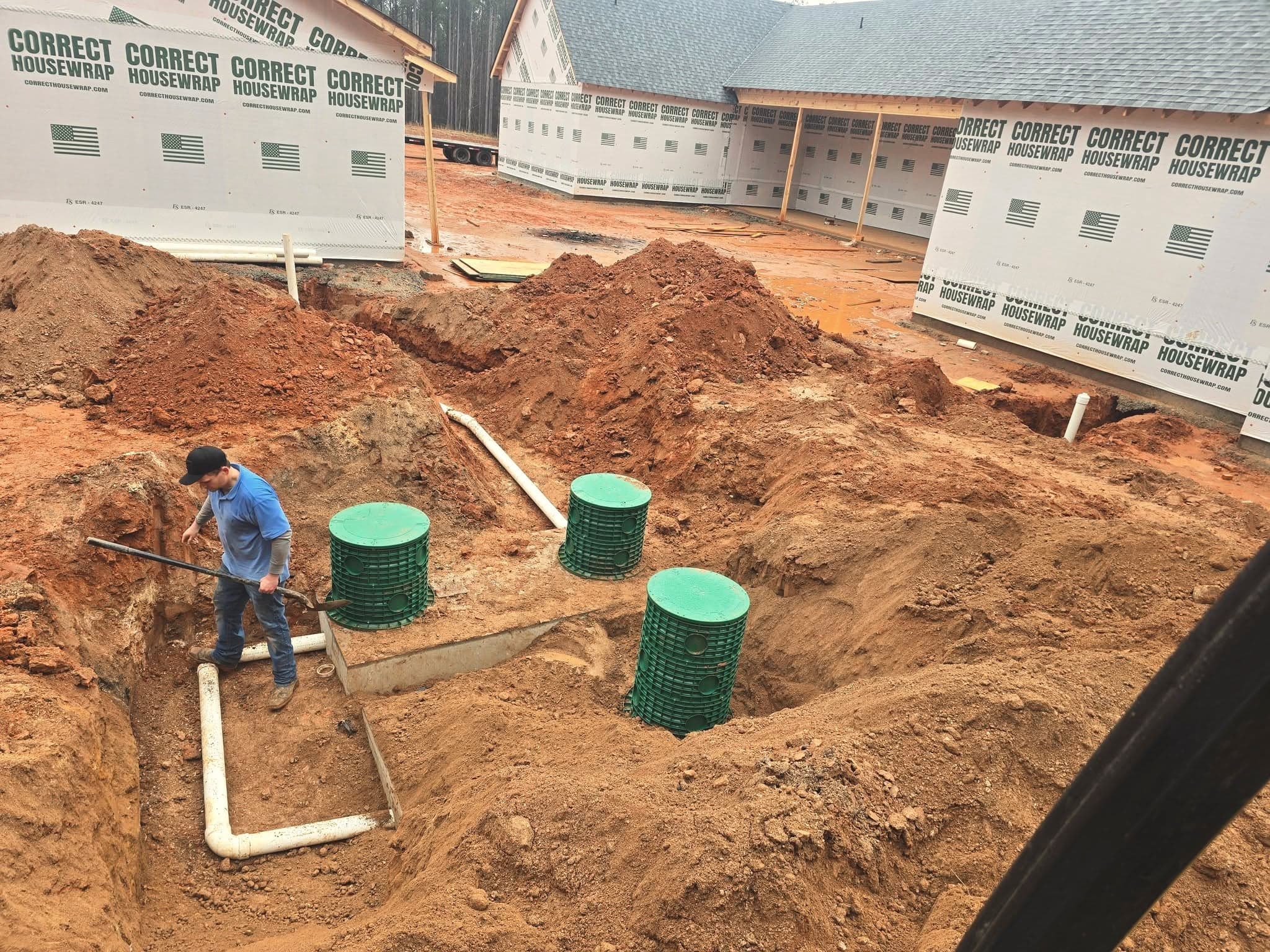
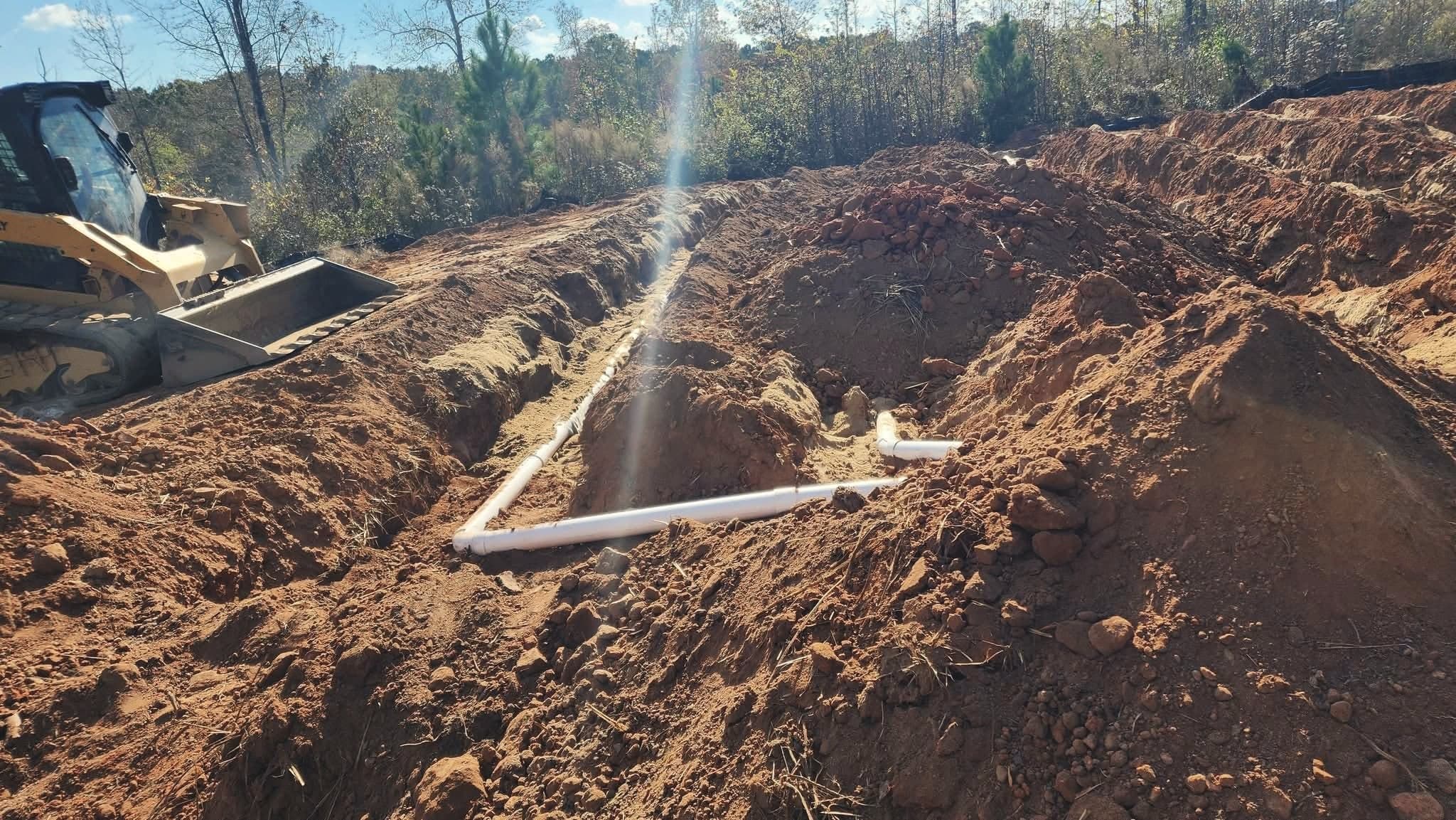
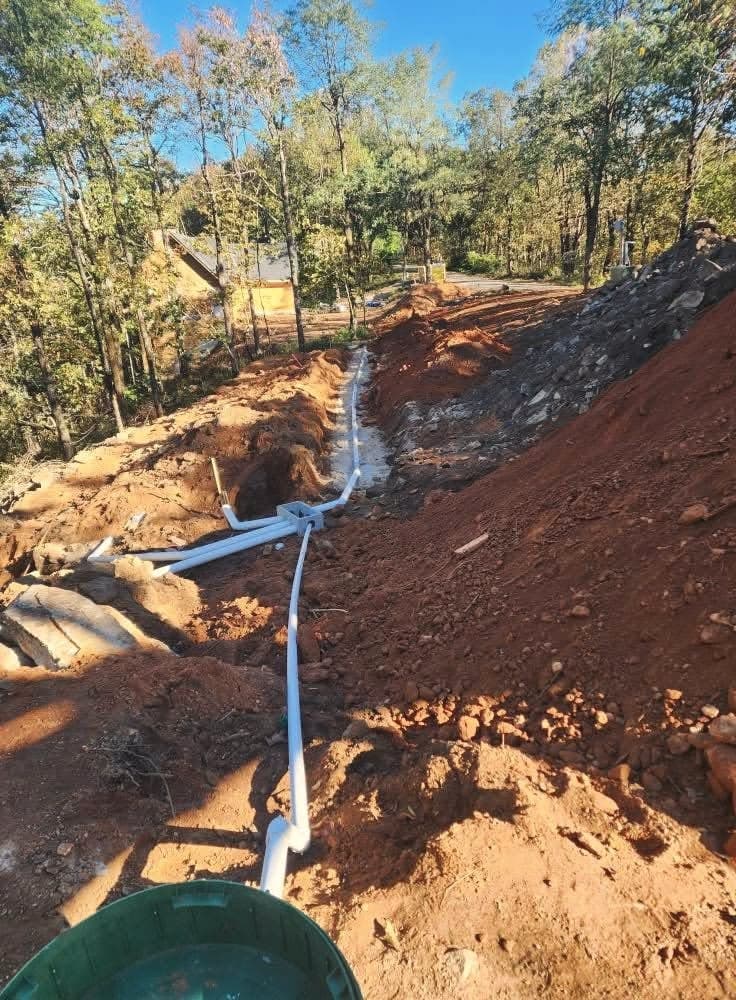
A commercial connection lives under the utility's sewer use ordinance in a way a house never does. NCWSA's is a good example because it spells out both the construction rules and the pretreatment program in one document. The building sewer must be ductile iron or ASTM D3034 PVC, with tight, waterproof joints. Ductile iron is required anywhere the line comes within 10 feet of a water service pipe. The building sewer can't share a trench with the water service. It can't run parallel to or within 3 feet of a bearing wall. And no backfill goes in until the Authority has inspected and approved the work (NCWSA §2.6, §2.9).
Pretreatment rules matter to a repair because they can put structures in the line. NCWSA can require grease, oil and sand interceptors when a business discharges enough to cause trouble; residential users are exempt. It can require a monitoring manhole on the building sewer, and industrial wastewater may not bypass that manhole. Monroe's grease control article requires a sampling manhole after the interceptor for food service establishments. So a restaurant lateral in Monroe isn't just a pipe. It's interceptor, sampling manhole, then pipe, and the repair has to keep all three working.
Rain is the other thing sewer use ordinances care about. Roof downspouts, foundation drains and other stormwater may not be tied into a building sewer under NCWSA's rules. If a line lets in groundwater or rainwater, NCWSA can require the owner to repair it, charge a higher rate for the extra treatment, or require disconnection. A commercial repair is a good time to find and remove any illegal storm tie-in, because the trench is already open.
Grease itself, including how often traps must be pumped and where the manifests go, is covered on our grease and sewer line page. This page stays on the pipe.