24/7 Emergency? (678) 863-5620

SEPTIC INSPECTION · METRO ATLANTA

Septic inspections for home sales and peace of mind in metro Atlanta

Before you list, buy or refinance a house on septic, find out what's actually in the ground: the tank, the baffles, the distribution box and the drain field. We open it up, pump it, probe the field and tell you in plain words what we found.
  • Georgia DPH-certified installer & pumper
  • Residential & commercial
  • Emergency line answered 24/7

Get a free estimate

or call (678) 863-5620

Property type
What do you need?
Rather talk? (678) 863-5620
Where's the property?
Is sewage backing up inside? (optional)
Who should we call?

By submitting, you agree we may call or text you about this request. Msg & data rates may apply. Reply STOP to opt out. SMS terms.

The short answer

Do you need a septic inspection to sell a house in Georgia?

Georgia's septic rules don't require an inspection when a house sells, but lenders, buyers and closing attorneys often ask for one. A septic inspection checks the tank, baffles, distribution box and drain field. Atlanta Water & Sewage Solutions, a Georgia DPH-certified septic installer and pumper in Oxford, GA, does visual and full pump-and-probe inspections.

Reviewed by Atlanta Water & Sewage Solutions · Last updated

Key facts

Septic inspection in Georgia: the facts that matter at closing

Each row links to the agency, code or publisher it comes from. Tap a source to check it yourself.

What Georgia rules, county Environmental Health offices and published cost guides say about septic inspections.
TopicWhat it saysSource
Required by state rule when a home sells?No point-of-sale mandate appears in Chapter 511-3-1. Rule .17(4) only sets how an evaluation is done if one is conducted.Georgia DPH Rules Chapter 511-3-1, On-Site Sewage Management Systems (Jan 2016), 2016
What a county evaluation is based onInspection records from the original install, maintenance records, and a site evaluation of current performance (DPH Manual, Section L).Georgia DPH Manual for On-Site Sewage Management Systems, Section L (March 2026), 2026
GNR county fee (Gwinnett, Newton, Rockdale)Visual Inspection (Existing System Evaluation): $145 on the Newton schedule effective January 1, 2026.GNR Environmental Health Fee Schedule — Newton County (effective Jan 1, 2026), 2026
Walton County letter conditionProof the tank was pumped within the last 5 years must be provided before a satisfactory existing-system evaluation letter is issued.Walton County Environmental Health — Service Request Form (Northeast Health District), 2023
Typical Atlanta market range, full inspection for a sale$300 to $600+ (typical market range per HomeGuide, 2023; not our price).HomeGuide — Septic Inspection Cost (Dec 7, 2023), 2023
If the inspection finds a failureRepairs, replacement or additions to existing systems must be permitted and inspected (511-3-1-.03(2)(c)).Georgia DPH Rules Chapter 511-3-1, On-Site Sewage Management Systems (Jan 2016), 2016
Who is responsible for the systemThe property owner, for operating and maintaining it (511-3-1-.17(2)).Georgia DPH Rules Chapter 511-3-1, On-Site Sewage Management Systems (Jan 2016), 2016
Who does the work hereAtlanta Water & Sewage Solutions is on the Georgia DPH certified installer and approved pumper lists dated 9/18/2026.Georgia DPH Certified Septic Tank Installers list (9/18/2026), 2026

Plain definitions

Inspection terms you'll see in a contract or report

Septic inspection
A septic inspection is a hands-on check of a house's on-site sewage system, from the pipe leaving the foundation through the tank and distribution box to the drain field.
Existing system evaluation
An existing system evaluation is the county Environmental Health office's review of a septic system's records and current condition, usually requested for a loan, a pool or an addition.
Visual inspection
A visual inspection looks at the yard, the fixtures and any exposed lids without pumping the tank or probing the field, so it can miss problems below grade.
Full (pump-and-probe) inspection
A full inspection pumps the tank so its walls, baffles and outlet can be seen, then probes the drain field lines to check for saturation and standing effluent.
Hydraulic load test
A hydraulic load test runs a measured volume of water into the system and watches how the tank and field respond, to see whether the field accepts a normal day's flow.
Distribution box (d-box)
The distribution box is the small concrete or plastic box after the tank that splits effluent between the drain field lines.
Baffle / outlet tee
A baffle or outlet tee is the fitting at each end of the tank that holds scum and sludge back so only the clearer middle layer flows to the field.
As-built
An as-built is the county's drawing of where the tank and field were actually installed, filed when the system passed its original inspection.

The whole story

Required vs requested: why Georgia septic inspections happen anyway

Here is the part people get wrong. Georgia's on-site sewage rules, Chapter 511-3-1, do not say a septic system must be inspected before a house changes hands. The only rule on the subject, 511-3-1-.17(4), says that *if* a performance evaluation of an existing system is conducted, it has to follow the procedure in the DPH Manual. That is a how-to rule, not a trigger.

So the inspection is usually driven by paper, not law. A buyer writes a septic inspection into the due-diligence terms of the purchase contract. A lender wants something showing the system works before it funds the loan. A closing attorney asks whether the county has a letter on file. Each of those parties can ask for a different thing, so the first question we ask when you call is simple: who is asking, and what exactly do they want to see?

Most of the time the answer is one of two documents. The first is a county letter, the result of an existing system evaluation by Environmental Health. The second is a contractor's inspection report, written by a septic company after it has opened and pumped the tank. They are not the same thing. The county looks at its records and the site. A contractor opens the tank and gets into the field lines. Some closings call for both.

One more wrinkle: the county evaluation application itself asks when the tank was last pumped, and Walton County won't issue a satisfactory letter without proof of a pump-out in the last 5 years. As a DPH-approved pumper we can pump the tank, inspect it while it's open, and hand you the pumping record the county wants, in one visit.

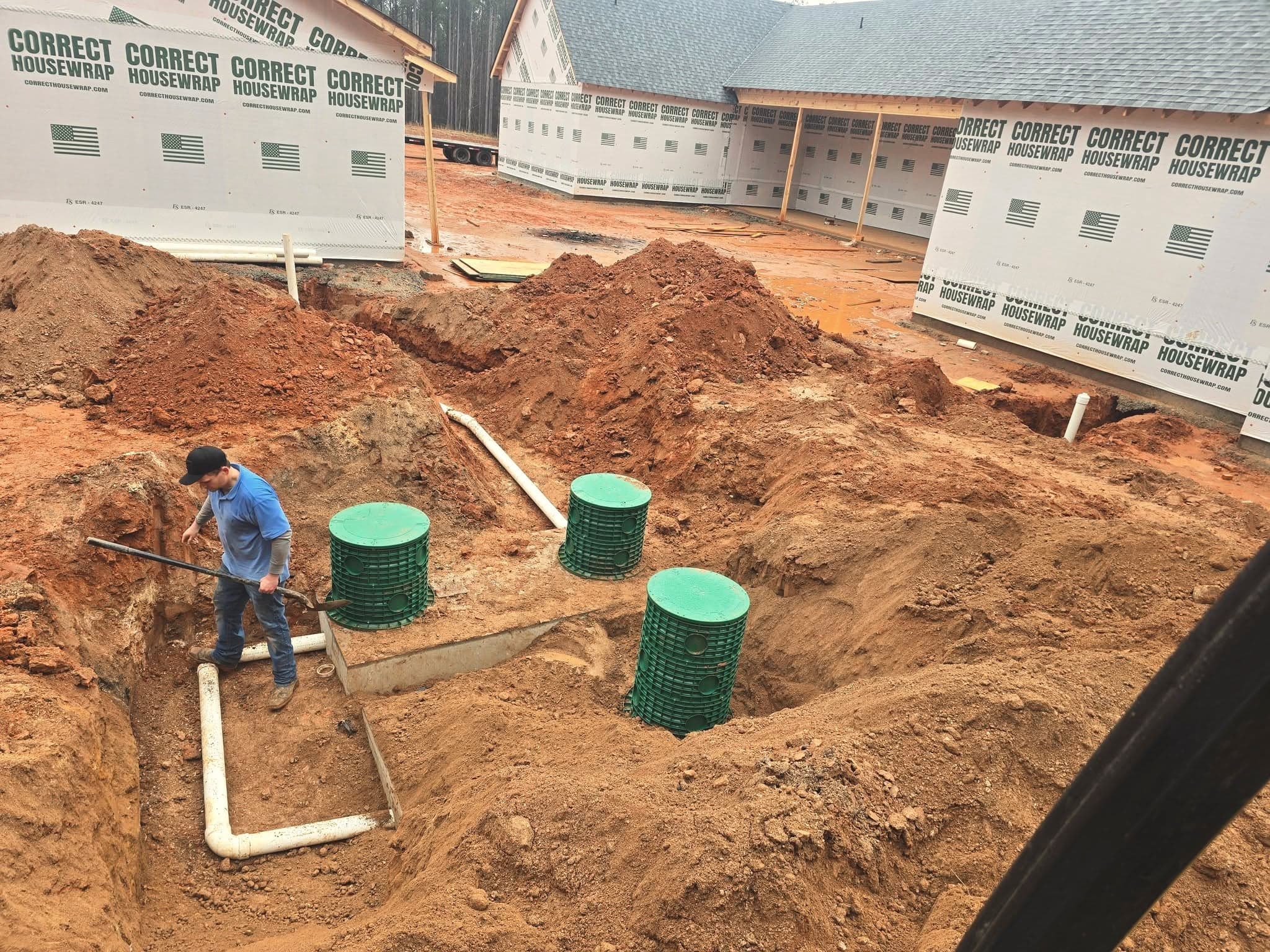
From our job files.

Your options

County evaluation, visual inspection or full inspection?

Three different things get called a "septic inspection" in a Georgia real estate deal. Pick the one that answers the question the buyer or lender is actually asking.

OPTION 01

County existing system evaluation

When it fits: The lender, closing attorney or a county permit (pool, addition, bedroom) needs an official letter. In GNR counties it is billed as a "Visual Inspection (Existing System Evaluation)" at $145 per the Newton fee schedule.

  • Comes from the office that permitted the system
  • Reviews install and maintenance records
  • An official letter from the permitting authority
  • Doesn't necessarily open or pump the tank
  • Scheduling runs on the county's calendar
  • May require a pumping record first (Walton: within 5 years)

OPTION 02

Visual contractor inspection

When it fits: A quick look before an offer, or a follow-up when the home inspector noted something in the yard.

  • Lowest cost
  • Fast to schedule
  • Can flag obvious surfacing or odor problems
  • Can't see baffles, tank walls or sludge depth
  • Won't find a crushed d-box or saturated line
  • Weak evidence if the deal is contested

HomeGuide notes that a visual inspection or dye test "may not detect all problems".

OPTION 03

Full pump-and-probe inspection

When it fits: You're buying and want to know what you're taking on, you're selling an older system with thin records, or the visual inspection raised a flag.

  • Tank pumped so walls, baffles and outlet are visible
  • Distribution box opened and field lines probed
  • Gives a pumping record for a county letter
  • Costs more and takes longer
  • Lids may need digging if there are no risers
  • Some shallow digging in the yard

How the job runs

What we check in a full septic inspection

This is the order we work in on a typical single-family system. Alternative systems (aerobic units, pump tanks, drip) add steps for the equipment and controls.
  1. 1

    Pull the records first

    We ask for the county permit, the as-built drawing and any pumping receipts. The bedroom count on the permit should match the house; if a bedroom was added since, the tank may be undersized under 511-3-1-.05 (1,000 gal for 1–4 bedrooms, plus 250 gal per extra bedroom).

    511-3-1-.05(3)Georgia DPH Rules Chapter 511-3-1, On-Site Sewage Management Systems (Jan 2016)

  2. 2

    Locate and expose the lids

    Using the as-built, the cleanout and a probe rod, we find the tank and uncover both compartment lids. No risers usually means digging 1 to 3 feet of red clay by hand.

  3. 3

    Run the house

    Toilets flushed, sinks and tubs run, a washer cycle if the seller allows it. We watch for slow drains and gurgling inside and listen for flow arriving at the tank outside.

    HomeGuide — Septic Inspection Cost (Dec 7, 2023)

  4. 4

    Pump and inspect the tank

    With the tank empty we can see the walls, the seams, the inlet and outlet baffles or tees, any effluent filter, and signs of groundwater leaking in. The DPH Manual warns that missing baffles let solids pass straight to the field.

    Georgia DPH Manual for On-Site Sewage Management Systems, Section L (March 2026)

  5. 5

    Check the inlet line

    If sewage backed up or the inlet sits low, we check the pipe between the house and the tank, often with a sewer camera inspection from the cleanout.

  6. 6

    Open the distribution box

    A tilted or cracked d-box sends all the flow down one line. We look at level, the outlets and whether solids have carried over from the tank.

  7. 7

    Probe the drain field

    We probe along each line for standing effluent, soft saturated soil and odor, and walk the field for lush stripes, wet spots or surfacing.

  8. 8

    Hydraulic load test (when it's warranted)

    On a sale where the field is in question, we can introduce a measured volume of water and watch how the tank level and field respond over the test period.

  9. 9

    Write it up

    You get a plain-language report: what we saw, photos, what passed, what needs attention, and whether any fix would need a county repair permit.

Warning signs

Red flags that call for a full inspection, not a quick look

If you're buying, walk the yard and ask the seller these questions before your due-diligence period runs out. Any one of these is a reason to pump and probe.

Buying or selling on septic? Call (678) 863-5620

  • 1. No record of the tank being pumpedUGA Extension recommends pumping every 3 to 7 years. A tank that's gone a decade or more is where baffle and field damage hide.
  • 2. Green stripes or soggy ground over the fieldLines of greener grass, or ground that stays soft days after rain, can mean effluent is reaching the surface.
  • 3. Slow drains or gurgling when fixtures runUGA lists slow drains, backed-up plumbing and gurgling among the signs of septic trouble.
  • 4. Bedrooms added since the permitA three-bedroom permit on a five-bedroom house means the tank and field were sized for less flow than the house can produce.
  • 5. Nobody knows where the tank isNo risers, no as-built, no sketch. Finding it is step one, and the county record is the fastest route.
  • 6. A pool, patio or drive near the fieldGeorgia requires the field to sit at least 15 ft from pools and 5 ft from drives (511-3-1-.07(3)). Hardscape built later can crush lines.

Worth knowing

Finding the permit record and as-built before you list

The best septic inspection starts at the Environmental Health office, not in the yard. When a Georgia system is installed it is permitted and inspected by the county, so there is usually a paper trail: the permit, the approved bedroom count, and often a drawing of where the tank and field went. The DPH Manual says county evaluations lean on exactly that: install inspection records, maintenance records and a site visit.

Where to look depends on which side of a county line you're on. In Gwinnett, Newton and Rockdale, the office is GNR Health Environmental Health. Gwinnett went further back in 2011 and put digitized septic location records into its public GIS, so you can often see the tank and field before anyone picks up a shovel. In Walton, Morgan and the rest of the Northeast Health District, ask the county Environmental Health office. In DeKalb, DeKalb Public Health handles septic certification letters for loans and refinances.

If there is no record at all, that is itself a finding. Older rural houses around Oxford, Mansfield and Social Circle sometimes predate good record-keeping, or had a system replaced without anyone updating the file. We'll locate the tank physically, sketch it, and give you the sketch. UGA's advice is blunt: draw where it is so it's not lost again.

The best septic inspection starts at the Environmental Health office, not in the yard.

Permits & the Georgia rules

If the inspection fails before closing

A failed inspection doesn't kill a sale by itself, but it starts a clock. Any repair has to be permitted and inspected by the county, and in GNR counties that means a Level 3 soil report first. Here is the sequence, and where it differs by county.
  1. 01

    Pin down what failed: a baffle or tee, a lid, the d-box, the inlet pipe, or the drain field itself. The first four are often small repairs; a failed field is a bigger job.

  2. 02

    Check whether public sewer is within 200 ft of the property line. If it is, a failing system generally has to connect instead of being repaired (a compliant residential repair under 2,000 gpd may be exempted).

  3. 03

    In Gwinnett, Newton and Rockdale, order a Level 3 soil report from a certified soil classifier; GNR has required one for repair permits since February 7, 2022.

  4. 04

    File the repair permit application (the contractor can apply as the owner's agent) and allow GNR about 10 working days for review and a site visit.

  5. 05

    Make the repair with a DPH-certified contractor and have it inspected before it's covered; the permit is good for 12 months.

  6. 06

    Get the final approval to the closing attorney, along with the pumping record if the county letter needs one.

Georgia rule 511-3-1-.17(4)

If a performance evaluation of an existing system is conducted, the evaluation shall be performed in accordance with the procedure set forth in the Manual…
Read the rule

Georgia rule 511-3-1-.03(2)(c)

Repairs, replacement, or additions to existing systems must be permitted and inspected.
Read the rule

Georgia rule 511-3-1-.03(1)(a)

…immediate connection shall be made to a public or community sewerage system if such a system is available.
Read the rule

Georgia rule 511-3-1-.16(1)

No person shall perform services as a soil classifier, septic tank contractor, inspection personnel, maintenance personnel, or sewage pumper unless that person is currently certified…
Read the rule

How it varies by county

  • Newton, Rockdale & Gwinnett (GNR Health)

    The Existing Septic System Evaluation Application lists "Loan Closing for Home Sale or Refinance" as a reason and asks when the tank was last pumped. The visual inspection fee is $145 on the 2026 Newton schedule; a reinspection is $175.

  • Walton (Northeast Health District)

    The Service Request Form covers "Refinance/Purchase" evaluations and requires proof of pumping within 5 years for a satisfactory letter. The form lists $150 regular and $225 priority; the August 2024 fee schedule lists $200 for a residential evaluation, so confirm with the office.

  • Morgan & other Northeast Health District counties

    Northeast Health District lists existing system evaluations among its septic services and requires inspections for permits and repair permits.

  • DeKalb (DeKalb Public Health)

    Septic certification letters for a loan, refinance or foster/adoption are requested through DeKalb Public Health's evaluation form; a repair must be permitted before a contractor does the work.

Worth knowing

Who pays, and how a failed system usually gets settled

No Georgia rule assigns the cost of a septic inspection to the buyer or the seller, so your purchase contract does. In practice a buyer usually pays for their own due-diligence inspection, and a seller who wants a clean listing pays for a pre-listing one. HomeGuide puts it the same way: in a sale, either side may pay depending on the rules where you are.

When the report comes back with a problem, the fix is a negotiation, and the numbers you negotiate with come from a real repair estimate, not a guess. A cracked outlet tee is a small line item. A failed drain field in slow Piedmont clay can mean a Level 3 soil report, a permit and a larger field. We give free on-site estimates, and because we are a certified installer as well as a pumper, the same crew that found the failure can permit, dig and rebuild it. You don't hand the report to a second company and start over.

Build time into the contract. Between the soil report, the county's review and an inspection before cover, a septic repair rarely fits in the last week before closing. The earlier in the due-diligence period the tank is opened, the more room everyone has.

From our job files.

Homes & businesses

Home inspections vs commercial property inspections

Residential

Houses

A house inspection is usually about a sale or a refinance: one tank, one field, sometimes a pump tank on a sloped lot. The checklist above is built for that.

Also common: pre-listing inspections for sellers, and evaluations before a pool, addition or extra bedroom, which counties treat as their own permit question.

  • Sale, purchase or refinance
  • Pool or addition planning
  • Inherited or long-vacant houses

Commercial

Churches, shops and small commercial sites

Commercial systems are sized in gallons per day, not bedrooms, and a change of use (say, a house becoming an office) is its own trigger on the GNR evaluation form. Grease and high-strength waste add a pretreatment question.

We inspect commercial tanks and fields the same way, open and pumped, and flag whether the system was sized for how the building is used today.

  • Change of use
  • Property acquisition due diligence
  • Systems over residential scale
Commercial septic repair

What it costs

What a septic inspection typically costs in Georgia

These are published third-party market ranges, not our prices. We give free on-site estimates. County Environmental Health fees are separate and set by each county.

What moves the price

Ranges above are published third-party typical market ranges (HomeGuide, Septic & Well Pro) and county fee schedules, not Atlanta Water & Sewage Solutions prices. Every property is different; call (678) 863-5620 for a free on-site estimate.

Free estimate: (678) 863-5620
  1. 01Buried lidsNo risers means digging to the lids by hand, and in compacted red clay that is real time on a shovel.
  2. 02Pumping requiredA full inspection needs an empty tank, and Walton's county letter needs a pumping record within 5 years.
  3. 03System typePump tanks, alarms, aerobic units and drip systems add components to test beyond a gravity tank and trenches.
  4. 04County fee on topThe county evaluation is billed by Environmental Health: $145 in GNR's Newton schedule, $200 on Walton's 2024 schedule.
  5. 05Camera workIf the inlet pipe is suspect, scoping it is an added step, not part of every inspection.

Where we do this

SEPTIC INSPECTION across the east metro

Every county runs its own permits and utilities. Start with your county's rules, or jump to your town.

FAQ

Septic inspection questions from Georgia buyers and sellers

Straight answers, with the rule or record behind them. Still unsure? Call and ask the crew that digs.

(678) 863-5620

Is a septic inspection required to sell a house in Georgia?

Not by state rule. We found no point-of-sale requirement in Georgia's septic rules, Chapter 511-3-1; rule .17(4) only says how an evaluation must be done if one is conducted. In practice lenders, buyers and closing attorneys often ask for a county letter, a contractor inspection or both, so plan on one if the house is on septic.

Source: Georgia DPH Rules Chapter 511-3-1, On-Site Sewage Management Systems (Jan 2016)

What is a septic letter for closing?

It's the county Environmental Health office's written result of an existing system evaluation. GNR's application lists loan closing for a sale or refinance as a reason to request one. Walton County won't issue a satisfactory letter without proof the tank was pumped within the last 5 years, so the pump-out usually comes first.

Source: GNR Newton Environmental Health — Existing Septic System Evaluation Application (Rev. 9/9/2016)

What's the difference between a visual and a full septic inspection?

A visual inspection checks the yard, the fixtures and any exposed lids without pumping. A full inspection pumps the tank so the walls, baffles and outlet can be seen, opens the distribution box and probes the drain field lines. For a purchase, the full inspection is the one that finds hidden damage before you own it.

Source: HomeGuide — Septic Inspection Cost (Dec 7, 2023)

How long does a septic inspection take?

The on-site work usually takes a few hours; HomeGuide cites 1 to 3 hours, depending on how easy the lids are to reach and what turns up. Scheduling a county evaluation is separate and runs on the Environmental Health office's calendar, so request it early in your due-diligence period.

Source: HomeGuide — Septic Inspection Cost (Dec 7, 2023)

Can the seller's recent pump-out receipt replace an inspection?

It helps, but it isn't the same thing. A pumping receipt shows the tank was emptied, and Walton County needs one for its letter. It doesn't tell you whether the baffles are intact, whether the d-box is level or whether the field lines are saturated. Ask whether the pumper noted the tank's condition while it was open.

Source: Walton County Environmental Health — Service Request Form (Northeast Health District)

What happens if the drain field fails the inspection?

A field repair needs a county permit and inspection under 511-3-1-.03. In Gwinnett, Newton and Rockdale that starts with a Level 3 soil report. If public sewer is within 200 ft, a failing system generally must connect instead. Buyer and seller then settle the cost through the contract; a real repair estimate makes that negotiation faster.

Source: Georgia DPH Rules Chapter 511-3-1, On-Site Sewage Management Systems (Jan 2016)

Where do I find the septic permit and as-built for a house?

Start with the county Environmental Health office that permitted the system: GNR Health for Gwinnett, Newton and Rockdale, the county office in the Northeast Health District for Walton and Morgan, and DeKalb Public Health in DeKalb. Gwinnett also has digitized septic location records in its public GIS.

Source: Gwinnett County — Septic Tank Records Now Available Online (news release, June 14, 2011)

Should I get a septic inspection even if I'm not selling?

If the tank hasn't been opened in years, yes. UGA Extension recommends having it inspected and pumped every 3 to 7 years, and Georgia rule 511-3-1-.17(2) makes the owner responsible for operating and maintaining the system. Finding a broken outlet tee early is far cheaper than replacing a clogged field later.

Source: UGA Extension Bulletin B1421 — A Beginner's Guide to Septic Systems (Oct 2024)

Sources

Where these facts come from

Rules, costs and local facts on this page link to the agency, code or publisher that states them. Cost figures are third-party market ranges, not our prices — estimates are free.

Reviewed by Atlanta Water & Sewage Solutions · Last updated

  1. 1Georgia DPH Rules Chapter 511-3-1, On-Site Sewage Management Systems (Jan 2016) (2016)
  2. 2Ga. Comp. R. & Regs. 511-3-1 (Georgia Secretary of State rules index)
  3. 3Georgia DPH Manual for On-Site Sewage Management Systems, Section L (March 2026) (2026)
  4. 4GNR Health — Septic Systems (2026)
  5. 5GNR Newton Environmental Health — Existing Septic System Evaluation Application (Rev. 9/9/2016) (2016)
  6. 6GNR Environmental Health Fee Schedule — Newton County (effective Jan 1, 2026) (2026)
  7. 7GNR Residential Septic System Repair Permit Application & Requirements (Rev. 2024-05-03) (2024)
  8. 8Northeast Health District — Sewage/Septic Systems
  9. 9Walton County Environmental Health — Service Request Form (Northeast Health District) (2023)
  10. 10Walton County Environmental Health Fees (effective August 1, 2024) (2024)
  11. 11DeKalb Public Health — Septic Systems
  12. 12Gwinnett County — Septic Tank Records Now Available Online (news release, June 14, 2011) (2011)
  13. 13UGA Extension Bulletin B1421 — A Beginner's Guide to Septic Systems (Oct 2024) (2024)
  14. 14HomeGuide — Septic Inspection Cost (Dec 7, 2023) (2023)
  15. 15HomeGuide — Septic Tank Pumping Cost (Oct 2, 2023) (2023)
  16. 16Septic & Well Pro — Septic Inspection Georgia: Home Sale Guide (updated April 10, 2026) (2026)
  17. 17Georgia DPH Certified Septic Tank Installers list (9/18/2026) (2026)
  18. 18Georgia DPH Approved Septic Tank Pumpers list (9/18/2026) (2026)

Ready when you are

Need septic inspection? Call the crew that digs.

Before you list, buy or refinance a house on septic, find out what's actually in the ground: the tank, the baffles, the distribution box and the drain field. We open it up, pump it, probe the field and tell you in plain words what we found.

(678) 863-5620
  • Georgia DPH-certified installer & pumper
  • Residential & commercial
  • Oxford, GA

Property type
What do you need?
Rather talk? (678) 863-5620
Where's the property?
Is sewage backing up inside? (optional)
Who should we call?

By submitting, you agree we may call or text you about this request. Msg & data rates may apply. Reply STOP to opt out. SMS terms.

Call nowFree Estimate