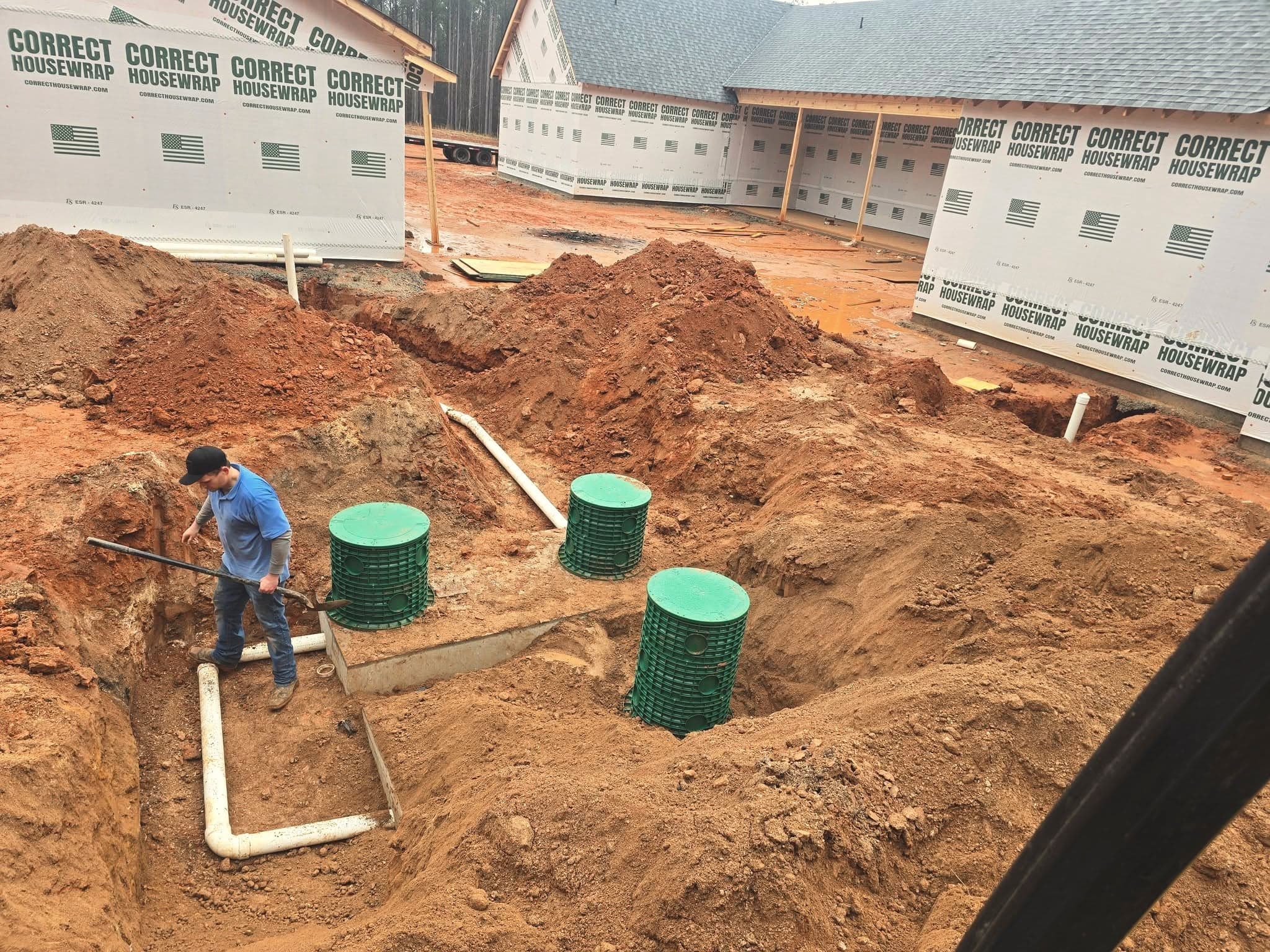
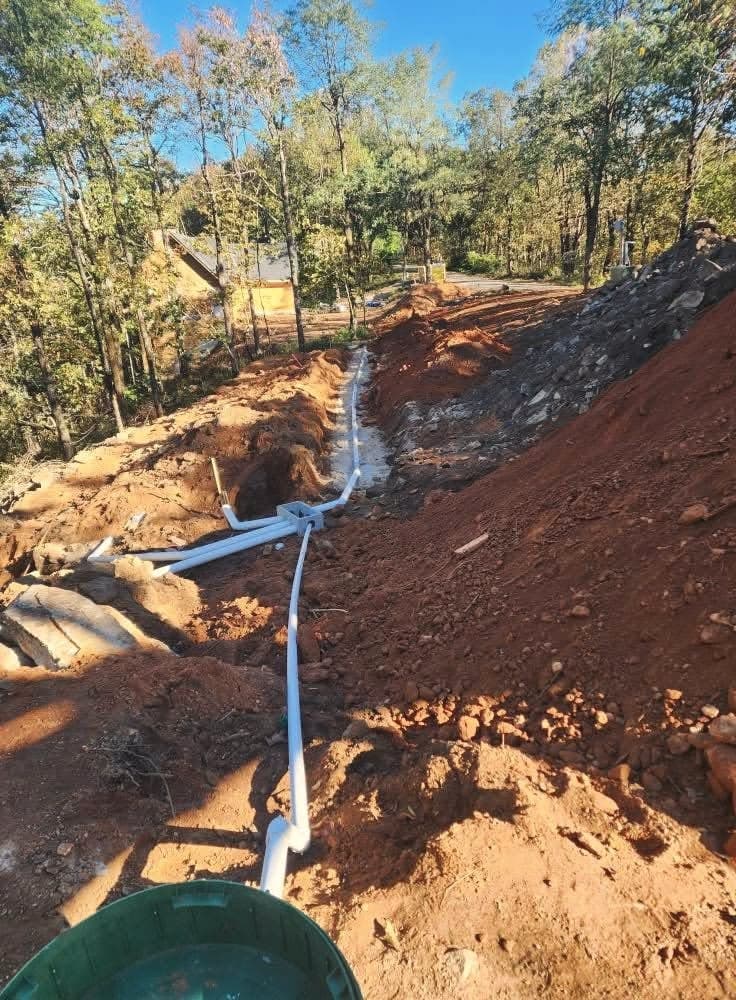
The fix depends on where the blockage is, so the first ten minutes on the phone are questions. Here's how we narrow it down, and you can do most of it yourself.
**One fixture backs up, the rest drain.** That's a branch clog inside the house, not an emergency at the tank or the street. Stop using that fixture.
**The lowest drain in the house backs up when you flush or run water upstairs.** That's the main house drain or everything beyond it. Go outside and find the cleanout. If you pop the cap and it's full of standing sewage, the blockage is downstream of the cleanout: the lateral or the tank inlet. If it's dry, the clog is between the house and the cleanout.
**You're on city sewer and neighbors have it too.** That points at the public main, which is the utility's problem. Gwinnett DWR tells owners to call its own 24-hour line (678.376.7000) for backups and clears blockages in the main and in the lateral inside the right-of-way. NCWSA still clears clogs in the street main. Call the utility first; if their line is clear, the blockage is on your side.
**You're on septic and the tank hasn't been pumped in years.** A full tank or a clogged outlet baffle is the most common cause. The fix is usually pumping, plus a look at the baffle and filter. We're on the DPH approved pumper list and can pump the tank.
**The alarm is going off.** On a system with a pump tank, the alarm means the water level is too high. The pump may have failed, a float may be stuck, a breaker may have tripped, or the field may be refusing water. See our guide to a septic alarm going off.
**It's been raining for days.** A backup after heavy rain is often a drowned drain field, not a broken part. EPA says not to pump while the soil is saturated because silt can get into the tank and field. A tank emptied in waterlogged ground can even shift or float. Sometimes the right emergency move is to cut water use to almost nothing and wait for the ground to drain. Our guide on septic backing up after rain walks through it.
**Sewage is surfacing in the yard.** That's a failing field or a broken line, and it's the one that brings the health department in. Georgia's rules prohibit letting effluent discharge to the ground surface. It needs a permitted repair.