
RESIDENTIAL · SEWER · SEPTIC · WATER LINES
Home sewer, septic and water lines in metro Atlanta — one call
- Georgia DPH-certified installer & pumper
- Homes across metro Atlanta
- Emergency line answered 24/7
Get a free estimate
or call (678) 863-5620The short answer
Who fixes the pipes outside a house in metro Atlanta?
In Georgia the homeowner is responsible for the septic system and, under most local utilities, the sewer lateral and the water line on the house side of the meter. Atlanta Water & Sewage Solutions, a Georgia DPH-certified septic installer and pumper in Oxford, GA, repairs and replaces all three for homes across metro Atlanta.
Reviewed by Atlanta Water & Sewage Solutions · Last updated
Who does the work
One crew, the whole line
- Georgia DPH Certified Septic Tank Installer Listed by the Georgia Department of Public Health
- Georgia DPH Certified Septic Tank Pumper Listed by the Georgia Department of Public Health
- Homeowners across metro Atlanta, from our shop in Oxford, GA
Start here
What's happening?
- 01
Slow drains
One slow sink is usually a local clog. Every drain slow at once points outside the house: a full septic tank, or roots and sags in the sewer line that a sewer camera inspection can find. Read how often to pump a septic tank in Georgia.
Scope the line - 02
Sewage smell
Odor in the yard over the tank or field, or indoors near floor drains, can mean a full tank, a cracked lid or a broken pipe leaking into the soil. Start with septic repair or sewer line repair, and if you're not sure which you have, see septic or sewer: how to tell.
Septic repair - 03
Soggy yard
A wet patch over the drain field that smells is a septic problem; see drain field repair and the signs a drain field is failing. A wet strip with clean water between the meter and the house is more likely a water line leak.
Drain field repair - 04
Alarm going off
An alarm on a septic system usually means high water in a pump tank: the pump, float or power has failed. Cut water use and read what to do when the septic alarm goes off. Pump replacement is part of septic repair.
Septic alarm guide - 05
Low water pressure
If the whole house lost pressure, check with your utility first. If the street side is fine, the problem is often on your side of the meter: a leaking service line or a failing pressure-reducing valve. See water line repair and installation and the cost guide.
Water line repair - 06
Buying or selling
On septic, get a septic inspection and read whether Georgia requires one to sell. On sewer, an older house deserves a sewer camera inspection before your due-diligence period ends.
Septic inspection
Key facts
Homeowner facts for sewer, septic and water lines in Georgia
Each row links to the agency, code or publisher it comes from. Tap a source to check it yourself.
| Topic | What it says | Source |
|---|---|---|
| Georgia homes on septic | 36.8%, vs 25% nationally (UGA CAES). | UGA CAES News — Georgia septic systems (Jan 16, 2014), 2014 |
| Who maintains a septic system | The property owner is responsible for operating and maintaining it (511-3-1-.17(2)). | Georgia DPH Rules Chapter 511-3-1, On-Site Sewage Management Systems (Jan 2016), 2016 |
| How often to pump | Every 3 to 7 years (UGA Extension); Gwinnett County advises pumping and inspection every 3 to 5 years. | UGA Extension Bulletin B1421 — A Beginner's Guide to Septic Systems (Oct 2024), 2024 |
| When a house must be on sewer | If public sewer is available within 200 ft of the property line or in an abutting right-of-way (511-3-1-.03(1)). | Georgia DPH Rules Chapter 511-3-1, On-Site Sewage Management Systems (Jan 2016), 2016 |
| Sewer lateral (Gwinnett example) | Yours from the house all the way to, and including, the tie-in at the county sewer. | Gwinnett County DWR — Sewer Lateral Ownership and Responsibility |
| Water service line (Gwinnett example) | Everything on the customer's side of the meter, including leaks between meter and house, is the owner's. | Gwinnett County DWR — Resident Responsibility |
| Septic repairs | Must be permitted and inspected by the county (511-3-1-.03(2)(c)). | Georgia DPH Rules Chapter 511-3-1, On-Site Sewage Management Systems (Jan 2016), 2016 |
| Our certifications | Georgia DPH certified septic installer and approved pumper, both lists dated 9/18/2026. | Georgia DPH Approved Septic Tank Pumpers list (9/18/2026), 2026 |
The whole story
Septic or sewer? Five ways to tell in an afternoon
It sounds like something every owner would know, but it is easy to buy a house without anyone saying it out loud. It matters, because a septic problem and a sewer problem look alike from inside the house and are fixed in completely different ways.
**1. Read the water bill.** A sewer customer is usually billed for sewer service along with water. No sewer charge on the bill is a strong hint you're on septic. A private well and no water bill at all usually means septic too.
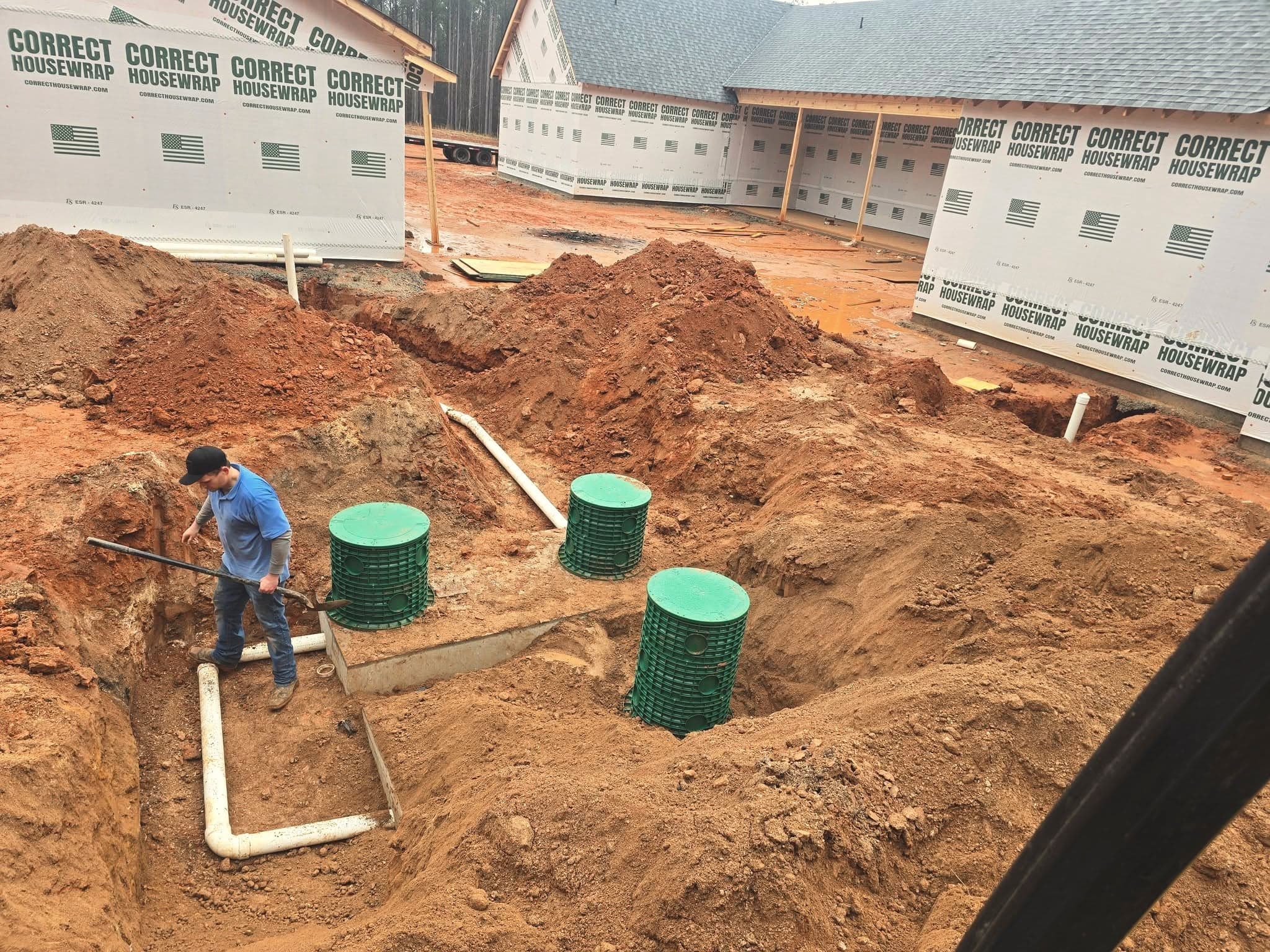
**2. Look for lids and a cleanout.** A septic tank has one or two lids, sometimes on green or black plastic risers, and Georgia rules say a tank should sit about 10 ft from the foundation. A sewer lateral has a cleanout, a capped pipe near the house and, in Gwinnett, often a second one at the right-of-way. Some septic houses have a cleanout too, so lids are the better tell.
**3. Check the county records.** Septic systems are permitted by county Environmental Health: GNR Health for Gwinnett, Newton and Rockdale, the Northeast Health District for Walton and Morgan, and DeKalb Public Health. A permit on file answers the question. Gwinnett has also put digitized septic location records in its public GIS.
**4. Ask the utility.** The water and sewer provider can tell you whether your address has a sewer account and whether a main runs past the lot.
**5. Look at the neighborhood.** Older in-town streets in Covington, Conyers and Monroe are largely sewered; rural roads around Oxford, Mansfield, Social Circle and Jersey are largely septic. Gwinnett alone, per the county, has an estimated 30% of its population on septic. Neighborhood patterns are a clue, not proof, so confirm with one of the steps above.
Plain definitions
The whole line, piece by piece
- Building drain
- The building drain is the pipe under the house that gathers every toilet, sink and tub and carries it out through the foundation.
- Cleanout
- A cleanout is the capped access pipe in the yard or at the foundation where sewer lines are cleared and cameras go in.↗
- Sewer lateral
- The sewer lateral is the private pipe running from the house to the public sewer main in the street.↗
- Septic tank
- A septic tank is a buried, usually two-compartment tank where solids settle and scum floats so only the clearer middle layer flows on.↗
- Drain field
- The drain field (also called a leach field or absorption field) is the set of buried trenches where effluent from the tank soaks into the soil.↗
- Water service line
- The water service line is the pipe from the utility's meter to the house, which in most metro utilities belongs to the owner.↗
- Pressure-reducing valve
- A pressure-reducing valve is the fitting on the house side of the meter that keeps street pressure from overloading household plumbing.↗
Worth knowing
How the pieces connect, from meter to drain field
Picture a house from the curb. Clean water comes in from the utility's main, through the meter box near the street, and up a buried service line to the house. Used water leaves the other way: down through the building drain, out past the foundation, and into the ground again. On a sewered lot it runs through the lateral to a main in the street. On a septic lot it runs to a tank in the yard, then to a distribution box, then out into the drain field trenches.
Everything a homeowner calls "the plumbing" inside the walls is only the middle of that route. The expensive failures happen at the ends, underground, where you can't see them: a root-split clay joint in the lateral, a baffle rotted off inside the tank, a field line crushed by a truck, a service line leaking into the red clay for months before the bill jumps.
Those failures don't respect trade boundaries either. A backed-up toilet might be a full tank, a broken inlet pipe, or a field that has stopped taking water. A company that only pumps tanks, or only snakes drains, can only fix its piece. We work the whole run. We pump and inspect tanks, scope lines, repair and replace laterals, water lines and drain fields, and do the excavation all of it takes. When you call us, the diagnosis isn't limited to the one thing a single-trade company happens to sell.
Picture a house from the curb.
Who owns what
Which part is yours? Ownership lines by local utility
Gwinnett County DWR (sewer)
The owner maintains the entire sewer lateral, including the connection to the public sewer; a cleanout at the right-of-way is the county's to maintain.↗
Where the line sits: Connection to the public sewer
Gwinnett County DWR (water)
DWR maintains the main, the pipe to the meter and the meter; everything on the customer's side of the meter is the owner's.↗
Where the line sits: Meter
Newton County Water & Sewerage Authority
The owner maintains the sewer service line from the building to the connection with the public main, and the water line from the meter to the building.↗
Where the line sits: Sewer tap at the main / water meter
City of Covington (sewer)
Customers maintain the sewer pipes from their plumbing to the city street line or the sewer main, whichever is nearer.↗
Where the line sits: Street line or main, whichever is nearer
Rockdale Water Resources
The county maintains sewer service lines to the right-of-way and water lines through the meter; the customer owns the rest, including the right-of-way sewer cleanout and a backflow preventer.↗
Where the line sits: Right-of-way (sewer) / meter (water)
Walton County Water Department
The county handles everything up to and through the meter. From the meter toward the house, the water line plus any pressure-reducing or backflow valve are the customer's.↗
Where the line sits: Meter
DeKalb County Watershed Management
The owner maintains the building sewer on private property; the county owns the water system up to and including the meter.↗
Where the line sits: Property line (sewer) / meter (water)
Worth knowing
What Georgia expects from a homeowner
On a septic lot, the rule is short. Georgia's on-site sewage rules make the property owner responsible for properly operating and maintaining the system, and UGA Extension says the same in plain language: the owner is responsible for its operation, maintenance and repairs. Nobody from the county pumps your tank on a schedule.
In practice that comes down to a few habits. Have the tank inspected and pumped every 3 to 7 years, sooner for a big household. Keep grease, wipes, paper towels and coffee grounds out of the drains. Skip the additives; the Georgia DPH advisory discourages them and the DPH Manual says they are no substitute for pumping. Keep cars, sheds and pools off the drain field, where Georgia's rules set minimum distances. And keep a sketch of where the tank is.
On a sewered lot, the lateral from your house to the main is usually yours, and so is the water service line from the meter to the house. When a utility says "customer side," it means you pay for the repair. That's why knowing where your ownership line falls, before the backup, saves an argument later.
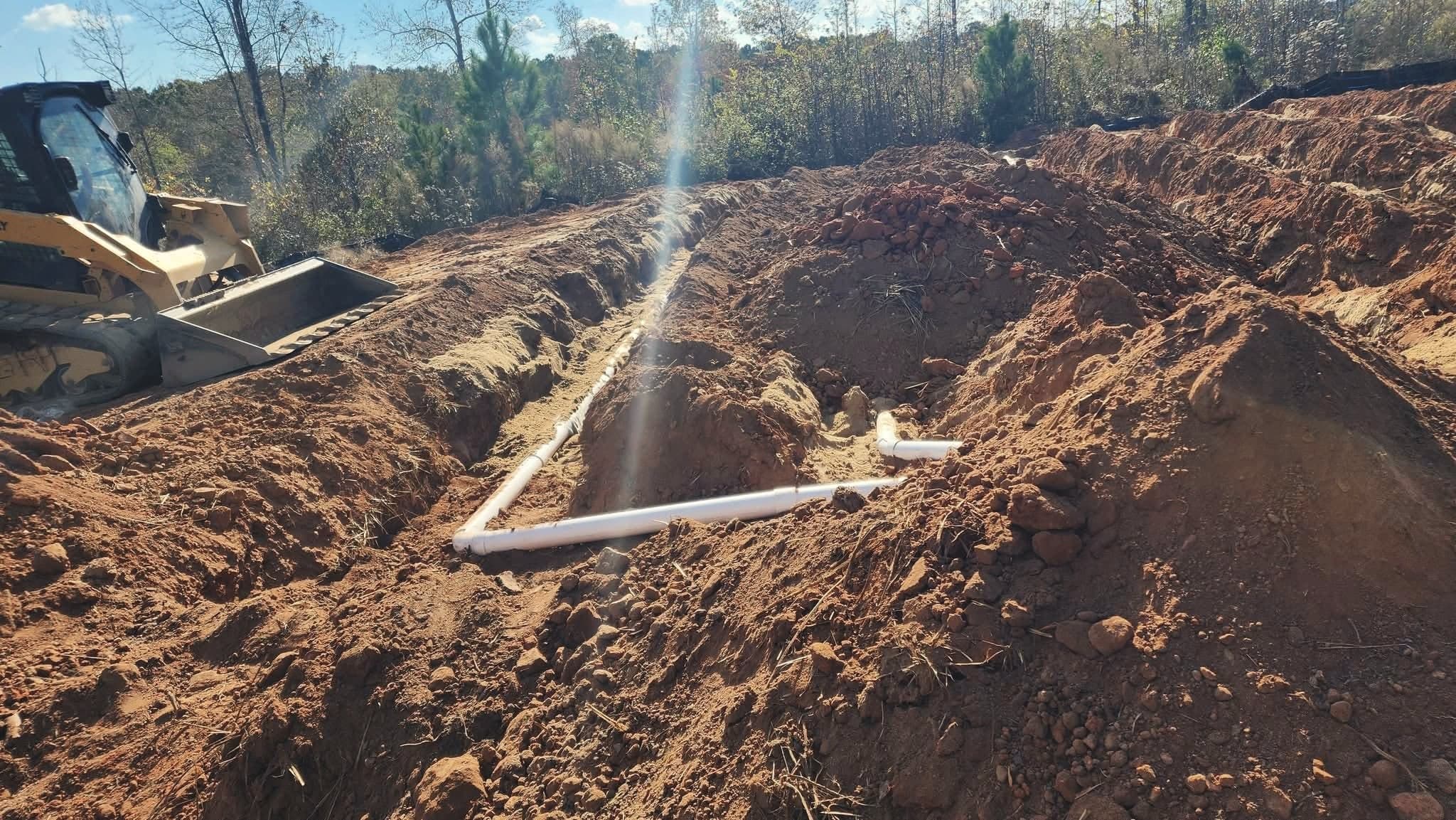
When a repair is needed on a septic system, it has to be permitted and inspected by county Environmental Health. We handle the permit. And if your house is failing on septic with public sewer within 200 ft of the property line, Georgia's rules generally require connecting to sewer instead, which is a septic-to-sewer conversion, not a repair.
How the job runs
What happens when you call
- 1
Tell us what you're seeing
Call (678) 863-5620. We'll ask which symptoms, how long, whether you're on septic or sewer, and whether sewage is inside the house. If it's an active backup, call now and we'll tell you how fast we can be there.
- 2
Free on-site estimate
We look at the site, open what needs opening and explain the likely cause in plain terms before any work is priced.
- 3
Diagnose the right piece
That may mean pumping and inspecting the tank, a camera inspection of the lateral, or pressure-checking the water line from the meter.
- 4
Permits, if the job needs them
Septic repairs are permitted and inspected by county Environmental Health; in GNR counties that starts with a Level 3 soil report. Sewer and water connections may need a utility or plumbing permit.
511-3-1-.03(2)(c)GNR Health — Septic Systems
- 5
Dig, repair, backfill
The same crew excavates, makes the repair, calls for any required inspection before cover, and backfills and grades the yard.
Georgia DPH Rules Chapter 511-3-1, On-Site Sewage Management Systems (Jan 2016)
- 6
Records you keep
You get what we found and what we did. For septic work, the county inspection approval goes in your file for the next time you sell or refinance.
Permits & the Georgia rules
Georgia rules homeowners run into
- 01
Septic repair or replacement: county Environmental Health permit, then inspection before the work is covered; permits are valid up to 12 months.↗
- 02
Gwinnett, Newton and Rockdale: a Level 3 soil report is required for all septic permits, including repairs, since February 7, 2022.↗
- 03
Pool, addition or extra bedroom on septic: expect a county existing-system evaluation first; Walton and GNR both list these as reasons to request one.↗
Georgia rule 511-3-1-.17(2)
“The property owner shall be responsible for properly operating and maintaining the on-site sewage management system…”
Georgia rule 511-3-1-.03(2)(c)
“Repairs, replacement, or additions to existing systems must be permitted and inspected.”
Georgia rule 511-3-1-.03(1)(a)
“Connection shall be made to a public or community sewage treatment system if such system is available within two hundred feet (200')…”
How it varies by county
GNR Health permits and inspects septic work and investigates complaints of failing systems.↗
Northeast Health District handles septic permits, repair permits and existing system evaluations; inspections are required for permits and repair permits.↗
DeKalb Public Health permits septic repairs before work starts; only a DPH-certified contractor may repair or pump the system.↗
What it costs
Typical homeowner costs, at a glance
Septic tank pumping
$300–$700
per pump-out
Typical national range per HomeGuide, 2023.
Typical market range — HomeGuide — Septic Tank Pumping Cost (Oct 2, 2023), 2023
Full septic inspection for a sale, Atlanta
$300–$600+
per inspection
Typical market range per HomeGuide, 2023.
Typical market range — HomeGuide — Septic Inspection Cost (Dec 7, 2023), 2023
Drain field replacement
$3,000–$15,000
per job
Typical national range per HomeGuide, 2026.
Typical market range — HomeGuide — How Much Does a Leach or Drain Field Replacement Cost? (2026), 2026
Sewer line repair
$150–$3,800
per repair, by method
Typical national range per HomeGuide, 2025.
Typical market range — HomeGuide — Sewer Line Repair & Replacement Cost (Dec 22, 2025), 2025
Sewer line replacement
$50–$250
per linear foot
Typical national range per HomeGuide, 2025.
Typical market range — HomeGuide — Sewer Line Repair & Replacement Cost (Dec 22, 2025), 2025
Main water line repair
$400–$1,500
per repair
Typical national range per HomeGuide, 2025.
Typical market range — HomeGuide — Main Water Line Repair Cost (Dec 22, 2025), 2025
Main water line replacement
$2,000–$5,000
per job
Typical national range per HomeGuide, 2025.
Typical market range — HomeGuide — Water Line Replacement Cost (Dec 22, 2025), 2025
What moves the price
Ranges above are published third-party typical market ranges from HomeGuide, not Atlanta Water & Sewage Solutions prices. Call (678) 863-5620 for a free on-site estimate.
Free estimate: (678) 863-5620- 01Depth and distanceA long rural lateral or water line, or a deep one, means more trench.
- 02Red clayPiedmont clay is slow to dig and slow to perc, which affects both trenching time and drain field size.
- 03What's on topDriveways, patios and mature trees over the line add restoration and hand-digging.
- 04Permits and soil reportsSeptic repairs carry county fees and, in GNR counties, a Level 3 soil report paid to a private soil classifier.
FAQ
Homeowner questions
Straight answers, with the rule or record behind them. Still unsure? Call and ask the crew that digs.
(678) 863-5620Is the sewer line from my house to the street my responsibility?
Usually, at least up to the right-of-way. Gwinnett makes the owner responsible for the whole lateral including the connection to the public sewer; Rockdale's county side stops at the right-of-way; NCWSA customers own the line through the tap; DeKalb splits at the edge of private property. Check your utility's rule before a repair.
Source: Gwinnett County DWR — Sewer Lateral Ownership and Responsibility
Who pays to fix a leak between the water meter and my house?
In the metro utilities we've checked, you do. Gwinnett, Rockdale, Walton County and NCWSA all put the line on the customer side of the meter with the owner, and Walton includes pressure-reducing and backflow valves. The utility owns the meter and everything on the street side.
Source: Walton County Water Department — Accounts Policies & Procedures (New Service Application)
Can one company handle a septic problem that turns out to be a pipe problem?
Yes, if it's set up for both. We're a Georgia DPH-certified septic installer and pumper and we also repair and replace sewer and water lines and do the excavation. A backup that starts as a septic call and ends as a broken inlet pipe stays with the same crew.
Source: Georgia DPH Certified Septic Tank Installers list (9/18/2026)
Do I have to hook up to sewer if it comes down my road?
Georgia's rule requires connection when public sewer is available within 200 ft of the property line or in an abutting right-of-way, and a failing septic system must connect if sewer is available. Local utilities add their own notice periods, so ask yours how it enforces the rule.
Source: Georgia DPH Rules Chapter 511-3-1, On-Site Sewage Management Systems (Jan 2016)
How do I find my septic tank?
Start with the county Environmental Health file for your address, which may include a drawing. Gwinnett has digitized location records in its public GIS. Otherwise follow the main drain out from the house; Georgia rules say a tank should be 10 ft from the foundation, so start probing past that. Once it's found, sketch it, as UGA Extension advises.
Source: Gwinnett County — Septic Tank Records Now Available Online (June 14, 2011)
Should I use a septic additive?
No. Georgia DPH's advisory discourages additives, and the DPH Manual says chemical or biological additives are not a substitute for pumping and can interfere with how the tank works. Regular pumping and keeping grease and wipes out of the drains do more than any product.
Does a leach field and a drain field mean the same thing?
Yes. Leach field, drain field and absorption field all describe the buried trenches where effluent from the septic tank soaks into the soil. Georgia's rules use "absorption field"; around metro Atlanta most people say drain field.
Source: Georgia DPH Rules Chapter 511-3-1, On-Site Sewage Management Systems (Jan 2016)
Do you work on commercial properties too?
Yes. We do residential and commercial septic and sewer work. Commercial systems are sized and permitted differently, so there's a separate commercial section covering restaurants, churches, offices and multi-unit buildings.
Keep going
Every residential service, plus guides and local pages
- Sewer line repair
- Sewer line replacement and septic-to-sewer
- Septic repair
- New septic system installation
- Septic tank pumping
- Septic inspection
- Drain field repair and replacement
- Sewer camera inspection
- Water line repair and installation
- Emergency septic and sewer help
- Excavation, grading and drainage
- Commercial sewer and septic
- Homeowner septic checklist
- Septic or sewer: how to tell
- Who owns the sewer lateral
- Septic and sewer cost guide for Georgia
- Newton County
- Walton County
- Rockdale County
- Gwinnett County
- DeKalb County
- Morgan County
- Jasper County
Sources
Where these facts come from
Rules, costs and local facts on this page link to the agency, code or publisher that states them. Cost figures are third-party market ranges, not our prices — estimates are free.
Reviewed by Atlanta Water & Sewage Solutions · Last updated
- 1Georgia DPH Rules Chapter 511-3-1, On-Site Sewage Management Systems (Jan 2016) (2016)
- 2UGA Extension Bulletin B1421 — A Beginner's Guide to Septic Systems (Oct 2024) (2024)
- 3UGA CAES News — Georgia septic systems (Jan 16, 2014) (2014)
- 4Gwinnett County DWR — Septic Tanks
- 5Gwinnett County — Septic Tank Records Now Available Online (June 14, 2011) (2011)
- 6Gwinnett County DWR — Sewer Lateral Ownership and Responsibility
- 7Gwinnett County DWR — Resident Responsibility
- 8Newton County Water & Sewerage Authority — Customer vs. NCWSA Responsibilities
- 9Rockdale County Code of Ordinances, Ch. 98, Art. I, Div. 1 (Municode)
- 10Walton County Water Department — Accounts Policies & Procedures (New Service Application) (2023)
- 11DeKalb County Code Ch. 25, Art. IV, Div. 3 — Building Sewers and Connections (Municode)
- 12DeKalb County Code Ch. 25, Art. II, Div. 1 — Sec. 25-43 Location, ownership of facilities (Municode)
- 13Covington, GA Code of Ordinances § 13.16.070 (Municode)
- 14GNR Health — Septic Systems (2026)
- 15Northeast Health District — Sewage/Septic Systems
- 16DeKalb Public Health — Septic Systems
- 17Georgia DPH — Septic Tank Additives Advisory
- 18Georgia DPH Certified Septic Tank Installers list (9/18/2026) (2026)
- 19Georgia DPH Approved Septic Tank Pumpers list (9/18/2026) (2026)
- 20HomeGuide — Septic Tank Pumping Cost (Oct 2, 2023) (2023)
- 21HomeGuide — Septic Inspection Cost (Dec 7, 2023) (2023)
- 22HomeGuide — How Much Does a Leach or Drain Field Replacement Cost? (2026) (2026)
- 23HomeGuide — Sewer Line Repair & Replacement Cost (Dec 22, 2025) (2025)
- 24HomeGuide — Main Water Line Repair Cost (Dec 22, 2025) (2025)
- 25HomeGuide — Water Line Replacement Cost (Dec 22, 2025) (2025)
Ready when you are
Need residential? Call the crew that digs.
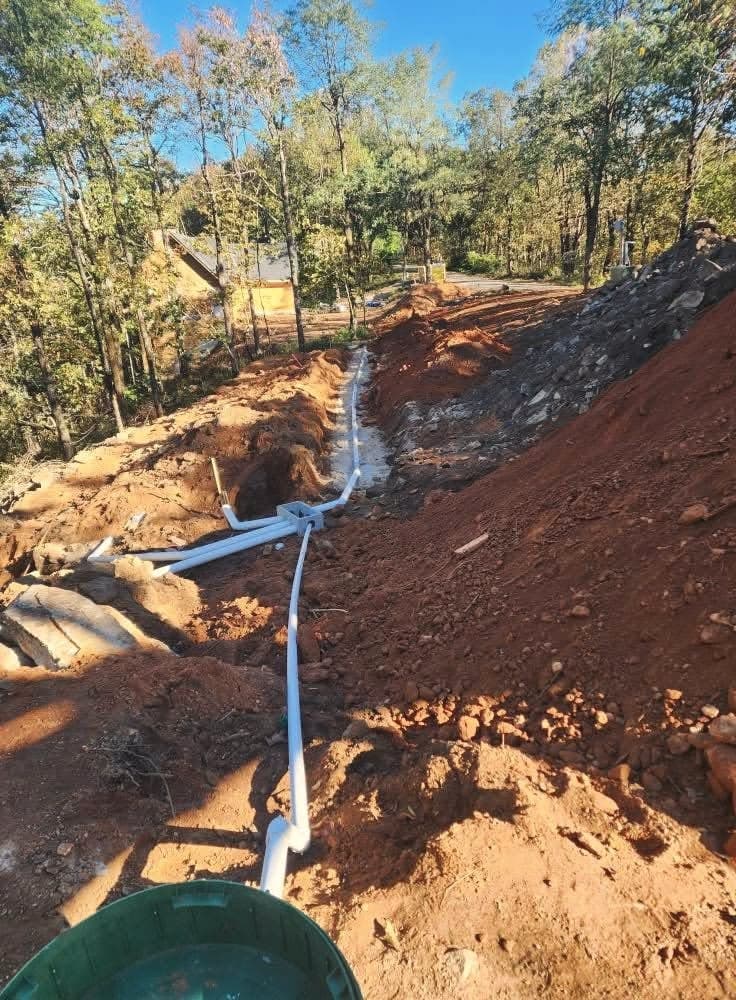
Start with what you're seeing: a slow drain, a smell, a soggy patch of lawn, an alarm, weak water pressure or a house sale on the calendar. We'll point you to the right fix, and if it takes digging, the same crew handles the permit, the trench and the backfill.
(678) 863-5620- Georgia DPH-certified installer & pumper
- Residential & commercial
- Oxford, GA
Free estimate
or call (678) 863-5620