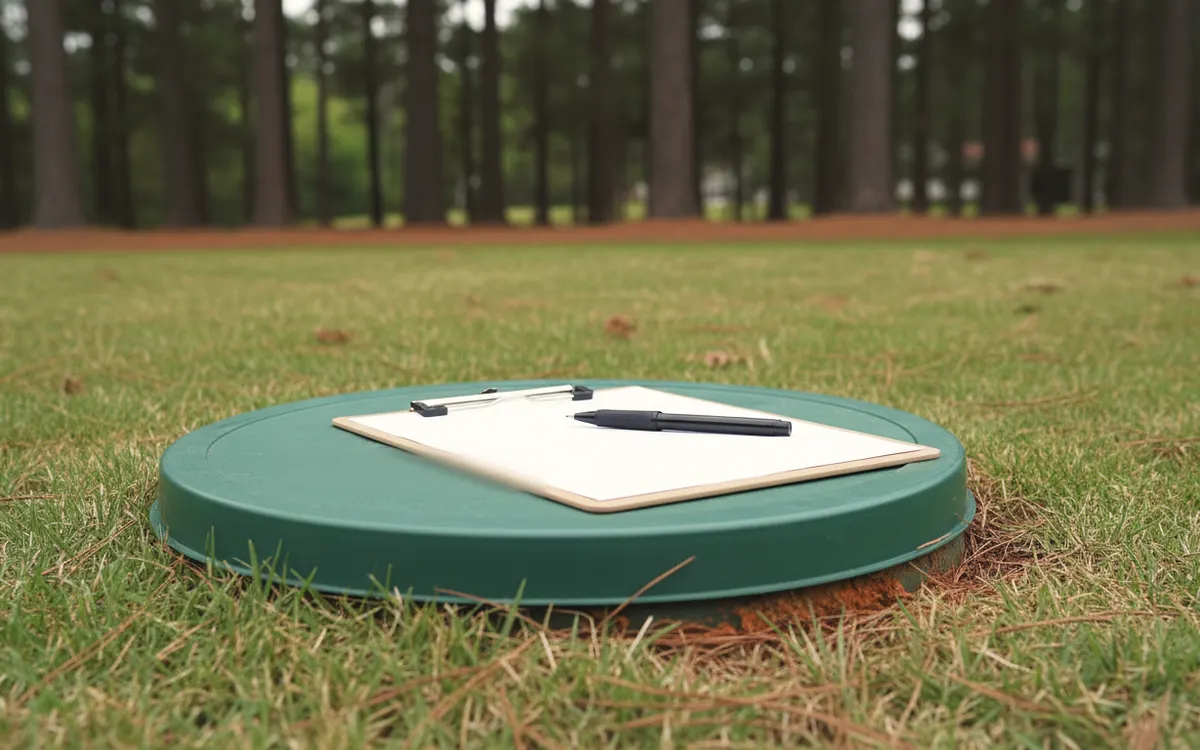
Septic permits & records
Clayton County Health District — Office of Environmental Services
- Address
- 1117 Battle Creek Rd, Jonesboro, GA 30236
- Phone
- 678-610-7469
Serving metro Atlanta from Oxford, GA
Georgia DPH-certified septic installer & pumper24/7 Emergency? (678) 863-5620
Clayton County · Septic & sewer rules
Get a free estimate
or call (678) 863-5620The short answer
The Clayton County Water Authority supplies water, sewer and stormwater service across the county and its six cities. You own the four-inch lateral up to CCWA's connection and everything past the meter. Septic, allowed only where sewer isn't available, is permitted by the Clayton County Health District on Battle Creek Road.↗↗↗
Reviewed by Atlanta Water & Sewage Solutions · Last updated
At a glance
Who owns what
Clayton County Water Authoritysewer lateral
You: the four-inch private lateral from the house to CCWA's point of connection↗
Where the line sits: Point of connection at the right-of-way or CCWA easement
Clayton County Water Authoritymain
CCWA: the six-inch public lateral in the right-of-way or easement, and the main↗
Where the line sits: Right-of-way / easement
Clayton County Water Authoritywater service line
CCWA through the meter; you from the meter to the house↗
Where the line sits: Meter
County code says it just as plainly: building sewers and their connections belong to the landowner, CCWA holds no ownership in them, and the owner pays every cost of installing and connecting one.↗
Local facts
Each row links to the agency, code or publisher it comes from. Tap a source to check it yourself.
| Topic | What it says | Source |
|---|---|---|
| Created | 1858, named for Congressman Augustin Smith Clayton | Clayton County, Georgia - Wikipedia |
| Water authority founded | March 7, 1955, by act of the General Assembly, starting with about 450 customers and 8 employees | Who We Are | Clayton County Water Authority, GA |
| Water supply | Five raw-water reservoirs, the largest Shoal Creek at 387 acres; up to 42 million gallons a day of drinking water | What We Do | Clayton County Water Authority, GA |
| Median year built | 1989 (ACS 2020-2024) | Census Reporter: Clayton County, GA (ACS 2024 5-year) |
| Smallest lot for a septic drain field | 25,000 square feet | Clayton County Code Ch. 98, Art. II — Water Authority Sewer Use (Municode, Supp. 105) |
| Septic permit fees | $225 new residential system; $200 repair or alteration (schedule effective Jan. 1, 2017) | Clayton County Board of Health, Office of Environmental Health Services — 2017 Fee Schedule (effective January 1, 2017) |
| Size | 144 square miles, 142 of them land | Clayton County, Georgia - Wikipedia |
The Clayton County story
Most metro counties we serve are a patchwork: a city utility in the middle, septic around the edges. Clayton is different. A single authority, created by the legislature in 1955, now serves more than 250,000 people through roughly 82,000 accounts, including Forest Park, Jonesboro, Lake City, Lovejoy, Morrow and Riverdale.↗
That changes what homeowners call us for. Here the typical problem isn't a soggy drain field. It's a cracked or root-bound lateral under a front yard, a cleanout cap snapped off by a mower, or a water service leak between the meter box and the slab. CCWA's own guidance lists grease buildup and tree roots as the usual causes of backups, and warns that broken cleanout caps let stormwater into the line.↗
Housing age sets the clock. Clayton's median home dates to 1989, but about 35% of its 115,000-plus units were built before 1980, so plenty of laterals have been underground for 45 years or more.↗
Most metro counties we serve are a patchwork: a city utility in the middle, septic around the edges.
Sewer or septic?
Septic hasn't vanished. CCWA bills homes on septic as 'water only' customers, which tells you they're still out there. But the county's sewer-use ordinance lets a septic system be used only where no sewer is available, and it won't allow one where a public line is reasonably accessible.↗↗
The bar for a new drain field is high: no permit for subsurface absorption on a lot under 25,000 square feet, a 2,000-gallon-per-day ceiling on any system, and no discharge to a natural outlet. Once sewer reaches a septic property, the owner gets 30 days after notice to connect, and the old tank must be pumped of sludge and filled.↗
Permits · Clayton County Health District — Office of Environmental Services
File the OSSMS Repair Permit Application or the New OSSMS Permit Application with the Office of Environmental Services.↗
The health officer can hold the permit until the site is inspected, then must approve the work before it's backfilled.↗
Adding a pool, garage or outbuilding to a septic property also needs a Health District permit.↗
Pay in advance; starting without a permit doubles the fee.↗
When a home switches to sewer, a septic tank closing letter documents the abandonment: $50 for a new dwelling, $150 for an existing one.↗
Georgia rule Ga. Comp. R. & Regs. 511-3-1-.03(1)(a)
“…if such system is available within two hundred feet (200') of the property line”
More about Clayton County
CCWA has a requirement that catches homes with basements or low lots. If your lowest fixture, a basement toilet or floor sink for example, sits below the next manhole upstream, your lateral must carry a sanitary backflow device. When raw sewage surges at that manhole, the device closes and keeps it out of the house.↗
Skip it and the risk shifts to you: without the device, the owner is responsible for damage and cleanup from a backup. We check fixture elevations against the nearest manhole during a camera job and can add the valve at the cleanout while the line is open.↗
Restaurants face a different rule set. CCWA's grease program requires new and remodeled food service facilities to put in an outdoor interceptor of 1,500 to 3,000 gallons and pump it out completely at least every three months.↗
CCWA has a requirement that catches homes with basements or low lots.
Soil & terrain
Clayton sits on a drainage divide: the Upper Flint system takes the west side and the Upper Ocmulgee the east. The Flint itself starts as seepage in East Point and passes beneath the runways at Hartsfield-Jackson before heading south.↗↗
Underfoot it's mostly Cecil. In the USDA survey area covering Clayton, Fayette and Henry, Cecil sandy loam on 2–6% slopes is the single biggest map unit, at roughly 97,000 acres. Cecil is very deep, with bedrock below 60 inches, so most sewer trenches here fight sticky red clay rather than rock.↗↗
Services here
Also available:Sewer Camera InspectionSeptic Pumping
Towns we serve
Who to call at the county
Septic permits & records
FAQ
Straight answers, with the rule or record behind them. Still unsure? Call and ask the crew that digs.
(678) 863-5620No. CCWA owns the six-inch public lateral in the right-of-way or its easement. The four-inch line from your house to that connection is yours to maintain, and county code confirms CCWA has no ownership in building sewers.
Source: Preventing Costly Sewer Backups | Clayton County Water Authority, GA
You do if your lowest fixture is below the next upstream manhole. CCWA requires a sanitary backflow device in that case, and without one the owner carries the cost of damage and cleanup after a backup.
Source: Preventing Costly Sewer Backups | Clayton County Water Authority, GA
Only if sewer isn't reasonably accessible and the lot has at least 25,000 square feet. The county ordinance bars drain-field permits on smaller lots and caps any system at 2,000 gallons a day. The Health District reviews the site before issuing a permit.
Source: Clayton County Code Ch. 98, Art. II — Water Authority Sewer Use (Municode, Supp. 105)
Thirty days after official notice, if CCWA's line is within 200 feet of your property line. The connection is at your expense, and a septic tank being retired must be pumped and filled.
Source: Clayton County Code Ch. 98, Art. II — Water Authority Sewer Use (Municode, Supp. 105)
The Board of Health's schedule effective January 1, 2017 lists $200 for a residential repair or alteration and $225 for a new residential system, with a $75 re-inspection fee. Fees are paid up front.
You do. CCWA provides service and maintenance up to and including the meter; once water leaves the meter it's in your privately owned system.
Source: How To Read Your Meter | Clayton County Water Authority, GA
CCWA doesn't post tap or connection fees online. Its Engineering Section at 770-960-5207 answers availability questions and estimates connection, tap and meter charges for a specific property.
Source: Engineering / Developer Information | Clayton County Water Authority, GA
CCWA at 770-960-5200. Public mains and the right-of-way lateral are theirs. Call us when the problem is inside your lot, on the private side of the connection.
Sources
Rules, costs and local facts on this page link to the agency, code or publisher that states them. Cost figures are third-party market ranges, not our prices — estimates are free.
Reviewed by Atlanta Water & Sewage Solutions · Last updated
Ready when you are
Call (678) 863-5620. We camera the pipe, mark CCWA's connection, and fix what's yours.
(678) 863-5620Free estimate
or call (678) 863-5620