Septic Pumping · Rutledge, GA
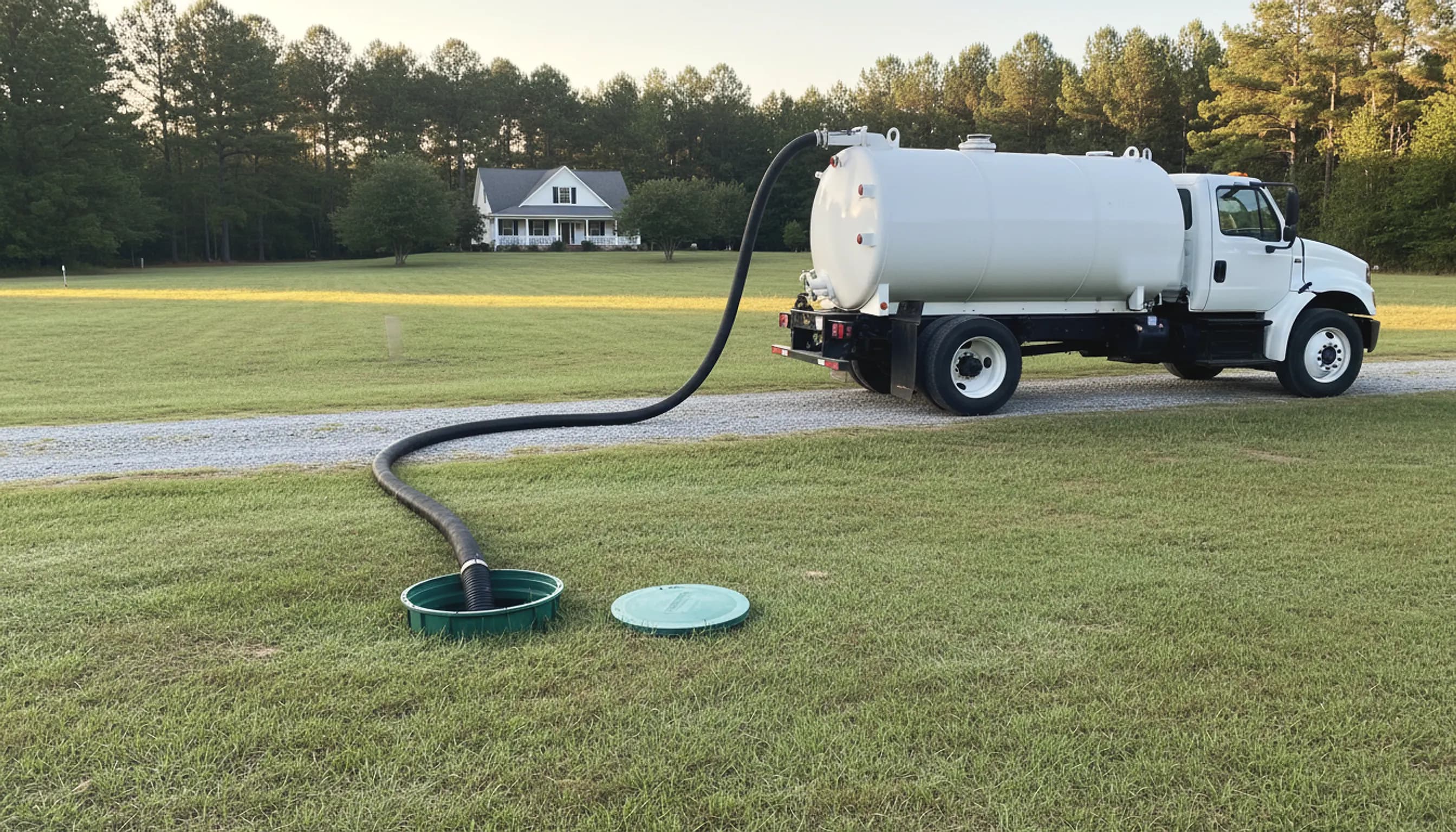
Septic tank pumping in Rutledge, timed to keep solids out of drain fields that sit in slow-draining clay.
- Georgia DPH-certified installer & pumper
- Residential & commercial
- Local shop in Oxford, GA
Get a free estimate
or call (678) 863-5620The short answer
How often should a Rutledge, GA septic tank be pumped?
UGA Extension recommends pumping a Georgia septic tank every 3 to 7 years, and that matters in Rutledge because fields sit in slow Hard Labor clay that cannot absorb carried-over solids. A proper pump-out empties every compartment through its own lid. We are on Georgia's approved pumper list and serve Rutledge from Oxford.↗↗↗
Reviewed by Atlanta Water & Sewage Solutions · Last updated
The Rutledge story
Cheap insurance for an expensive field
A tank's job is to hold back grease and sludge so only clarified liquid reaches the trenches. Once the sludge layer climbs high enough, solids ride out with the effluent and start sealing the gravel and soil. In ground that already moves water slowly, that seal forms faster and is harder to reverse.↗
That is the whole case for a pumping schedule around Rutledge. A pump-out costs a few hundred dollars. A field replacement on a farm lot costs many times that, plus a permit and weeks of torn-up yard.
Rutledge's housing also skews older. The census estimate puts the median home at 1978, which means plenty of tanks here were set before risers were common and have lids buried under decades of lawn.↗
On the record
- Rice Creek, which drains the south side of Rutledge, flows to Big Indian Creek and on to the Little River, a separate basin from the Hard Labor Creek side of town.↗
More about Rutledge
How often, for your household
UGA's range is wide on purpose. A couple on a 1,000-gallon tank can sit at the long end; a full house with a garbage disposal belongs at the short end. Georgia DPH's manual leans toward every 3 to 5 years as a general rule.↗↗
Rural Rutledge adds two wrinkles. Homes on private wells should keep the tank in good order to protect the water they drink, and farm households that wash produce or gear through the house plumbing send more water to the tank than a typical in-town home.↗
- UGA Extension's septic bulletin advises having the tank inspected and pumped periodically, ideally every 3 to 7 years.↗
UGA's range is wide on purpose.
Permits · Georgia DPH and Morgan County Environmental Health
What Georgia requires of the pumper
- 01
The company must hold a septage removal permit, applied for in its home county at least 10 days before it begins pumping.↗
- 02
Its trucks are inspected; Morgan County's schedule lists a pump truck inspection fee of $150.↗
- 03
Liquid, sludge and scum are removed completely, through each compartment's own opening.↗
- 04
The owner gets written notes on the tank's condition, and the load goes only to a permitted treatment plant, septage facility or land site.↗
What it costs
Pump-out prices, by published source
Septic tank pumping, Atlanta (most projects)
$359–$1,048
Typical market range — Angi — How Much Does It Cost to Pump a Septic Tank in Atlanta? (updated May 5, 2026), 2026
Septic tank pumping, national
$300–$700
Typical market range — HomeGuide — How Much Does Septic Tank Pumping Cost? (2026 data), 2026
1,500-gallon tank, national
$450–$1,050
Typical market range — HomeGuide — How Much Does Septic Tank Pumping Cost? (2026 data), 2026
Locating and digging to the lids (Georgia)
$50–$150
Typical market range — Septic & Well Pro — Septic Pumping Cost Georgia 2026 (updated April 10, 2026), 2026
Effluent filter cleaning (Georgia)
$25–$75
Typical market range — Septic & Well Pro — Septic Pumping Cost Georgia 2026 (updated April 10, 2026), 2026
What moves the price
These are third-party typical market ranges, not our prices. Every job is quoted after we see it — estimates are free.
Free estimate: (678) 863-5620- 01Tank size and number of compartments
- 02Lids buried deep under old lawn with no riser
- 03Hose run from the drive across pasture or around outbuildings
- 04Whether the effluent filter has been cleaned in years
Warning signs
Your Rutledge tank is overdue if
Seeing two or more of these? Call before it gets worse.
- 1. Nobody in the house can remember the last pump-out
- 2. Tubs and sinks drain slowly on a day with no rain
- 3. A sewage smell hangs near the tank in warm weather
- 4. The grass over the tank stays wet or sinks slightly
- 5. You are listing the house and want the tank condition on paper
More about Rutledge
Homes, farms and small businesses
For a house we locate the tank, uncover both lids, pump each side, clean the filter and note the baffles. If the lids are deep, a riser installed that day saves digging on every visit after.
A shop, church or office on a commercial system may have a larger tank, a grease interceptor or a pump chamber. Those get pumped on a tighter cycle set by use, and we write down levels so the next interval is based on evidence rather than a guess.
For a house we locate the tank, uncover both lids, pump each side, clean the filter and note the baffles.
FAQ
Rutledge septic pumping questions
Straight answers, with the rule or record behind them. Still unsure? Call and ask the crew that digs.
(678) 863-5620Do I need a permit to have my tank pumped?
You don't. The pumping company carries the septage removal permit and certification required by Georgia's rules.
Source: Georgia DPH Rules Chapter 511-3-1, On-Site Sewage Management Systems (Jan 2016)
Is pumping every few years really needed if nothing is wrong?
Yes. UGA Extension recommends every 3 to 7 years, because solids build silently until they reach the field.
Source: UGA Extension Bulletin B1421, septic system care (rev. Oct 18, 2024)
Why pump both compartments?
The first compartment holds most of the sludge. Georgia's manual treats septage removal as removing all liquid, sludge and scum.
What will a pump-out cost me?
Angi's 2026 Atlanta range for most projects is $359 to $1,048. Digging to buried lids can add $50 to $150 by Septic & Well Pro's figures.
Source: Angi — How Much Does It Cost to Pump a Septic Tank in Atlanta? (updated May 5, 2026)
Will pumping fix a soggy field?
It relieves pressure for a short time, but a field that stays wet after a pump-out usually needs its own diagnosis.
Where does the waste go?
Only to a permitted wastewater plant, septage facility or regulated land site, with a manifest kept by the pumper.
Sources
Where these facts come from
Rules, costs and local facts on this page link to the agency, code or publisher that states them. Cost figures are third-party market ranges, not our prices — estimates are free.
Reviewed by Atlanta Water & Sewage Solutions · Last updated
- 1UGA Extension Bulletin B1421, septic system care (rev. Oct 18, 2024)
- 2USDA NRCS Official Series Description: Hard Labor series
- 3Georgia DPH Approved Septic Tank Pumpers list (dated 9/18/2026)
- 4Census Reporter: Rutledge, GA (ACS 2024 5-year)
- 5Wikipedia: Rutledge, Georgia
- 6Georgia DPH Manual for On-Site Sewage Management Systems (2026), incl. Section I Septage Removal and Disposal
- 7Morgan County & Cities of Bostwick, Buckhead and Rutledge 2022-2036 Comprehensive Plan (GA DCA)
- 8Georgia DPH Rules Chapter 511-3-1, On-Site Sewage Management Systems (Jan 2016)
- 9Morgan County EH fees, effective August 1, 2024 (Northeast Health District)
- 10Angi — How Much Does It Cost to Pump a Septic Tank in Atlanta? (updated May 5, 2026)
- 11HomeGuide — How Much Does Septic Tank Pumping Cost? (2026 data)
- 12Septic & Well Pro — Septic Pumping Cost Georgia 2026 (updated April 10, 2026)
Ready when you are
Can't remember the last pump-out? That is the answer.
Tell us roughly where the tank sits and whether you have the county drawing. We schedule the visit and give you written notes on what we find.
(678) 863-5620- Georgia DPH-certified installer & pumper
- Residential & commercial
- Oxford, GA
Free estimate
or call (678) 863-5620