
HOW-TO GUIDE · SEPTIC-TO-SEWER CONVERSION
How septic-to-sewer conversion works in DeKalb, Newton and Gwinnett
- Georgia DPH-certified installer & pumper
- Homes across metro Atlanta
- Emergency line answered 24/7
Get a free estimate
or call (678) 863-5620The short answer
How does septic-to-sewer conversion work in DeKalb, Newton and Gwinnett?
A conversion starts with the utility: confirm a main or stub-out reaches your lot, pay its connection fees and get the permits. A contractor then lays a new building sewer from the house to that connection, and the old tank is pumped by a certified pumper and filled or removed. Inspections follow before sewer service begins.
Reviewed by Atlanta Water & Sewage Solutions · Last updated
Who does the work
One crew, the whole line
- Georgia DPH Certified Septic Tank Installer Listed by the Georgia Department of Public Health
- Georgia DPH Certified Septic Tank Pumper Listed by the Georgia Department of Public Health
- Homeowners across metro Atlanta, from our shop in Oxford, GA
Key facts
Conversion rules and fees by utility
Each row links to the agency, code or publisher it comes from. Tap a source to check it yourself.
| Topic | What it says | Source |
|---|---|---|
| State trigger | Connect when public sewer is within 200 feet of the property line or in an abutting right-of-way (Rule 511-3-1-.03(1)(a)) | Georgia DPH Rules Chapter 511-3-1, On-Site Sewage Management Systems (Jan 2016), 2016 |
| Failing system | Must connect immediately if sewer is available, unless the county exempts a qualifying repair | Georgia DPH Rules Chapter 511-3-1, On-Site Sewage Management Systems (Jan 2016), 2016 |
| Old tank | Pumped by a certified pumper, then filled with sand, soil or rock, or removed (Rule 511-3-1-.17(5)) | Georgia DPH Rules Chapter 511-3-1, On-Site Sewage Management Systems (Jan 2016), 2016 |
| Gwinnett fee (3/4-inch meter) | $4,172: a $4,147 system development charge plus a $25 permit fee | Residential Septic to Sewer Procedure for Unincorporated Gwinnett County |
| Gwinnett plumbing permit | 0.6 percent of the construction estimate, $30 minimum | Residential Septic to Sewer Procedure for Unincorporated Gwinnett County |
| NCWSA residential sewer fee | $3,650 plus a $75 sewer tap inspection; NCWSA does not make taps | NCWSA Water and Sewer Fees (sheet header: effective July 1, 2025), 2025 |
| DeKalb conversion districts | Each lot's share of the extension is capped at $7,500 | DeKalb County Code Ch. 25, Art. IV, Div. 2.5 — Special Septic Tank to Sewer Conversion Tax District |
| Typical conversion work | $3,000 to $15,000 before utility fees, typical national range (HomeGuide, 2025) | HomeGuide — Sewer Line Installation Cost (updated December 2025), 2025 |
Plain definitions
Conversion vocabulary
- Stub-out
- A short pipe the utility leaves at or near a lot line so a house can tie into a newly built main.
- Building sewer
- The owner's new gravity pipe from the house drain to the utility's cleanout or main; Georgia's rule calls for self-cleaning flow throughout.↗
- System development charge
- Gwinnett's one-time fee for a new sewer customer's share of the system's infrastructure costs.↗
- Tank abandonment
- Taking a septic tank out of service by pumping it and filling or removing it so no one can become trapped in it.↗
- Conversion tax district
- A DeKalb special district created to extend sewer into septic neighborhoods, with each lot's share of the extension capped.↗
Permits & the Georgia rules
The Georgia rules every conversion runs through
- 01
Ask the utility whether sewer reaches your lot, what it costs to connect, and whether a design or extension is needed.↗
- 02
Pay the utility's connection fees and obtain its permit; in Gwinnett that's the Septic to Sewer Permit from DWR.↗
- 03
Have the building's plumbing permit pulled. Gwinnett's procedure expects the licensed plumber to obtain a Plumbing Only Permit after showing the DWR permit.↗
- 04
Request a Georgia 811 locate before any mechanized digging on the lot.↗
- 05
Lay the building sewer to the utility's cleanout or main, then pass the connection inspection.↗
- 06
Have the tank pumped by a certified pumper, then fill or remove it and pass the abandonment inspection.↗
Georgia rule Rule 511-3-1-.03(1)(a)
“insure gravity flow at a self-cleaning velocity throughout”
Georgia rule Rule 511-3-1-.17(5)
“fill the empty tank with sand, soil, or rock to prevent entrapment, or have the empty tank removed”
How it varies by county
The published procedure applies once the neighborhood sewer project is finished and a cleanout has been set in your yard. Two inspections: the tie-in at the cleanout, and the tank after it's cleaned out and crushed or filled.↗
Most of unincorporated Newton relies on septic. New customers fund extensions, retain a design professional whose drawings NCWSA approves, secure easements if the lot doesn't touch the sewer, and build under NCWSA inspection.↗
Countywide, owners get 24 months after notice to connect when sewer is within 100 feet. In a conversion tax district, connecting is encouraged rather than required unless health or water-quality conditions call for it.↗
Owners have 90 days after official notice to connect.↗
Where sewer is available, the owner of a failed private system has 30 days after written notice to connect.↗
How the job runs
A typical conversion, start to finish
- 1
Confirm service and grade
Find out where the main or stub-out sits and whether the house can drain to it by gravity. NCWSA notes that a private lift station is an option when the lot sits below the sewer.
NCWSA — Connecting to Sanitary Sewer in Unincorporated Newton County (rev. 11/29/2018)
- 2
Get estimates and a design if required
Gwinnett suggests collecting more than one estimate. In unincorporated Newton, a design professional's construction drawings must be approved first.
Residential Septic to Sewer Procedure for Unincorporated Gwinnett County
- 3
Pay fees and pull permits
Utility fees come first; building or plumbing permits follow. No work may begin in Gwinnett until both permits are issued.
Residential Septic to Sewer Procedure for Unincorporated Gwinnett County
- 4
Locate utilities and dig
With the 811 ticket marked, the trench runs from the house drain to the connection point. Routing avoids the tank and any gas, water or electric lines crossing the yard.
Georgia 811 — Georgia Dig Law summary (O.C.G.A. 25-9-6, 25-9-7)
- 5
Connect and inspect
The new line is tied in and inspected while the trench is open, so the inspector can see the connection and the pipe bedding.
- 6
Pump and abandon the tank
A certified pumper empties the tank; it's then crushed and filled with sand, soil, rock, concrete or gravel as the local procedure allows, or dug out.
- 7
Restore the yard
Backfill, grade and seed the trench and the old tank area. The drain field stays in the ground, unused.
The whole story
Who handles which part of the job?
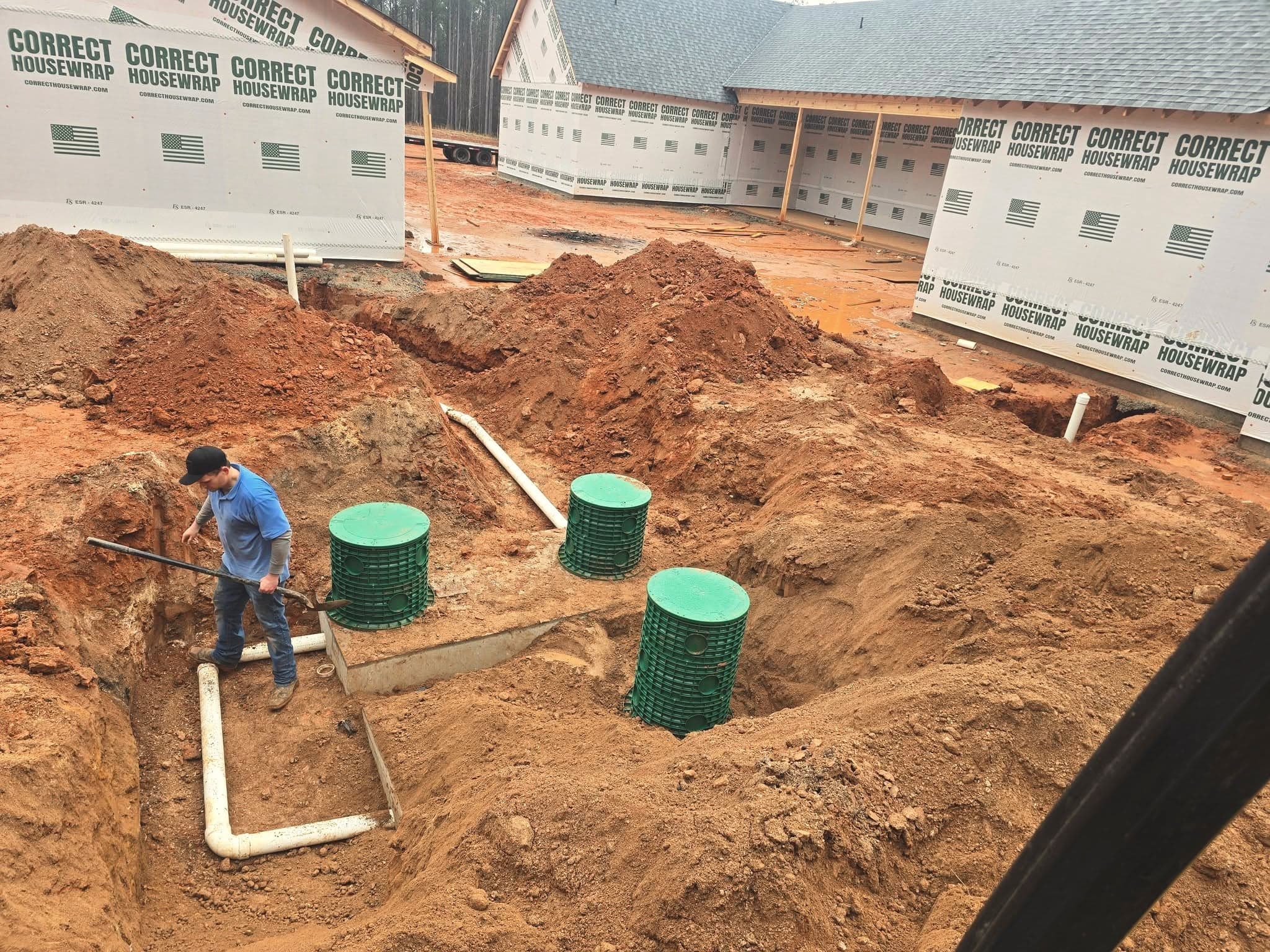
A conversion touches three trades. The utility handles its main and the connection point on its side. A licensed plumber pulls the plumbing permit in counties like Gwinnett, where the procedure names one. The digging, the new building sewer across the yard, and the tank pump-out and fill are excavation and septic work.
Atlanta Water & Sewage Solutions is on Georgia DPH's lists as a certified septic installer and an approved septic tank pumper, which covers the pump-out and abandonment side of the job and the excavation for the new line. We coordinate with the utility and the permit holder so the inspections happen in the right order. Our sewer line installation page covers the new-line work in more detail.
Worth knowing
Should I convert before my septic system fails?
If a main is within 200 feet or in the right-of-way beside your lot, the state rule generally already requires the connection, and many utilities set deadlines once they give notice. Waiting can mean converting on someone else's schedule, sometimes right after a backup.
Where connecting is optional, compare the utility fees and lateral cost with the likely cost of your next septic repair. Our septic vs sewer cost guide lays out both sides with published rates. A system that works today can keep working for years with routine pumping; one showing drain field warning signs is a stronger case for converting now.
If a main is within 200 feet or in the right-of-way beside your lot, the state rule generally already requires the connection, and many utilities set deadlines once they give notice.
FAQ
Septic-to-sewer conversion questions
Straight answers, with the rule or record behind them. Still unsure? Call and ask the crew that digs.
(678) 863-5620How much does it cost to convert from septic to sewer in Gwinnett County?
Gwinnett's published procedure lists $4,172 for a typical 3/4-inch residential conversion: a $4,147 system development charge plus a $25 permit fee. The plumbing permit adds 0.6 percent of the construction estimate, with a $30 minimum. Construction is separate; HomeGuide's 2025 national range for conversion work runs $3,000 to $15,000.
Source: Residential Septic to Sewer Procedure for Unincorporated Gwinnett County
Do I have to connect to sewer in Georgia if it's available?
Generally, yes. Georgia rule 511-3-1-.03(1)(a) requires connection when a public system is within 200 feet of the property line or in an abutting right-of-way, and immediate connection when an existing system fails and sewer is available. A county board of health can exempt a qualifying residential repair under subsection (b).
Source: Georgia DPH Rules Chapter 511-3-1, On-Site Sewage Management Systems (Jan 2016)
What happens to my septic tank when I connect to sewer?
Georgia requires the tank to be pumped out by a certified pumper and then either filled with sand, soil or rock or removed entirely, so no one can fall in. Gwinnett's procedure allows crushing the tank or filling it with concrete or gravel, followed by an inspection.
Source: Georgia DPH Rules Chapter 511-3-1, On-Site Sewage Management Systems (Jan 2016)
How do I connect to sewer in unincorporated Newton County?
NCWSA's guidelines start with whether sewer sits in the right-of-way or easement next to your property and whether the house has enough fall to drain by gravity. You then hire a design professional, get NCWSA's approval, obtain any easements, pay the $3,650 residential fee plus $75 tap inspection, and build under NCWSA inspection.
Source: NCWSA — Connecting to Sanitary Sewer in Unincorporated Newton County (rev. 11/29/2018)
Does DeKalb County require septic homes to connect to sewer?
Under DeKalb's general sewer code, an owner has 24 months from notice to tie in if a main lies within 100 feet. Inside a septic-to-sewer conversion tax district, connecting is encouraged but not mandatory unless health or water-quality conditions require it, and each lot's share of the extension cost is capped at $7,500.
Source: DeKalb County Code Ch. 25, Art. IV, Div. 2.5 — Special Septic Tank to Sewer Conversion Tax District
Can I connect to sewer if my house is lower than the street?
Sometimes. Georgia's rule calls for gravity flow at a self-cleaning velocity where it can be achieved. When the lot sits below the main, NCWSA's guidelines mention a private lift station that pumps wastewater up to the public sewer. That adds equipment the owner maintains, so it's worth a design review before committing.
Source: NCWSA — Connecting to Sanitary Sewer in Unincorporated Newton County (rev. 11/29/2018)
Do I need a permit to abandon a septic tank?
The abandonment itself is governed by Rule 511-3-1-.17(5), and in a conversion it's inspected as part of the sewer permit, as Gwinnett's procedure shows. If you're abandoning a tank for another reason, check with your county environmental health office, such as GNR Public Health or DeKalb Public Health.
Source: GNR Public Health — Septic Systems (Gwinnett, Newton & Rockdale)
How long does a septic-to-sewer conversion take?
The construction is often short; permits and approvals set the pace. In unincorporated Newton, NCWSA must approve construction drawings before work is permitted, and Gwinnett won't let work start until both permits are issued. Plan for permitting first, then book the dig, inspections and tank abandonment together.
Source: NCWSA — Connecting to Sanitary Sewer in Unincorporated Newton County (rev. 11/29/2018)
Keep going
Related services and guides
- Sewer line installation and conversions
- Septic pumping for tank abandonment
- Excavation and yard restoration
- Camera inspection of the house drain
- Is septic or sewer cheaper over time?
- Septic or sewer: how to tell
- Who owns the sewer lateral after you connect
- Find your septic tank permit records
- Sewer service in DeKalb County
- Sewer service in Newton County
- Sewer service in Gwinnett County
- Sewer service in Rockdale County
Sources
Where these facts come from
Rules, costs and local facts on this page link to the agency, code or publisher that states them. Cost figures are third-party market ranges, not our prices — estimates are free.
Reviewed by Atlanta Water & Sewage Solutions · Last updated
- 1Georgia DPH Rules Chapter 511-3-1, On-Site Sewage Management Systems (Jan 2016) (2016)
- 2Residential Septic to Sewer Procedure for Unincorporated Gwinnett County
- 3Gwinnett DWR Rates and Fee Schedule — January 2026 (2026)
- 4NCWSA — Connecting to Sanitary Sewer in Unincorporated Newton County (rev. 11/29/2018) (2018)
- 5NCWSA Water and Sewer Fees (sheet header: effective July 1, 2025) (2025)
- 6DeKalb County Code Ch. 25, Art. IV, Div. 1 — Sewers and Sewage Disposal, Generally (Sec. 25-154)
- 7DeKalb County Code Ch. 25, Art. IV, Div. 2.5 — Special Septic Tank to Sewer Conversion Tax District
- 8DeKalb Public Health — Septic Systems
- 9GNR Public Health — Septic Systems (Gwinnett, Newton & Rockdale) (2026)
- 10Covington, GA Code of Ordinances § 13.16.040 (Municode)
- 11Rockdale County Code, Ch. 98, Art. III, Div. 2 — Wastewater Application and Connection Process; Fees (Municode)
- 12HomeGuide — Sewer Line Installation Cost (updated December 2025) (2025)
- 13Georgia 811 — Georgia Dig Law summary (O.C.G.A. 25-9-6, 25-9-7) (2026)
- 14Georgia DPH Approved Septic Tank Pumpers list (9/18/2026) (2026)
Ready when you are
Rather have a pro look at it? Call the crew that digs.
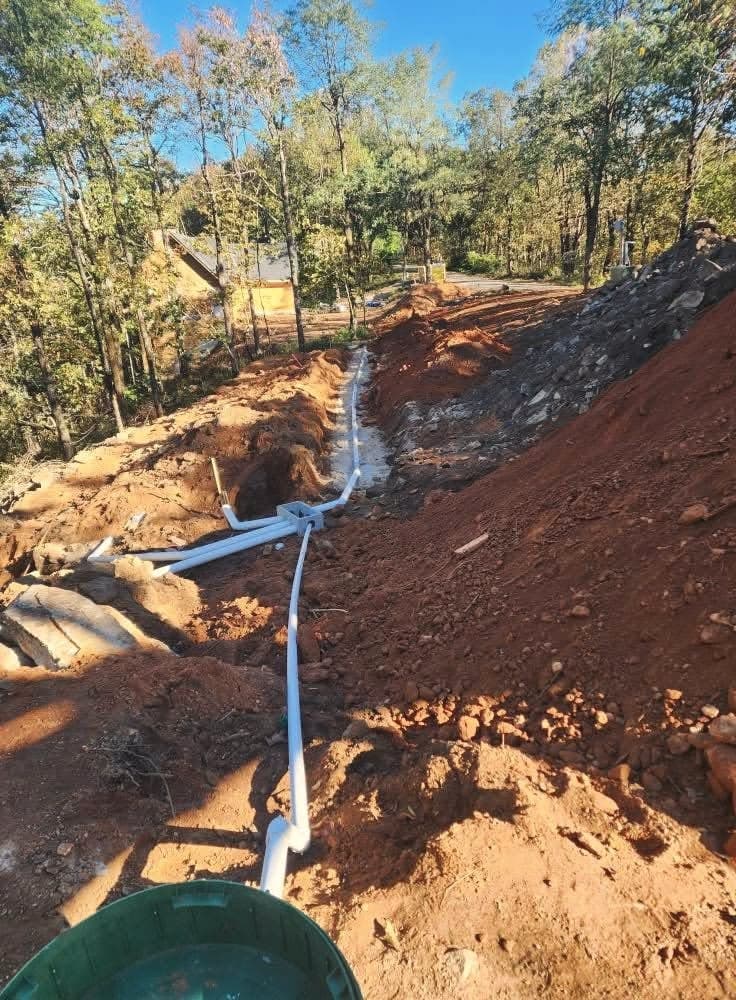
A conversion is three jobs in one: paying the utility, building a new line to its main, and taking the old tank out of service the way Georgia requires. Each county sequences them a little differently.
(678) 863-5620- Georgia DPH-certified installer & pumper
- Residential & commercial
- Oxford, GA
Free estimate
or call (678) 863-5620