OPTION 01
Dry trap
When it fits: Odor from one room with a drain nobody uses, especially in dry or hot months.
- Fixed with water in seconds
- Trap primers or seal inserts stop repeats
- Comes back if the fixture stays idle
Serving metro Atlanta from Oxford, GA
Georgia DPH-certified septic installer & pumper24/7 Emergency? (678) 863-5620
HOMEOWNER GUIDE · ODORS & SAFETY
Get a free estimate
or call (678) 863-5620The short answer
An indoor sewer odor usually means gas is slipping past a barrier: a dried-out trap, a blocked vent, a failed toilet wax seal, or a cracked drain or sewer lateral. On septic, a full tank or saturated field can push odor back. If the smell is strong or brings headaches or dizziness, leave and call for help.
Reviewed by Atlanta Water & Sewage Solutions · Last updated
Who does the work
One crew, the whole line
Key facts
Each row links to the agency, code or publisher it comes from. Tap a source to check it yourself.
| Topic | What it says | Source |
|---|---|---|
| What you smell | Hydrogen sulfide, a colorless gas with a rotten-egg odor that ATSDR notes is often called sewer gas | ATSDR (CDC) — ToxFAQs for Hydrogen Sulfide |
| How sensitive your nose is | Some people notice the odor between 0.01 and 1.5 ppm, per OSHA | OSHA — Hydrogen Sulfide: Hazards |
| Low-level symptoms | At 2 to 5 ppm, prolonged exposure may cause nausea, watery eyes, headaches or poor sleep | OSHA — Hydrogen Sulfide: Hazards |
| When your nose stops warning you | OSHA lists loss of smell at 100 to 150 ppm, so a fading odor is not proof the gas is gone | OSHA — Hydrogen Sulfide: Hazards |
| Life-threatening range | ATSDR says levels above 500 ppm can cause sudden unconsciousness or death | ATSDR (CDC) — ToxFAQs for Hydrogen Sulfide |
| Trap seal depth required | Each fixture trap holds a water seal of at least 2 inches and no more than 4 (IPC 1002.4) | Georgia State Minimum Standard Plumbing Code 2018 (IPC 2018), Ch. 10 Traps — Sec. 1002.4 Trap Seals (UpCodes), 2018 |
| Why vents matter | The vent system must keep trap seals from facing more than 1 inch of water-column pressure (IPC 901.2) | Georgia State Minimum Standard Plumbing Code 2018 (IPC 2018), Ch. 9 Vents — Sec. 901.2 Trap Seal Protection (UpCodes), 2018 |
| Natural gas smells similar | Atlanta Gas Light adds mercaptan so leaking natural gas smells like rotten eggs | Atlanta Gas Light — Emergency Information |
Plain definitions
Warning signs
Sewage backing up with the smell? Call (678) 863-5620
How the job runs
Guest showers, basement floor drains and laundry standpipes lose their water plug to evaporation. A quart of water refills a trap. Georgia's code expects seals on drains prone to drying to be protected, often with a trap primer or a seal insert.
Rock each toilet gently. Movement, a stain at the base, or odor strongest right at the floor points to a failed wax ring or loose flange bolts. A new seal is a common, inexpensive repair.
A missing or cracked cap on an indoor or yard cleanout, or an unglued pipe behind a washer, is an open door for sewer air.
If traps gurgle or drains slow when another fixture runs, air may not be moving through the vent. Leaves, nests or debris in a roof vent can let draining water pull trap seals down.
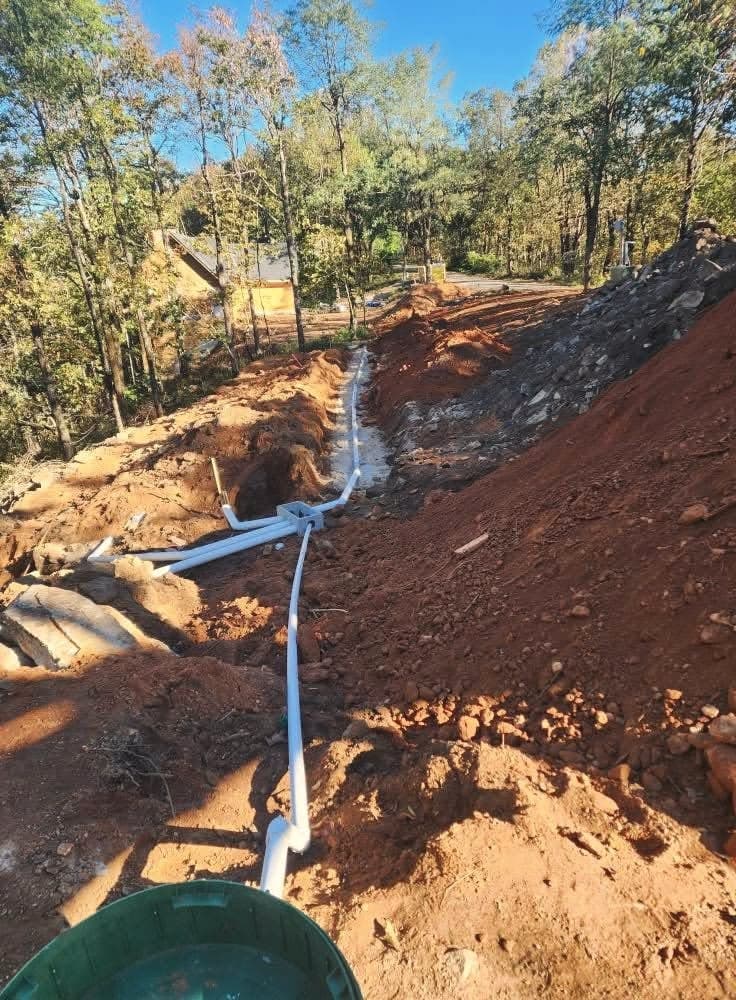
Odor under a slab, in a crawlspace, or stronger after heavy use can mean a cracked drain or separated joint. A camera run shows breaks, offsets and standing water in the line.
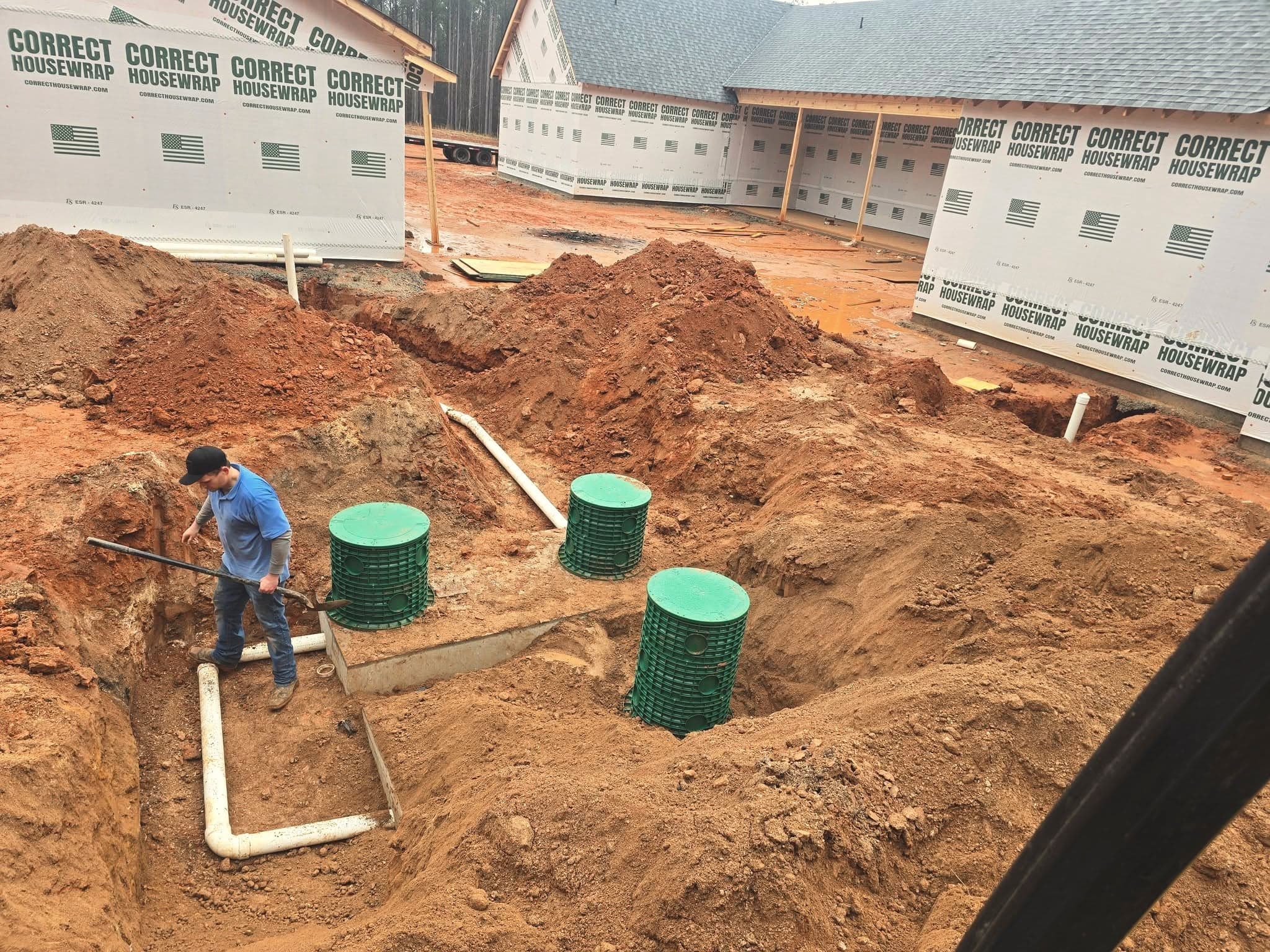
A tank overdue for pumping or a waterlogged drain field can push odor back toward the house, and slow drains often come with it. See our guide to drain field warning signs.
Your options
OPTION 01
When it fits: Odor from one room with a drain nobody uses, especially in dry or hot months.
OPTION 02
When it fits: Smell concentrated at one toilet base, sometimes with a loose or rocking bowl.
OPTION 03
When it fits: Gurgling drains, traps that lose water after a big drain, odor in several rooms.
OPTION 04
When it fits: Persistent odor below the house or in the yard, recurring clogs, soggy strip over the pipe.
Who pays depends on your utility's ownership line; see the table below.
OPTION 05
When it fits: Odor in the yard and house together, slow drains, wet ground over the field.
Who owns what
Gwinnett County DWR
The owner maintains the private lateral from the house to the right-of-way edge.↗
Where the line sits: Right-of-way
DeKalb County Watershed Management
The owner handles the building sewer on private property; the county maintains it within rights-of-way and easements.↗
Where the line sits: Property or easement line
Newton County Water & Sewerage Authority
The owner repairs the service line from the building to the public main, including the connection.↗
Where the line sits: House to main
The whole story
Georgia summers dry out traps fast in rooms nobody uses: a basement shower in a Snellville split-level, a laundry floor drain in a Covington ranch. Heat speeds evaporation, and once the water plug drops below its seal, air from the drain line flows straight in. A monthly bucket of water in every idle drain is the cheapest fix there is.
Heavy rain causes a different pattern. On sewer, groundwater can enter cracked laterals and old joints, and rising flow in the lines pushes air ahead of it. On septic, saturated red clay slows how fast the drain field accepts effluent, so odor lingers around the tank lids and vents. If a smell appears only after storms and fades as the yard dries, the buried system deserves a closer look. Our guide on septic backing up after rain walks through that case.
Worth knowing
For a faint, occasional whiff tied to one drain, yes: refill the trap and see if it clears within a day. For anything strong, spreading, or paired with symptoms, no. OSHA's table shows that the gas that makes sewers smell can dull your nose at higher concentrations, so trust how you feel over what you smell.
If there is any chance the odor is natural gas, leave first and let the gas utility decide. Atlanta Gas Light asks people not to hunt for a leak themselves. Sewer and septic trouble can wait for daylight; a gas leak cannot.
For a faint, occasional whiff tied to one drain, yes: refill the trap and see if it clears within a day.
FAQ
Straight answers, with the rule or record behind them. Still unsure? Call and ask the crew that digs.
(678) 863-5620At the low levels behind most household odors, it's mainly an irritant, though OSHA lists nausea, headaches and eye irritation from prolonged exposure at 2 to 5 ppm. The danger rises in enclosed spaces like pits, tanks and manholes. ATSDR says very high levels above 500 ppm can cause sudden unconsciousness or death.
Source: OSHA — Hydrogen Sulfide: Hazards
Intermittent odor usually means a trap seal is being lost and restored. An idle shower dries out, then gets used and refills. Or a vent problem lets a large drain pull water from a nearby trap. Georgia's plumbing code requires the vent system to protect trap seals from pressure swings for exactly this reason.
You often can't by smell alone, because natural gas is odorized with mercaptan to smell like rotten eggs. If a gas appliance is nearby or you're unsure, Atlanta Gas Light says to leave immediately, avoid anything that could spark, and call its emergency line at 877-427-4321 or 911 once outside.
Yes. The wax ring seals the gap between the toilet outlet and the floor flange. If the toilet rocks, was reset carelessly, or the flange has corroded, gas escapes at the base. Odor strongest right at the floor around one toilet, sometimes with staining, is the usual clue. Resetting the toilet on a new seal typically fixes it.
Indoors, a septic odor usually has the same entry points as sewer gas: a dry trap, a vent issue or a failed seal. A tank that's overdue for pumping, or a saturated drain field, can also slow drainage and push odor back. EPA warns tanks may contain dangerous gases, so leave opening one to professionals.
It can, especially under a slab or in a crawlspace where a broken joint vents directly beneath the floor. Look for recurring clogs, gurgling, or a wet or sunken strip over the line outside. A sewer camera inspection records cracks, offsets and standing water so repairs target the right spot.
Source: InterNACHI — Sewer Scope Inspection Standards of Practice
Traps, vents, toilet seals and pipes inside the walls are plumbing work. Buried drain lines, sewer laterals, septic tanks and drain fields involve excavation and, for septic, a county permit. If the in-house checks come up clean and the smell persists, the problem is likely underground.
A dry trap you've refilled can wait indefinitely. A smell that returns within days, spreads to several rooms, or comes with slow drains means something is broken and will likely get worse. Any smell with symptoms or sewage on the floor needs attention the same day.
Keep going
Sources
Rules, costs and local facts on this page link to the agency, code or publisher that states them. Cost figures are third-party market ranges, not our prices — estimates are free.
Reviewed by Atlanta Water & Sewage Solutions · Last updated
Ready when you are
Most indoor sewer odors trace back to a water seal that dried out or a pipe joint that opened up. A few are warnings you should not sit with. Here's how to sort one from the other.
(678) 863-5620Free estimate
or call (678) 863-5620