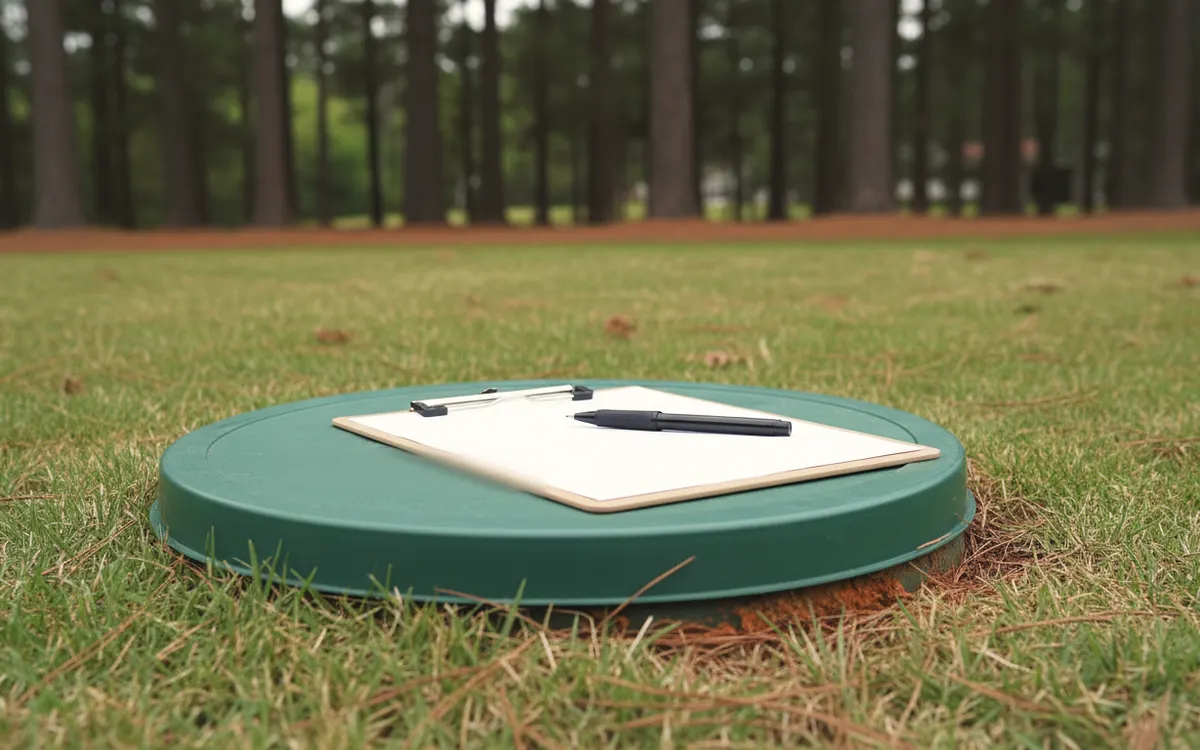
Septic permits & records
Fayette County Environmental Health (District 4 Public Health)
- Address
- 245 Booker Avenue, Suite E, Fayetteville, GA 30215
- Phone
- 943-209-8057
- Hours
- Mon–Fri 8–5, closed 12–1
Serving metro Atlanta from Oxford, GA
Georgia DPH-certified septic installer & pumper24/7 Emergency? (678) 863-5620
Fayette County · Septic & sewer rules
Get a free estimate
or call (678) 863-5620The short answer
Mostly septic. Fayette County has no wastewater treatment plant, and its stormwater program puts septic homes at over 90 percent. Only Fayetteville and Peachtree City run municipal sewer, with a thin strip in Tyrone. Septic permits come from Fayette County Environmental Health on Booker Avenue in Fayetteville.↗↗↗
Reviewed by Atlanta Water & Sewage Solutions · Last updated
Sewer or septic?
The county plan is blunt about it. Unincorporated Fayette, Brooks and Woolsey have no sewerage at all, every building there is served by septic, and the county has no plans to extend sanitary sewer into the unincorporated area. That is why lots out there are big: the plan ties the county's large-lot pattern directly to the soil and space a drain field needs.↗
Sewer exists in pockets. Fayetteville and Peachtree City own and operate the only municipal systems, and Tyrone serves part of the SR 74 North corridor. Even the county water utility stays out of wastewater; it only prints the sewer charge on the bill for the towns and authority that do the work.↗↗
Local facts
Each row links to the agency, code or publisher it comes from. Tap a source to check it yourself.
| Topic | What it says | Source |
|---|---|---|
| Septic share (unincorporated county) | Over 90 percent of homeowners, per the 2019 stormwater program | Unincorporated Fayette County Stormwater Management Program (December 2019) |
| Who bills sewer | FCWS sells water only and bills sewer for Tyrone, Fayetteville, Brooks and PCWASA | Sewer Providers | Fayette County Water System, GA |
| Septic tank size limits | 1,000 to 10,000 gallons; no more than 3,000 feet of trench | Fayette County Code Ch. 14, Art. IV — On-Site Sewage Management Systems (Municode, Supp. 22) |
| Property-line setbacks | Tank 10 ft, drain lines 5 ft; 25 ft where a buffer applies | Fayette County Code Sec. 110-93 — Septic tank and drain field line setbacks (Municode, Supp. 22) |
| Median year built | 1993 (ACS 2020-2024) | Census Reporter: Fayette County, GA (ACS 2024 5-year) |
| Created | May 15, 1821, named for the Marquis de Lafayette | Fayette County, Georgia - Wikipedia |
The Fayette County story
Fayette grew up fast in the 1980s and 1990s. The Census Bureau counts close to 23,000 homes from those two decades alone, half the county's housing, and the median house dates to 1993. A lot of those tanks and trenches are now thirty to forty years into service.↗
The county's own planning sessions flagged the pressure points. Stakeholders described five- and six-bedroom homes replacing the old three- and four-bedroom standard, several generations sharing one house and overrunning a system sized for fewer people, and pools and garages eating into the space a replacement field would need.↗
Put together, that describes a typical Fayette failure: a field that coped for twenty years and then started surfacing after an addition, a tank nobody has opened since closing, or a buyer's inspector asking where the system actually is. We start by finding the tank and reading the county's permit record, then decide whether it's a repair or a rebuild.
On the record
Permits · Fayette County Environmental Health, District 4 Public Health
Get a construction permit before any work on the lot; the Board of Health owes an answer within 20 days of a complete application.↗
For a failing system, file District 4's Residential Repair Permit Application and check the symptoms you see, from backups in the house to sewage surfacing over the lines.↗
Soil work is done by an approved evaluator, who must attach proof of at least $1 million in liability coverage to the report.↗
On tracts of three acres or more, a conventional or chamber system is allowed where the soil percolates at 120 minutes per inch or faster.↗
Nothing is covered until the final inspection and written approval; regrading or digging over the field later voids that approval.↗
Georgia rule Ga. Comp. R. & Regs. 511-3-1-.03
“…available within two hundred feet (200') of the property line”
Soil & terrain
Fayette sits entirely in the Upper Flint River basin, with the Flint itself tracing much of the eastern county line. The uplands between its creeks are mostly Cecil soils, deep red clay that NRCS rates only somewhat limited for absorption fields, which in practice means careful sizing rather than a flat no.↗↗
The problems are in the low ground. Across the survey area that covers Fayette, Clayton and Henry, about 114,000 acres of major soil components rate very limited, much of it frequently flooded Wehadkee and Cartecay bottomland along the creeks. A lot that slopes to a creek can have good soil at the house and none at the bottom of the yard.↗
More about Fayette County
Plenty of Fayette septic homes still buy water from the Fayette County Water System, which serves parts of the unincorporated county and four of its towns. FCWS installs the meter itself, and its construction standards call for Type K copper on every service line from the main to that meter, with a dual check valve set right after new residential meters.↗
Past the meter the pipe belongs to the house. During dry spells, like the Level 1 drought FCWS announced in April 2026, a slow leak on that private run shows up as a stubborn bill rather than a wet spot.↗
Plenty of Fayette septic homes still buy water from the Fayette County Water System, which serves parts of the unincorporated county and four of its towns.
Services here
Also available:Septic InspectionWater Line Repair & Installation
Towns we serve
Who to call at the county
Septic permits & records
On the map
About 1 hr 18 min / 54.4 mi by road from our Oxford shop
Routed from Oxford to the center of Fayette County. We schedule Fayette jobs as planned trips, not same-hour calls.
Route sourceFAQ
Straight answers, with the rule or record behind them. Still unsure? Call and ask the crew that digs.
(678) 863-5620Not in the unincorporated county. The county has no treatment plant and no plan to build sewer there; municipal sewer exists only in Fayetteville and Peachtree City, plus limited service in Tyrone.
Source: Fayette County Comprehensive Plan 2017–2040 (update adopted May 26, 2022)
Fayette County Environmental Health, part of District 4 Public Health, at 245 Booker Avenue, Suite E, in Fayetteville (943-209-8057). It handles new systems and repairs.
Source: District 4 Public Health: Fayette County (Health Department and Environmental Health)
At least 10 feet for the tank and 5 feet for drain lines under the county zoning code, or 25 feet where a buffer is required.
Source: Fayette County Code Sec. 110-93 — Septic tank and drain field line setbacks (Municode, Supp. 22)
The ordinance sets a 1,000-gallon minimum and a 10,000-gallon maximum for conventional and chamber systems, and caps absorption trenches at 3,000 linear feet.
Source: Fayette County Code Ch. 14, Art. IV — On-Site Sewage Management Systems (Municode, Supp. 22)
Only if sewer is actually available. The county code says a failed system must connect immediately when a public or community sewer is available, which in practice means inside or next to the city systems.
Source: Fayette County Code Ch. 14, Art. IV — On-Site Sewage Management Systems (Municode, Supp. 22)
Because FCWS doesn't provide sewer. It only bills sewer for Tyrone, Fayetteville, Brooks and PCWASA customers, so no sewer charge usually means a septic system.
On the uplands, usually workable: Cecil clay is rated somewhat limited. Creek bottoms and low terraces rate very limited, so where on the lot the field goes matters a lot.
Source: USDA NRCS Soil Data Access — survey area GA625 (Clayton, Fayette, and Henry Counties, Georgia)
About 1 hour 18 minutes and 54 miles by road from our Oxford shop to the middle of the county, by OSRM routing. We book Fayette work ahead rather than promising a same-hour arrival.
Guides
Sources
Rules, costs and local facts on this page link to the agency, code or publisher that states them. Cost figures are third-party market ranges, not our prices — estimates are free.
Reviewed by Atlanta Water & Sewage Solutions · Last updated
Ready when you are
Call (678) 863-5620. We locate the system, check it against the county permit, and quote the repair before we dig.
(678) 863-5620Free estimate
or call (678) 863-5620