
SEPTIC GUIDE · AEROBIC TREATMENT UNITS
What maintenance does an aerobic (ATU) septic system need in Georgia?
- Georgia DPH-certified installer & pumper
- Homes across metro Atlanta
- Emergency line answered 24/7
Get a free estimate
or call (678) 863-5620The short answer
What maintenance does an aerobic septic system need in Georgia?
Georgia's DPH Manual requires every aerobic treatment unit to come with a three-year service policy covering a visit every six months. After that, the owner must buy an extended policy or arrange equivalent maintenance for the life of the system. Owners also keep power on, answer alarms, and have residuals pumped when the service provider calls for it.
Reviewed by Atlanta Water & Sewage Solutions · Last updated
Who does the work
One crew, the whole line
- Georgia DPH Certified Septic Tank Installer Listed by the Georgia Department of Public Health
- Georgia DPH Certified Septic Tank Pumper Listed by the Georgia Department of Public Health
- Homeowners across metro Atlanta, from our shop in Oxford, GA
Key facts
Georgia's aerobic unit upkeep rules in one table
Each row links to the agency, code or publisher it comes from. Tap a source to check it yourself.
| Topic | What it says | Source |
|---|---|---|
| Who is responsible | The property owner operates and maintains the system (Rule 511-3-1-.17(2)) | Georgia DPH Rules Chapter 511-3-1, On-Site Sewage Management Systems (Jan 2016), 2016 |
| First three years | Service policy included in the purchase price, with six visits: one every six months | Georgia DPH Manual for On-Site Sewage Management Systems (March 2026), Section D(9) Aerobic Treatment Units, 2026 |
| After year three | Owner buys an extended policy or ensures equivalent maintenance, for the life of the system | Georgia DPH Manual for On-Site Sewage Management Systems (March 2026), Section D(9) Aerobic Treatment Units, 2026 |
| Emergency response | Service must be available within 48 hours of a request | Georgia DPH Manual for On-Site Sewage Management Systems (March 2026), Section D(9) Aerobic Treatment Units, 2026 |
| Minimum warranty | Two years on all components from installation | Georgia DPH Manual for On-Site Sewage Management Systems (March 2026), Section D(9) Aerobic Treatment Units, 2026 |
| Alarm | Visible and audible from 50 feet; 60 to 75 dBA at five feet | Georgia DPH Manual for On-Site Sewage Management Systems (March 2026), Section D(9) Aerobic Treatment Units, 2026 |
| Power outages | Treatment starts to decline after roughly 48 to 72 hours without power | Georgia DPH Manual for On-Site Sewage Management Systems (March 2026), Section D(9) Aerobic Treatment Units, 2026 |
| EPA's general advice | Systems with pumps or mechanical parts should be inspected about once a year, under a service contract | US EPA — How to Care for Your Septic System |
Plain definitions
Terms you'll see on the service paperwork
- Aerobic treatment unit (ATU)
- A tank system that mechanically mixes air into wastewater so oxygen-using bacteria break it down before it reaches the soil.↗
- Initial service policy
- The manufacturer's three-year maintenance agreement that Georgia requires to be built into the original purchase price of the unit.↗
- Extended service policy
- A follow-on agreement the manufacturer or its representative must offer, with coverage at least as broad as the first policy.↗
- Certified maintenance contractor
- A person certified by DPH to maintain, routinely inspect and evaluate on-site systems or advanced treatment units.↗
- Residuals
- The settled sludge and scum an ATU collects over time, removed by pumping on the schedule in the manufacturer's manual.↗
Permits & the Georgia rules
What the Georgia rules actually say
- 01
The unit must be a model on DPH's approved list, installed under a county permit by a representative the manufacturer has authorized.↗
- 02
At installation the representative hands the owner an owner's manual and explains how to run the unit within its normal range.↗
- 03
Six service visits follow over the first three years, and the provider must tell you in writing about any problem it can't fix on the spot.↗
- 04
The manufacturer or distributor reports each maintenance visit to DPH and the county health authority by March 15 of the following year.↗
- 05
From year four on, the owner keeps an extended policy or equivalent service in place. The Manual says maintenance and reporting continue for the life of the system.↗
Georgia rule Rule 511-3-1-.17(2)
“responsible for properly operating and maintaining the on-site sewage management system”
Georgia rule DPH Manual, Section D(9)(E)(1)(a)
“six inspection/service visits (scheduled once every six months over the three-year period)”
Georgia rule DPH Manual, Section D(9)(E)(3)
“The owner must obtain such a service policy or insure that equivalent maintenance and repair service is provided.”
Georgia rule DPH Manual, Section D(9)(E)(5)
“Emergency service must be available within 48 hours of a service request.”
How it varies by county
GNR Public Health's environmental health offices permit and inspect on-site systems in all three counties. Ask them for your permit file if you don't know your unit's model or service history.↗
DeKalb Public Health's environmental health division holds septic permits and records for the county's remaining on-site systems.↗
Northeast Health District environmental health offices handle on-site sewage permits here, so conditions written on an aerobic permit are on file with them.↗
How the job runs
What happens on a routine aerobic service visit
- 1
Check the air supply
The aerator, air pump or injector is inspected and adjusted, since treatment stops when air stops. Filters and diffusers are cleaned or replaced when the model calls for it.
- 2
Test the alarm and controls
The provider confirms the alarm fires for high water and for aeration failure, and that the warning still works if the unit itself malfunctions.
- 3
Look at and smell the liquid
Owner's manuals must describe visual and odor checks of the effluent and the mixed liquor inside the tank; those checks show whether the bacteria are healthy.
- 4
Measure the residuals
Settled solids are checked against the manufacturer's limits, and pumping is scheduled when they call for it rather than on a fixed calendar.
- 5
Write it up
Copies of periodic maintenance reports go to the owner and the local health authority. Keep yours with the house records.
Warning signs
Signs your aerobic unit needs a service call now
Aerobic alarm sounding or air pump quiet? Call (678) 863-5620
- 1. The alarm light or buzzer is onGeorgia requires the alarm to trip on high water or on aeration running outside the maker's limits. Either one means the unit isn't treating properly. Our septic alarm guide covers the first few minutes.
- 2. No hum from the air pumpMost units make a steady, quiet sound. Silence usually points to a tripped breaker, a failed motor or a clogged intake.
- 3. A sharp rotten-egg odor near the lidsA healthy aerobic tank smells earthy. A strong sulfur smell suggests the tank has gone without oxygen.
- 4. Power was out for two days or moreThe Manual notes performance begins to drop after about 48 to 72 hours without electricity, so have it checked after a long outage.
- 5. Wet ground or odor over the dispersal areaPoorly treated effluent can clog the soil faster. Surfacing liquid is a violation under Rule 511-3-1-.17(1), not just a nuisance.
What it costs
What aerobic ownership tends to cost
Mound or aerobic system installed (Georgia)
$10,000–$20,000
per system
Septic & Well Pro, 2026.
Typical market range — Septic & Well Pro — Septic Installation Cost Georgia 2026 (updated June 9, 2026), 2026
Septic pump-out, Atlanta market
$359–$1,048
per pumping
Angi, 2026; residual removal on an ATU is quoted the same way.
Typical market range — Angi — How Much Does It Cost to Pump a Septic Tank in Atlanta? (updated May 5, 2026), 2026
Septic pump replacement
$500–$1,300
per pump
HomeGuide national range, 2025; applies where the unit doses with a pump.
Typical market range — HomeGuide — How Much Does Septic Tank System Repair Cost? (Dec. 22, 2025), 2025
What moves the price
Every figure above is a typical market range from a third-party publisher and is not an Atlanta Water & Sewage Solutions price. Your unit and site set the real number, and our on-site estimates are free.
Free estimate: (678) 863-5620- 01Model and partsOnly listed models may be installed, so replacement aerators and controls come from that maker's supply chain.
- 02Whether a service policy is currentVisits under a paid policy cost nothing extra; a lapsed unit may need a catch-up visit and repairs first.
- 03ElectricityThe air pump runs on household power, so the unit adds a small, steady load to your bill.
The whole story
Why do so many east-metro lots end up with aerobic units?
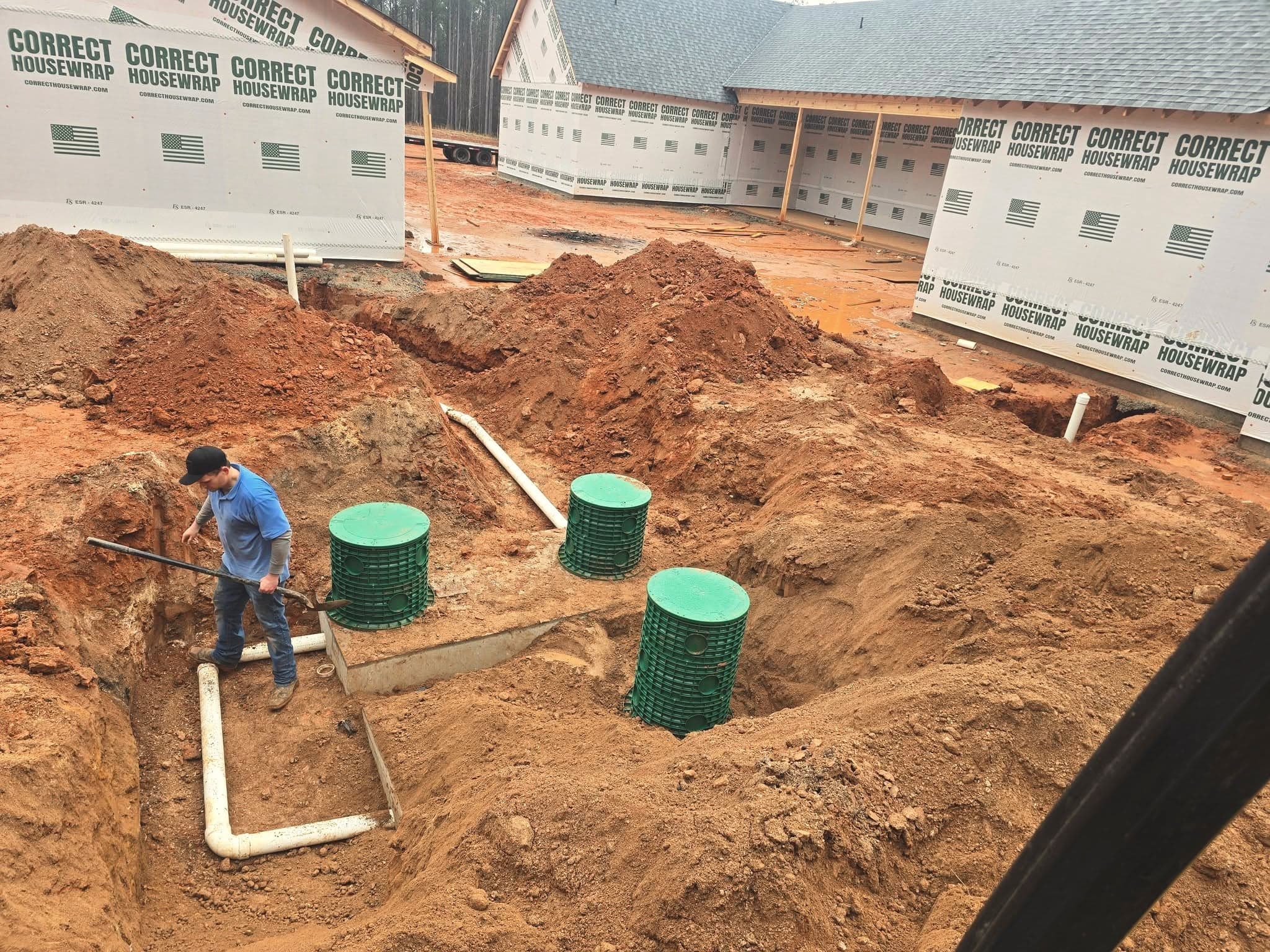
Most homes in Newton, Walton and Rockdale sit on conventional gravity systems. Aerobic units usually appear where a standard trench field won't fit the ground: shallow soil over rock, a seasonal water table, a tight lot, or a field that failed and has nowhere else to go. Our red clay soil guide explains how Piedmont subsoil drives that decision.
Georgia still expects the soil to finish the job. Under the DPH Manual, the bottom of the dispersal area must sit at least 12 inches above the seasonal high water table or rock, and a full replacement area must be set aside. The unit is a pretreatment step, not a substitute for suitable ground.
Worth knowing
What should I ask when buying a house with an aerobic system?
Ask the seller for the install date, the model on the data plate, and the name of whoever holds the current service policy. The Manual requires two data plates, one on the control box, and a label near the alarm that tells you how to get service. If those are missing, it's worth finding out why.
Then ask the county environmental health office for the permit file. The manufacturer's annual installation list sent to DPH records when the warranty ends and when the service contract ends, so the office may be able to confirm what the seller tells you. A pre-purchase septic inspection should cover the aerator and alarm as well as the tank.
Ask the seller for the install date, the model on the data plate, and the name of whoever holds the current service policy.
FAQ
Aerobic septic maintenance questions
Straight answers, with the rule or record behind them. Still unsure? Call and ask the crew that digs.
(678) 863-5620How often does an aerobic septic system need to be serviced in Georgia?
For the first three years, Georgia's DPH Manual requires six service visits, one every six months, under a policy included in the purchase price. After that the owner must keep an extended policy or equivalent service going for the life of the system. For the exact interval after year three, check your county permit conditions and the manufacturer's manual.
Is an aerobic septic maintenance contract required in Georgia?
In effect, yes. The Manual says the owner must obtain an extended service policy from the manufacturer or its authorized representative, or ensure equivalent maintenance and repair service is provided. Maintenance and the periodic reporting that goes with it continue for as long as the system is in use, not just during the warranty.
Can I maintain my own aerobic septic system?
Day-to-day care is yours: keep power on, watch the alarm, and keep harmful chemicals out. Rule 511-3-1-.17(3) bans strong acids, bases and solvents in any on-site system. Scheduled service is different. The Manual ties it to an authorized representative or equivalent service, and visit reports go to the county, so owners generally rely on a certified provider.
Source: Georgia DPH Rules Chapter 511-3-1, On-Site Sewage Management Systems (Jan 2016)
What does the aerobic septic alarm mean?
Georgia requires the alarm to detect two failures: liquid above the normal operating level, or aeration equipment running outside the manufacturer's limits. It must be visible and audible from 50 feet. Either way, cut back on water use and call for service. Check the breaker first, since a tripped circuit stops the air pump.
How often does an aerobic septic tank need to be pumped?
Georgia doesn't set a fixed calendar for aerobic units. The Manual requires each owner's manual to state the requirements and procedures for periodically removing residuals, and the service provider checks solids on routine visits. Pump when those measurements say to, which may differ from the three-to-five-year rule of thumb EPA gives for conventional tanks.
What happens to an aerobic system during a power outage?
The air pump stops, so treatment slows. The Manual notes performance begins to decline after extended outages, generally over 48 to 72 hours, and suggests backup power be considered where long outages are common. Use as little water as possible while the power is off, then have the unit checked if the outage ran long.
Who can install or work on an aerobic unit?
An ATU must be installed by a representative the manufacturer has authorized and DPH has approved. Anyone installing or servicing an advanced treatment system must carry the maker's certification card, and manufacturers send DPH a list of certified installers and service providers each year. Ask to see that card.
What if my aerobic unit's service policy has lapsed?
Get a certified provider out to inspect the unit, restore any failed parts, and put a new policy or equivalent service arrangement in place. Owners are responsible for proper operation under Rule 511-3-1-.17(2), and a unit left without service tends to fail quietly until the alarm, an odor or wet ground forces the issue.
Source: Georgia DPH Rules Chapter 511-3-1, On-Site Sewage Management Systems (Jan 2016)
Keep going
Related services and guides
- Septic system inspectionTank, alarm and field condition checks
- Septic tank pumpingResidual removal when the provider calls for it
- Septic repair
- Septic installation and system replacement
- Emergency septic service
- What to do when a septic alarm goes off
- Red clay soil and septic system choices
- How often to pump a septic tank in Georgia
- Homeowner septic checklist
- Are septic additives worth it?
- Septic service in Walton County
- Septic service in Newton County
- Septic service in Gwinnett County
Sources
Where these facts come from
Rules, costs and local facts on this page link to the agency, code or publisher that states them. Cost figures are third-party market ranges, not our prices — estimates are free.
Reviewed by Atlanta Water & Sewage Solutions · Last updated
- 1Georgia DPH Manual for On-Site Sewage Management Systems (March 2026), Section D(9) Aerobic Treatment Units (2026)
- 2Georgia DPH Rules Chapter 511-3-1, On-Site Sewage Management Systems (Jan 2016) (2016)
- 3US EPA — How to Care for Your Septic System
- 4GNR Public Health — Septic Systems (Gwinnett, Newton & Rockdale) (2026)
- 5DeKalb Public Health — Septic Systems
- 6Northeast Health District — Sewage / Septic Systems (Walton, Morgan)
- 7Septic & Well Pro — Septic Installation Cost Georgia 2026 (updated June 9, 2026) (2026)
- 8Angi — How Much Does It Cost to Pump a Septic Tank in Atlanta? (updated May 5, 2026) (2026)
- 9HomeGuide — How Much Does Septic Tank System Repair Cost? (Dec. 22, 2025) (2025)
Ready when you are
Rather have a pro look at it? Call the crew that digs.
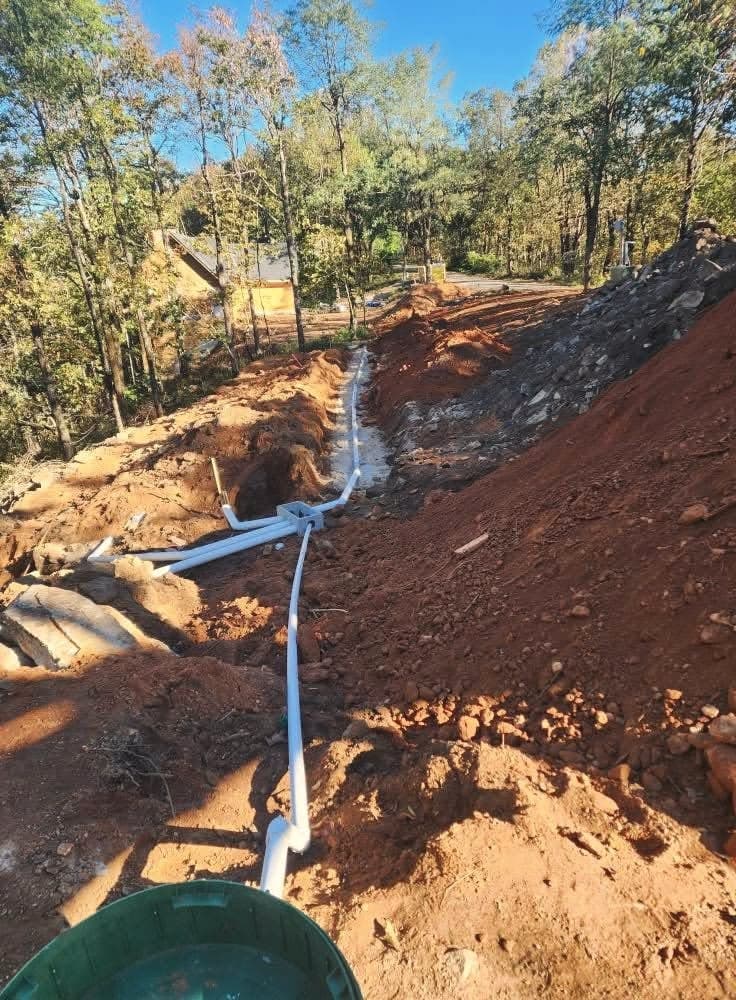
An aerobic system is a small treatment plant with an air pump, controls and an alarm. Georgia writes its upkeep into the state manual, and the paperwork follows the house.
(678) 863-5620- Georgia DPH-certified installer & pumper
- Residential & commercial
- Oxford, GA
Free estimate
or call (678) 863-5620