
CHECKLIST · SEPTIC OWNERS · GEORGIA
The Georgia homeowner septic checklist
- Georgia DPH-certified installer & pumper
- Homes across metro Atlanta
- Emergency line answered 24/7
Get a free estimate
or call (678) 863-5620The short answer
What should a Georgia septic owner check every year?
Each year, walk the tank and drain field for wet spots or odors, test any pump alarm, check that gutters and sump lines drain away from the field, and write down water use changes. Have the tank inspected about every three years and pumped every three to seven, and keep every pumping receipt and county permit.
Reviewed by Atlanta Water & Sewage Solutions · Last updated
Who does the work
One crew, the whole line
- Georgia DPH Certified Septic Tank Installer Listed by the Georgia Department of Public Health
- Georgia DPH Certified Septic Tank Pumper Listed by the Georgia Department of Public Health
- Homeowners across metro Atlanta, from our shop in Oxford, GA
Key facts
The checklist's numbers and where they come from
Each row links to the agency, code or publisher it comes from. Tap a source to check it yourself.
| Topic | What it says | Source |
|---|---|---|
| Professional inspection | At least every three years for an average household (EPA) | US EPA — How to Care for Your Septic System |
| Pump-out interval | About every 3 to 7 years, depending on tank size and use (UGA Extension) | UGA Extension Bulletin B1421, septic system care (rev. Oct 18, 2024), 2024 |
| Gwinnett's guidance | Pump and inspect every 3 to 5 years with a licensed septic contractor | Gwinnett County DWR — Septic Tanks |
| Additives | Not beneficial and possibly harmful, per the Georgia DPH advisory | Georgia DPH — Don't Flush Your Money Down the Drain: Additives and Your On-site Sewage Management System |
| What to flush | Human waste and toilet paper only (EPA rule of thumb) | US EPA — How to Care for Your Septic System |
| One running toilet | Can add as much as 200 gallons a day to the system (EPA) | US EPA — How to Care for Your Septic System |
| Gwinnett stormwater credit | 10 percent off the stormwater fee for five years after a pump-out | Gwinnett County DWR — Stormwater Utility Fee Credits |
| Who may pump | Georgia keeps a list of approved septic tank pumpers | Georgia DPH Approved Septic Tank Pumpers list (9/18/2026), 2026 |
Plain definitions
Three parts the checklist refers to
- Riser
- A plastic or concrete collar that brings a buried tank lid up to the lawn so the tank can be opened without digging.
- Effluent filter
- A screen in the tank's outlet that catches solids before the liquid leaves for the drain field; it is cleaned at service visits.
- As-built drawing
- The county's record of where a permitted system was actually installed, with the tank and field measured from the house.
How the job runs
Every month: a two-minute walk-around
- 1
Look over the drain field
Wet or spongy ground, standing water or grass noticeably greener than the rest of the yard in a dry spell all deserve a note with the date.
- 2
Smell near the tank and field
A sewage odor outdoors, away from a roof vent, is worth a call rather than a wait.
- 3
Keep vehicles and heavy loads off
No parking, driving or stacking materials on the field; the EPA lists parking on the drain field among the main things to avoid.
- 4
Check for leaks inside
A toilet that runs or a dripping faucet sends water the system has to absorb every hour of the day.
How the job runs
Once a year: the full check
- 1
Test the pump alarm if you have one
Most panels have a test switch; the horn or light should come on. If the system has a pump tank, a silent alarm is a failure waiting to be discovered. See what to do when a septic alarm goes off.
- 2
Walk the downspouts and sump line
Roof drains, sump pumps and other rainwater should run away from the field, not across it.
- 3
Look at what is growing over the lines
Grass is the right cover. Trees and shrubs belong well away from the field because roots can clog and break the pipes.
- 4
Review the household
More people, a new garbage disposal, a home business or a finished basement bathroom all change how fast the tank fills. Note it for the next pump-out.
- 5
Find the pump-out date
Check the last receipt. If you can't find one, or it is more than three years old, book an inspection.
How the job runs
Every 3 to 5 years: the pump-out visit
- 1
Hire an approved pumper
Georgia DPH publishes its approved pumper list; ask the company to confirm it is on it.
- 2
Ask for the sludge and scum readings
The layer depths tell you whether the next visit should come sooner or can wait longer.
UGA Extension Bulletin B1421, septic system care (rev. Oct 18, 2024)
- 3
Have the baffles and outlet filter checked
A missing baffle or a clogged filter shows up at a pump-out long before it shows up in the house.
- 4
Consider risers
If the lids had to be dug up, risers make every future visit faster and cheaper.
- 5
File the receipt
Keep it with the house records. In Gwinnett, it also earns the stormwater fee credit.
How the job runs
Before you sell, add on or build near the system
- 1
Pull the county records
The county Environmental Health office holds the permit and as-built for most systems; Gwinnett has put its septic records online.
Gwinnett County — Septic Tank Records Now Available Online (news release, June 14, 2011)
- 2
Check for a replacement area
Additions, pools and outbuildings can't go over the field or the ground set aside to rebuild it.
- 3
Talk to Environmental Health before adding bedrooms
Georgia sizes home tanks by bedroom count, so an added bedroom can mean a larger tank.
Georgia DPH Rules Chapter 511-3-1, On-Site Sewage Management Systems (Jan 2016)
- 4
Schedule an inspection for a sale
Buyers and lenders often ask for one; see septic inspections when a Georgia home sells.
Warning signs
Stop checking and call if you see these
Seeing one of these? Call (678) 863-5620
- 1. Sewage backing up into a tub, shower or floor drainStop running water and call; it's the most urgent sign on this list.
- 2. Gurgling and slow drains all over the houseOne slow sink is a clog. Every fixture slowing together points to the tank, the outlet or the field.
- 3. Wet, smelly ground over the field that doesn't dry outEffluent reaching the surface is a failed or overloaded field. Keep children and pets off it; read the signs of a failing drain field.
- 4. An alarm that won't clearA pump tank at high level fills quickly. Cut water use until someone looks at it.
The whole story
What should never go down a drain on septic?
The EPA's shortest rule is the one to post by the toilet: human waste and toilet paper only. Wipes labeled flushable, paper towels, feminine products, dental floss, cat litter and cigarette butts do not break down in a tank. They fill it, and some of them float out toward the field.
In the kitchen, grease and food scraps are the problem. The EPA suggests limiting or skipping the garbage disposal, and Georgia requires a bigger tank for a house that has one, which tells you how much extra solid material a disposal adds. Scrape plates into the trash and let cooking fat cool in a can.
Skip the additives aisle. Georgia DPH's advisory says septic additives are not beneficial and some can push fine solids into the drain field. Our septic additives guide explains why pumping on schedule does the job they promise.
Worth knowing
Which records should a Georgia septic owner keep?
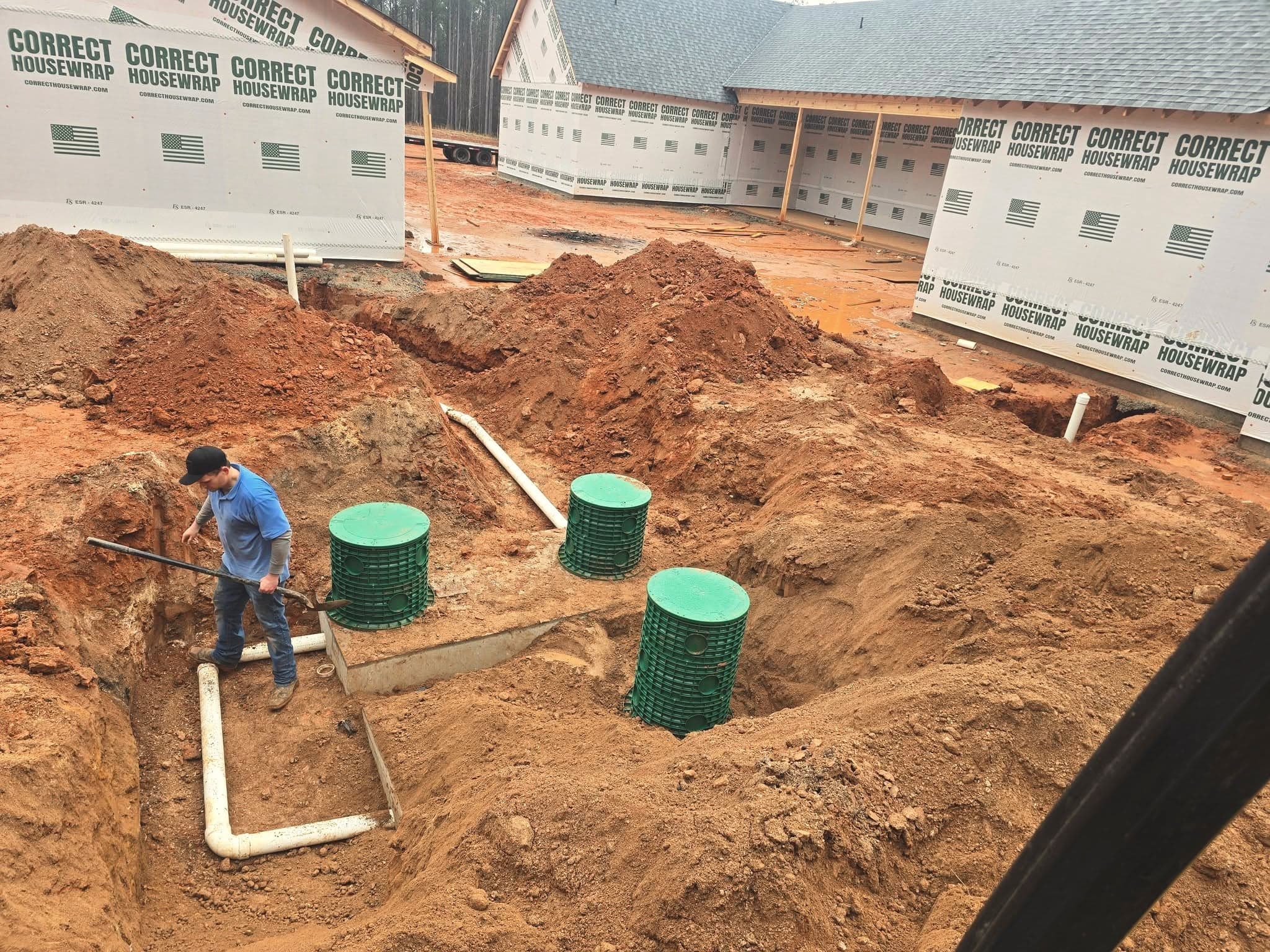
Keep a folder with four things: the county construction permit and as-built drawing, every pumping and inspection receipt, any repair permit, and a simple sketch of where the lids sit measured from two corners of the house. A buyer's inspector, a pumper or a county inspector will ask for each of them sooner or later.
If you don't have the permit or as-built, the county Environmental Health office usually does. In Gwinnett, Newton and Rockdale that is GNR Public Health; in Walton, Morgan and Jasper start with the Northeast Health District or the county office. Older homes may have no drawing at all, which is when a pumper's probe or a locate visit fills the gap. The metro Atlanta county rules guide lists every office.
Keep a folder with four things: the county construction permit and as-built drawing, every pumping and inspection receipt, any repair permit, and a simple sketch of where the lids sit measured from two corners of the house.
Worth knowing
How to use the printable checklist
Download the printable septic checklist (PDF) and keep it with the house records or on the inside of a utility closet door. It has the same monthly, yearly and pump-out lists as this page, with a blank line beside each item for the date you did it.
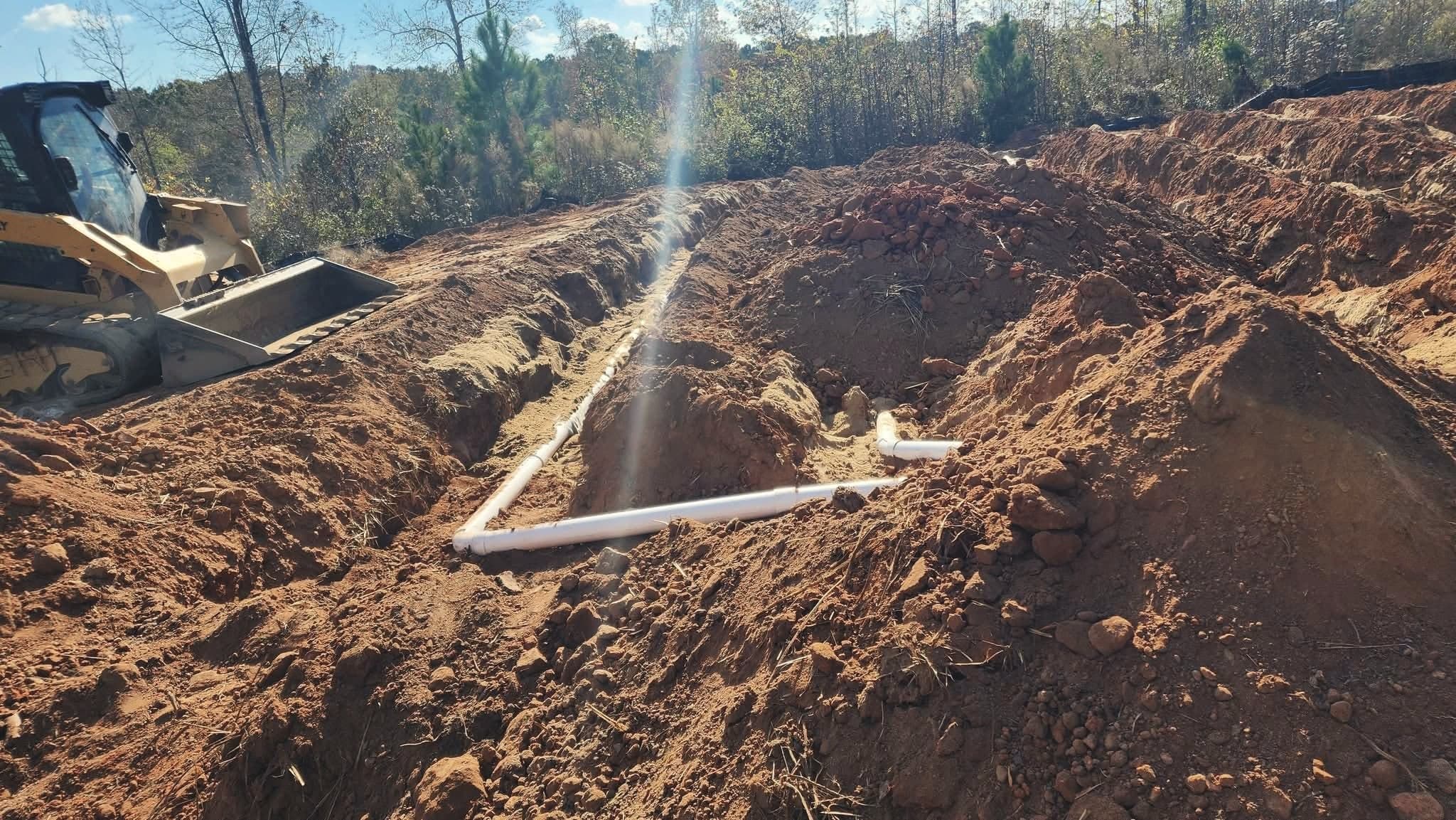
Red clay changes how forgiving a system is. Piedmont soils absorb water slowly, so a field that is overloaded for a few wet weeks shows it sooner here than in sandier parts of the state. The yearly downspout and water-use checks matter more in east metro Atlanta than a generic checklist suggests; the red clay soil guide explains why.
FAQ
Septic checklist questions
Straight answers, with the rule or record behind them. Still unsure? Call and ask the crew that digs.
(678) 863-5620How often should a septic system be inspected in Georgia?
The EPA suggests a professional inspection at least every three years for an average household, and Gwinnett County's water department recommends pumping and inspecting every three to five years. Systems with pumps, alarms or aerobic units need more frequent service, usually on the schedule in the permit or maintenance agreement.
How often should I pump my septic tank?
UGA Extension puts the typical range at every three to seven years. Smaller tanks, bigger households and garbage disposals move you toward the short end. Having the sludge and scum layers measured at each visit is the most reliable way to set the next date. Our pumping interval guide has a table by household size.
Source: UGA Extension Bulletin B1421, septic system care (rev. Oct 18, 2024)
Is it safe to plant a garden over the drain field?
Grass is the recommended cover. The EPA advises against trees, shrubs and vegetable gardens on the field because roots can tangle in and damage the lines. Keep trees far enough away that their roots will not reach the trenches as they grow.
Do I need to add bacteria or enzymes to my septic tank?
No. Georgia DPH's advisory says additives are not beneficial and can harm a system, and that household wastewater supplies all the bacteria a tank needs. The money is better spent on a pump-out at the right interval and on risers that make the tank easy to open.
Where do I find my septic permit and tank location?
Start with the county Environmental Health office, which keeps construction permits and as-built drawings for systems it approved. Gwinnett has its septic records online. For older homes with no record, a pumper can probe for the tank. See our guide to finding septic records and permits for each county.
Source: Gwinnett County — Septic Tank Records Now Available Online (news release, June 14, 2011)
Does Gwinnett County give a credit for pumping a septic tank?
Yes. Gwinnett's Department of Water Resources gives a 10 percent stormwater utility fee credit for five years after a septic tank is pumped. Keep the pumping receipt; the county's credit page explains how to apply.
Source: Gwinnett County DWR — Stormwater Utility Fee Credits
What should I write down after a pump-out?
The date, the company, the tank size, the sludge and scum depths if they measured them, whether the baffles and outlet filter were in good shape, and anything they recommended. Those notes set the next pump-out date and are exactly what a home inspector asks for when you sell.
Can a septic system handle a new bathroom or bedroom?
Not automatically. Georgia sizes a home's tank by bedrooms, starting at 1,000 gallons for up to four and adding 250 gallons for each one beyond that. Talk to the county Environmental Health office before adding bedrooms; a larger tank or field may be required.
Source: Georgia DPH Rules Chapter 511-3-1, On-Site Sewage Management Systems (Jan 2016)
Keep going
Services, guides and county pages
- Septic tank pumping
- Septic system inspections
- Septic system repair
- Drain field repair and replacement
- Yard grading and drainage away from the field
- How often to pump a septic tank in Georgia
- Finding your septic tank and permit records
- Why septic systems back up after heavy rain
- Georgia septic and sewer cost guide
- Newton County septic service
- Walton County septic service
- Rockdale County septic service
- Gwinnett County septic service
Sources
Where these facts come from
Rules, costs and local facts on this page link to the agency, code or publisher that states them. Cost figures are third-party market ranges, not our prices — estimates are free.
Reviewed by Atlanta Water & Sewage Solutions · Last updated
- 1UGA Extension Bulletin B1421, septic system care (rev. Oct 18, 2024) (2024)
- 2US EPA — How to Care for Your Septic System
- 3Georgia DPH — Don't Flush Your Money Down the Drain: Additives and Your On-site Sewage Management System
- 4Georgia DPH Rules Chapter 511-3-1, On-Site Sewage Management Systems (Jan 2016) (2016)
- 5Georgia DPH Manual for On-Site Sewage Management Systems (March 2026) (2026)
- 6Gwinnett County DWR — Septic Tanks
- 7Gwinnett County DWR — Stormwater Utility Fee Credits
- 8Gwinnett County — Septic Tank Records Now Available Online (news release, June 14, 2011) (2011)
- 9GNR Public Health — Septic Systems (Gwinnett, Newton & Rockdale)
- 10Northeast Health District — Sewage/Septic Systems
- 11Georgia DPH Approved Septic Tank Pumpers list (9/18/2026) (2026)
Ready when you are
Rather have a pro look at it? Call the crew that digs.
Monthly, yearly and pump-out checks for a Georgia septic system, drawn from UGA Extension, the EPA and Georgia DPH. Read it here or print the PDF version and keep it with the house papers.
(678) 863-5620- Georgia DPH-certified installer & pumper
- Residential & commercial
- Oxford, GA
Free estimate
or call (678) 863-5620